
Installing Hardwood Floors on Concrete: A Comprehensive Guide

The quick answerYes, you can install hardwood floors over concrete. The slab must be tested for moisture, cleaned, and leveled first, and the right method depends on the flooring: floating installations suit engineered hardwood, glue-down works with solid or engineered, and nail-down requires a plywood subfloor over the slab. Moisture control is the deciding factor.
Hardwood brings warmth and lasting value to a home, but a concrete subfloor changes how it has to be installed. Concrete holds and releases moisture, it can’t take a nail, and it is rarely perfectly flat. None of that rules out hardwood. It simply means the planning, materials, and method have to fit the slab. This guide walks through the three installation methods, the preparation each one needs, and what to watch for.
Can You Install Hardwood Floors on Concrete?
Yes, with careful planning and the right installation method. The main challenges are moisture control, proper preparation, including acclimation, and matching the flooring to the method.
Both solid and engineered hardwood can go over a slab. Choosing between them usually comes down to plank width, the heights of your doors and cabinets, and budget. Engineered thickness affects that height question directly, and our breakdown of how engineered plank thickness affects your floor explains how it changes door and cabinet clearances and which installation methods a manufacturer approves.
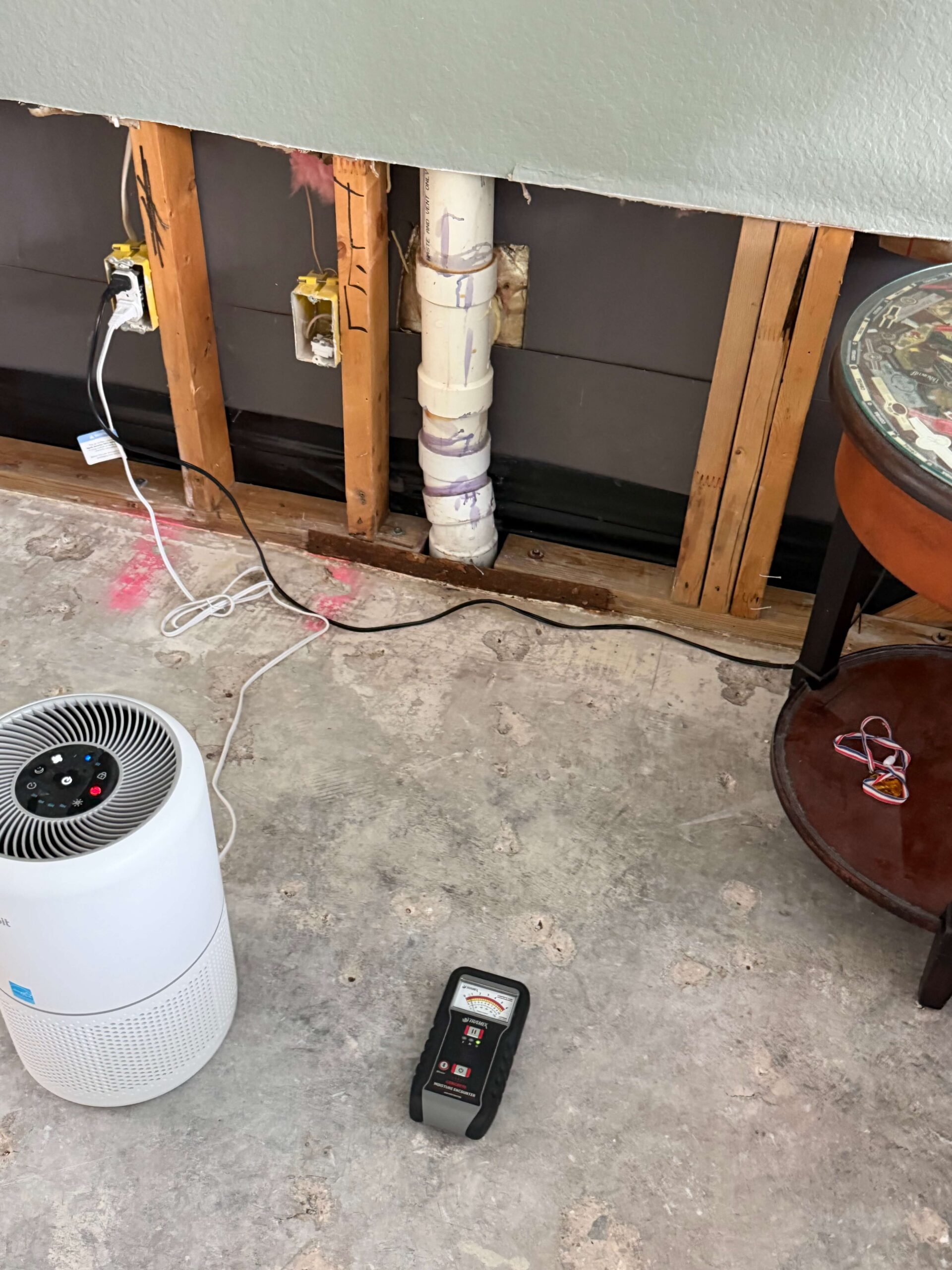
Testing a slab for moisture before a solid hardwood installation.
What Are the Three Ways to Install Hardwood Over Concrete?
There are three primary methods. Each suits different flooring and has its own preparation steps.
| Method | Works with | How it works |
|---|---|---|
| Floating | Engineered hardwood | Planks click together over a moisture barrier and underlayment without attaching to the slab. |
| Glue-down | Solid or engineered hardwood | Planks are set into wood flooring adhesive spread directly on the slab. |
| Nail-down over plywood | Solid hardwood | Plywood is fastened to the slab to create a nailable surface, then the hardwood is nailed to the plywood. |
Floating installation
A floating floor is not attached to the subfloor. It rests above it.
- Moisture barrier: lay down a barrier, such as 6-mil polyethylene sheeting, to protect the flooring from moisture rising through the concrete.
- Underlayment: install the underlayment the flooring manufacturer recommends for cushioning and added moisture protection.
- Flooring: click the planks together according to the manufacturer’s instructions, leaving an expansion gap around the perimeter.
Glue-down installation
The hardwood is bonded directly to the slab.
- Moisture testing: confirm the concrete meets the flooring manufacturer’s requirements.
- Moisture barrier: apply a moisture barrier adhesive or liquid membrane if the manufacturer requires one.
- Adhesive: spread a recommended wood flooring adhesive with a notched trowel.
- Flooring: press the planks firmly into the adhesive, following the manufacturer’s spacing and alignment guidelines.
Nail-down installation with a plywood subfloor
Plywood over the slab creates a surface that solid hardwood can be nailed into.
- Moisture barrier: lay down a barrier, such as 6-mil polyethylene sheeting.
- Plywood: attach plywood sheets to the concrete with concrete pins or a construction adhesive made for bonding wood to concrete, leaving a small gap between sheets for expansion.
- Flooring: nail the hardwood to the plywood with a flooring nailer, following the manufacturer’s spacing and alignment guidelines.
Hardwood on a slab foundation?
We will test your slab, recommend the right installation method, and explain exactly what preparation your floor needs.
Why Is Moisture the Biggest Concern?
Concrete can carry moisture up from below, and wood absorbs it. Without testing and the right barrier, that moisture reaches the underside of the planks and can cause cupping, gaps, or adhesive failure. Moisture testing the concrete and using the appropriate barrier is the most important step in the whole project.
Test before anything goes down. A slab that looks dry can still release moisture. Testing the concrete against the flooring manufacturer’s requirements is what tells you whether it is ready.
Barriers matter even for floors sold as waterproof. Planks that resist water don’t stop moisture from collecting beneath them, which is why a waterproof vinyl plank can still hide a wet subfloor.
How Should You Prepare the Slab?
- Clean it. Remove old adhesive, debris, and anything else that could interfere with the installation.
- Test it. Confirm the moisture level meets the flooring manufacturer’s requirements.
- Level it. Correct high spots and low spots so the floor sits flat.
- Acclimate the flooring. Let the hardwood adjust to the room’s humidity and temperature for at least 72 hours, or longer when needed, to minimize expansion and contraction.
Acclimation matters more here than in many places, because heat and humidity swing widely through the year. Our article on how the North Texas climate affects flooring choices explains why plank width and installation details carry extra weight in this region.
Should You Hire a Professional?
For most homeowners, yes. Hardwood over concrete involves moisture testing, barrier selection, adhesives, and leveling, and a mistake at any step can show up months later as movement or failure. An installer with experience over slabs gets those details right the first time.
Homeowners planning hardwood floor installation in Frisco over a concrete slab can expect the same sequence: test, prepare, choose the method, then install. Whether you are planning a hardwood installation in Plano for one room or an entire first floor, the slab gets the same attention.
If engineered hardwood fits your plank width, height, and budget goals, our engineered wood flooring installation page shows the products and process we use.
Not sure which method fits your slab?
We will look at your concrete, your doors and cabinets, and the floor you want, then recommend a method that suits all three.
50+ yrsof experience behind our team
650samples in our Dallas showroom
On-sitefinishing to match your floor
NWFAmember
Put Hardwood Over Your Slab the Right Way
Hardwood over concrete is entirely possible with the right approach and materials. For professional hardwood floor installation, contact Texas Hardwood Flooring. We will make sure your floors look beautiful and last for years to come.
Frequently Asked Questions
Can solid hardwood be installed on concrete?
Yes. Solid hardwood can be glued directly to a properly prepared slab or nailed to a plywood subfloor fastened over the concrete.
Do I need a moisture barrier over concrete?
For floating and nail-down installations, yes. For glue-down, a moisture barrier adhesive or liquid membrane is used when the flooring manufacturer requires it.
How long should hardwood acclimate before installation over a slab?
At least 72 hours, and longer when the room’s conditions call for it. The goal is to minimize expansion and contraction after installation.
What if my concrete slab isn’t level?
High and low spots are corrected before installation. A flat, clean, dry slab is the foundation of a floor that performs well.

