How to Care for Hardwood Floors in Warmer Weather

The quick answerKeep your A/C set between 65°F and 75°F and your indoor humidity between 30% and 50% all summer. Then limit direct sun with blinds or UV film, wipe up spills right away, put mats at the doors, and clean with a microfiber mop and a wood-safe cleaner. Steady conditions prevent most summer gaps, cupping, and fading.
Texas summers are hard on people, and they are hard on hardwood floors too. Heat, humidity, strong sun, and more traffic in and out of the house all show up in the floor eventually. The good news is that prevention is simple, and a few steady habits keep your hardwood looking its best until the weather cools off.
Why Does Summer Weather Affect Hardwood Floors?
Wood is a natural material that takes on and releases moisture from the air around it. When the air inside your home gets more humid, the planks expand. When it dries out, they shrink. Small, slow changes are normal. Large or fast swings are what cause problems.
North Texas can go from dry to sticky in a matter of days, which is why indoor climate control matters so much here. Our article on how the North Texas climate affects flooring explains why some homes see more seasonal movement than others.
What Temperature Should You Keep Your Home in Summer?
Keep your A/C running between 65°F and 75°F. A steady temperature limits the expansion and contraction that happen when a house heats up during the day and cools down at night.
Leave the system on when you travel, even if you set it a few degrees higher than normal. Shutting the A/C off for a week in July lets heat and humidity build inside, and the floor absorbs that moisture while you are away.
What Indoor Humidity Is Best for Hardwood?
Aim for indoor humidity between 30% and 50%. Most modern A/C systems include humidity controls. If yours does not, a dehumidifier is a smart addition, especially in rooms that run warmer or damper than the rest of the house.
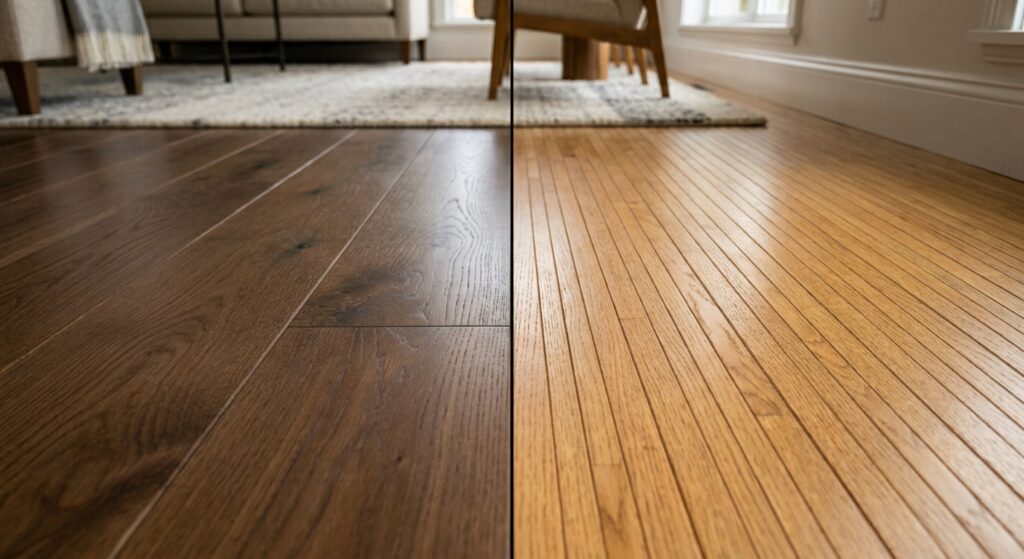
When the underside of the floor takes on more moisture than the surface, the plank edges rise above the center. If you are already seeing that washboard shape, our guide to what makes hardwood floors cup and when they flatten walks through the causes and fixes.
Watch the floor, not just the thermostat. Raised edges, new gaps, or a floor that feels different underfoot are early signs that indoor humidity is out of range. Catching it early usually means the floor can recover on its own once conditions stabilize.
Seeing raised edges or cupping this summer?
We can check moisture levels in the floor and tell you whether it will settle on its own or needs attention.
How Do You Protect Hardwood From Summer Sun?
Long summer days mean more direct sunlight across your floors. Over time, strong sun can fade the wood, dry it out, and leave light and dark patches where rugs and furniture sit.
- Close blinds or curtains in rooms that get strong afternoon sun.
- Consider UV-blocking window film on large windows and glass doors.
- Move rugs and furniture now and then so the floor ages evenly.
Light also changes how a finish looks. If you are planning to refinish, our comparison of matte, satin, and semi-gloss sheens shows how each one handles glare, dust, and everyday wear in a sunny room.
How Should You Handle Spills and Summer Traffic?
Summer usually brings more people through the house, more cold drinks, and more trips in from the pool or the yard. Wipe up water and sticky residue immediately. Standing liquid can stain the finish or work its way into the seams and cause warping.
Place mats at every entry to catch dust, grit, and moisture from sandals and wet feet. A simple mat goes a long way toward preventing scratches, and felt pads under chairs and tables help with the extra furniture movement that comes with summer gatherings.
What Is the Right Way to Clean Hardwood in Summer?
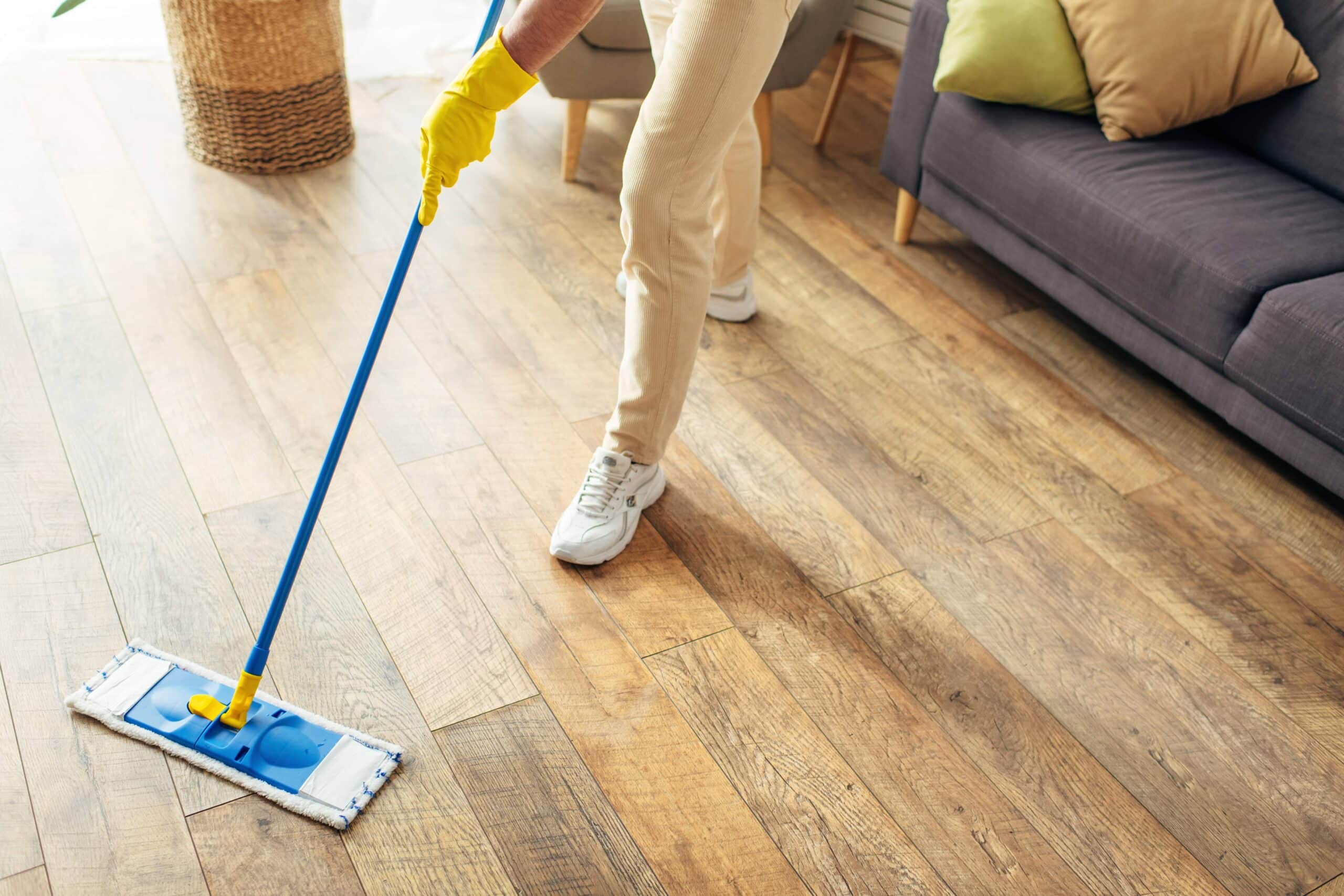
- Dry clean first. Sweep or use a dry microfiber mop to pick up grit that tracks in from outside.
- Use a wood-safe cleaner. Choose a product made for finished hardwood floors.
- Keep the mop barely damp. Never use a soaked mop or let water sit on the surface.
- Skip harsh products. Never use ammonia or vinegar-based solutions, which can dull and damage the finish.
When Is It Time to Refinish Before Next Summer?
Your finish is the layer that protects the wood from spills, sun, and wear. Once it wears thin in traffic paths or turns dull and gray, water and grit reach the wood more easily, and summer conditions do more damage.
If cleaning no longer brings back the shine, it may be time for professional hardwood floor sanding and refinishing. A fresh finish restores the color and gives the floor full protection again before the next hot season.
Is your finish wearing thin in the busiest rooms?
We will look at the floor, test the finish, and tell you whether a refinish or simple care is the right next step.
50+ yrsof experience behind our team
On-sitefinishing to match your floor
NWFAmember
3 generationsfamily-owned
Keep Your Hardwood Ready for Every Texas Summer
Warmer weather does not have to mean trouble for your floors. With steady indoor conditions and a few smart habits, your hardwood can look beautiful year-round. For more answers on choosing and caring for floors, see our most-asked flooring questions. If something already looks off, call us and we will help you figure out why.
Frequently Asked Questions
Should I turn off the A/C when I go on vacation?
No. Leave it running, even at a slightly higher setting than usual. Turning it off lets heat and humidity build up, and the floor absorbs that moisture while you are gone.
Do I need a dehumidifier for my hardwood floors?
Only if your A/C cannot keep indoor humidity between 30% and 50%. Many modern systems have humidity controls built in, but a dehumidifier helps in homes or rooms that stay damp.
Will seasonal gaps between planks close on their own?
Small seasonal movement is normal and often evens out as conditions change. Gaps or raised edges that keep growing are a sign that moisture levels need to be checked.
Can I use vinegar to clean hardwood floors?
No. Vinegar and ammonia can dull and damage the finish. Use a cleaner made for finished hardwood and a barely damp microfiber mop.