
Category Flooring Options
Recent Post
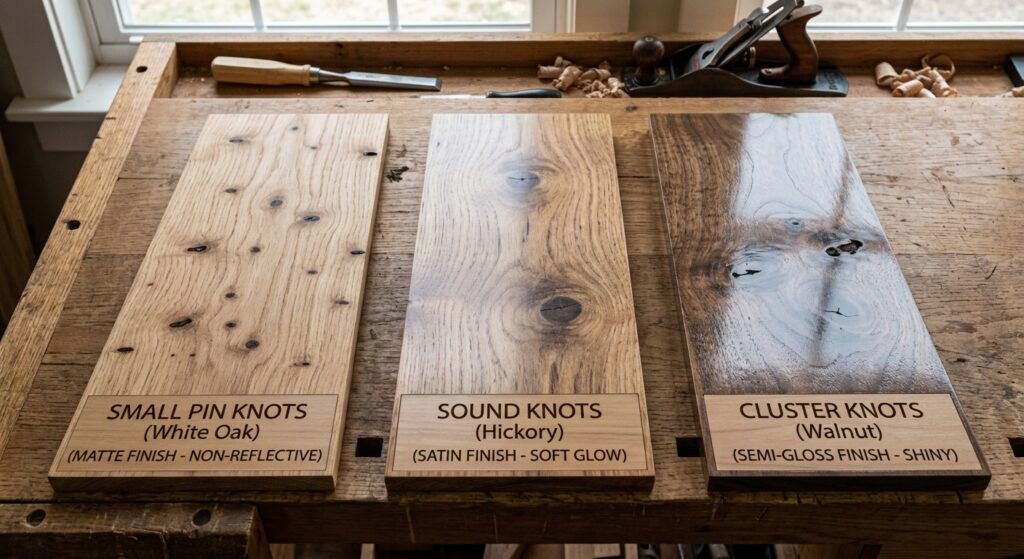
How Many Knots Do You Want in Your Floor?
The quick answerKnots, color swings, and dark mineral streaks are not defects. They are a grade, and you decide the grade at purchase. A plank full of character is exactly as hard, as stable, and as long-lived as a perfectly…
Recent Post
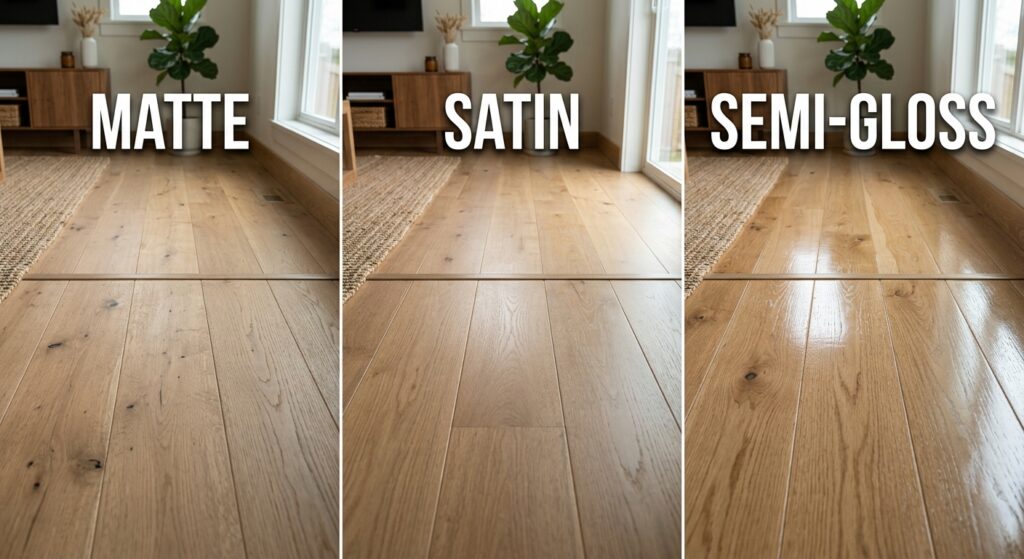
Matte vs Satin vs Semi-Gloss Hardwood Floors
The quick answerMatte hides the most. Semi-gloss hides the least. Sheen measures how much light a finish reflects, and reflected light is what makes a scratch, a dust film, or a paw print visible. Satin sits between them and is…
Recent Post
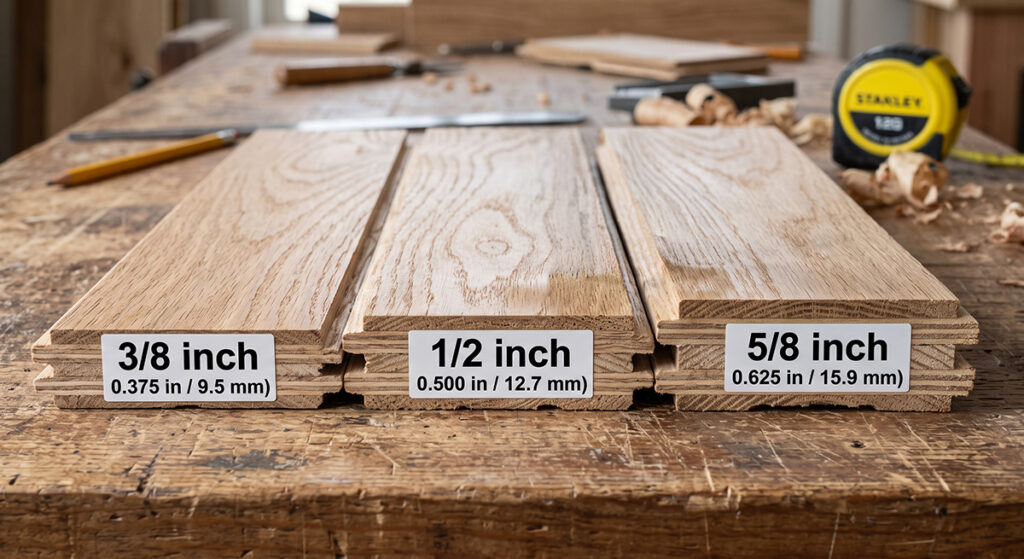
3/8″ vs. 1/2″ vs. 5/8″ Engineered Flooring Thickness: What Difference Does It Make?
The quick answerEngineered hardwood thickness determines how your new floor meets doors, cabinets, and existing flooring, and which installation methods a manufacturer approves. It does not determine how many times the floor can be refinished. The wear layer governs that,…
Recent Post
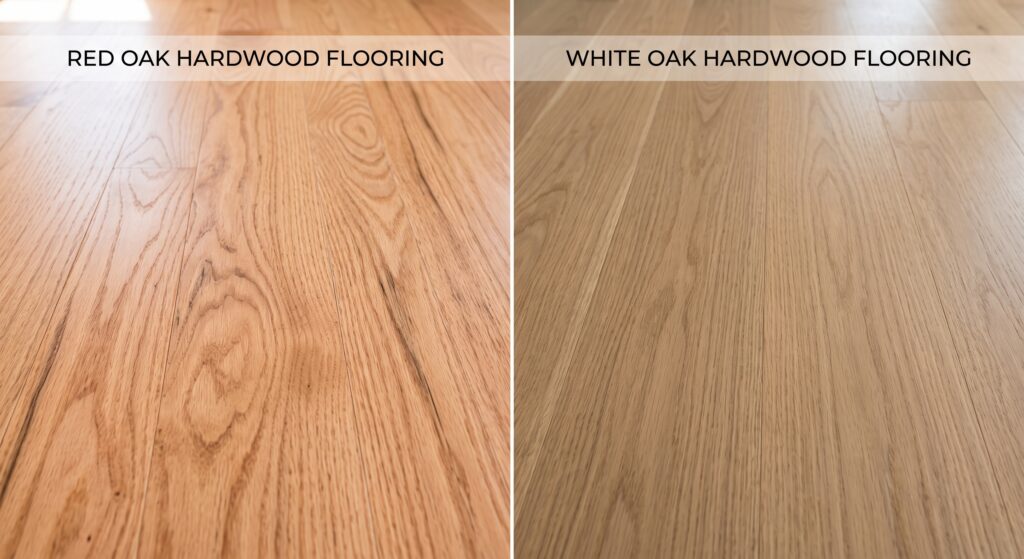
Red Oak vs. White Oak Flooring: Color, Hardness, and Stain Behavior
The quick answerWhite oak is slightly harder than red oak, but hardness is not the difference that will affect your project. Color is. Red oak carries a pink and amber undertone with an open, busy grain, and that undertone pushes…
Recent Post
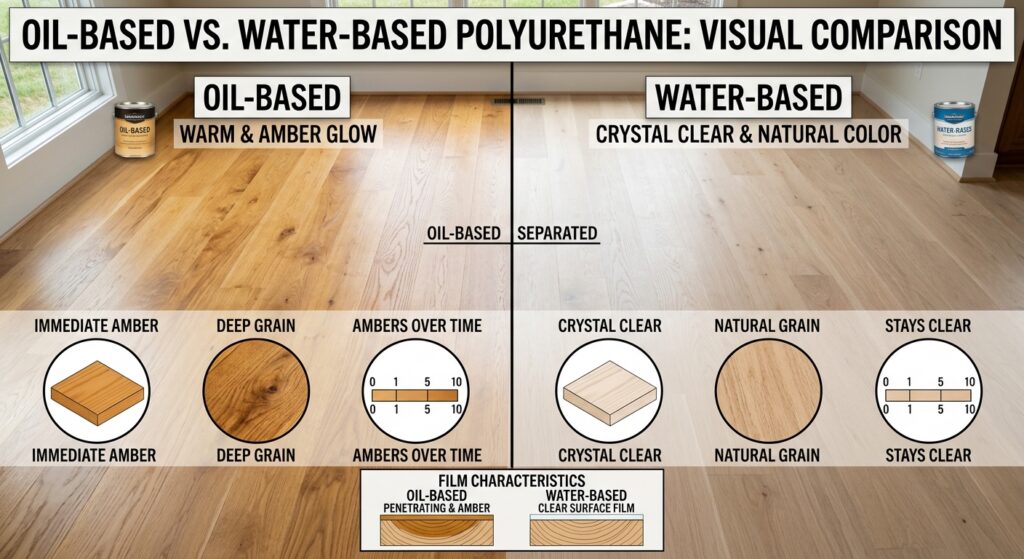
Oil-Based vs Water-Based Polyurethane: Color, Cure Time, and Odor
The quick answerOil-based polyurethane adds a warm amber tone the day it goes on and deepens over the years. Water-based polyurethane dries close to clear and stays that way, so the color you approve is the color you keep. Oil…
Recent Post
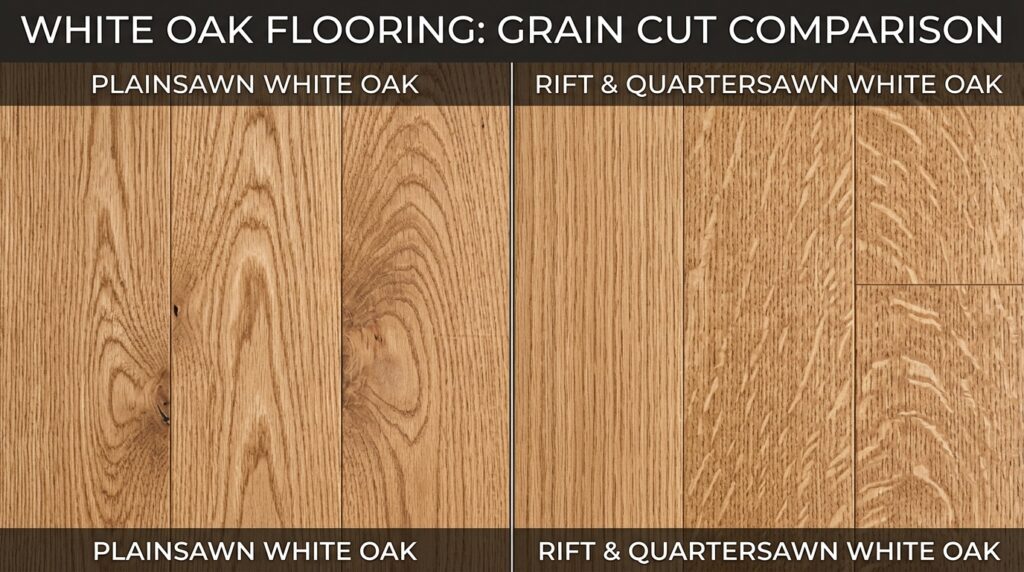
Plainsawn vs Rift and Quartersawn White Oak
The quick answerPlainsawn produces the familiar cathedral arch grain and is the most economical because it yields the most usable plank from a log. Quartersawn produces straight vertical grain with visible ray flecking. Rift produces the straightest, quietest grain of…
Recent Post
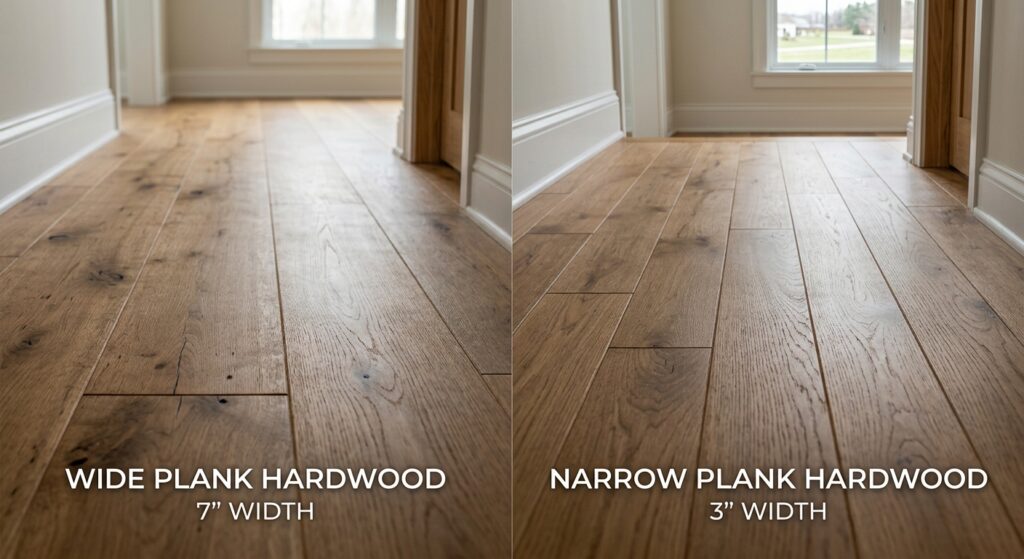
Wide Plank vs. Narrow Plank Hardwood: How Width Changes a Room
The quick answerWide planks make a room feel larger and quieter because they have fewer seam lines across the floor. Narrow planks read as more traditional and detailed, and in solid hardwood, they move less with humidity, which matters in…
Recent Post

Solid vs. Engineered Hardwood in Texas Homes: How to Choose
The quick answerChoose solid hardwood if you want the most refinishing potential, a fully custom on-site finish, and repairs that blend in decades from now. Choose engineered hardwood if you want a wider plank, need to preserve existing door and…
Recent Post

Choosing Flooring for the North Texas Climate
Hardwood flooring's natural materials make it uniquely vulnerable to changes in the climate. This article will help you understand the issues and make the right decision.
Recent Post

Refinishing Solid vs. Engineered Hardwood Floors
The quick answerBoth can be refinished, but not equally. Solid hardwood, typically ¾ inch thick, can usually be refinished five or six times. Engineered hardwood depends on its wear layer: 2mm is too thin to sand, 3mm to 4mm may…