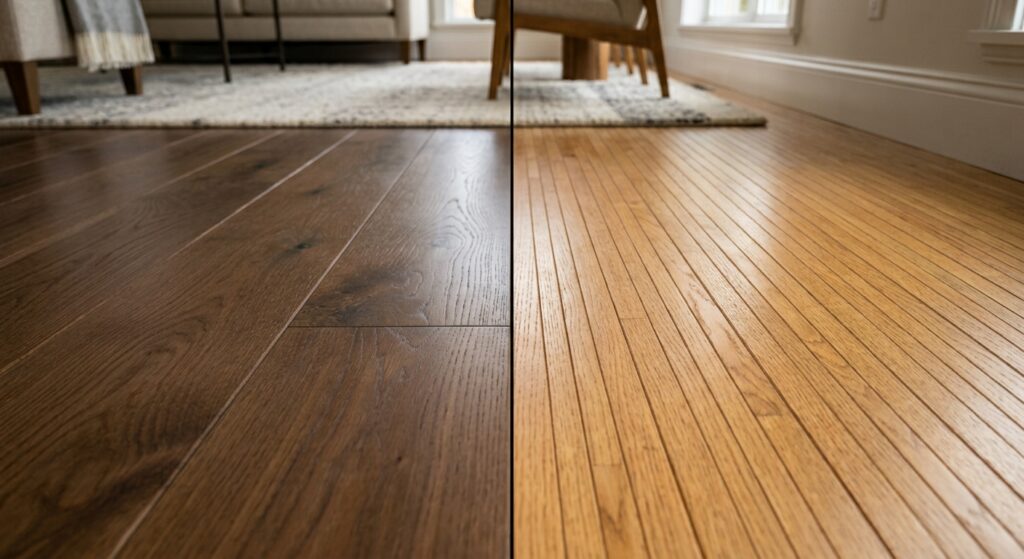
What to Know When Considering Solid Hardwood Floors

The quick answerSolid hardwood is real wood all the way through, typically ¾ inch thick, so it can be sanded and refinished many times, repaired plank by plank, and matched when you extend it into new rooms. Expect a careful process: moisture testing, subfloor preparation, nail-down installation, then sanding, staining, and sealing on site.
Before a solid hardwood project starts, most homeowners want to know the same things: what the process involves, how long it takes, how disruptive it will be, and whether solid is the right choice for their home. This guide answers each one in the order you will run into them.
Why Do Homeowners Choose Solid Hardwood?
Solid hardwood is chosen for the long run. Every plank is a single piece of wood, so the floor can be renewed again and again instead of replaced.
LongevityProperly maintained, it can last for generations. Decades
RefinishingIt can be sanded and refinished multiple times over the years. Renewable
Damage repairDamaged planks are replaced and the floor is refinished to look new. Repairable
Custom styleStained on site and hand-scraped to any degree, smooth to rustic. Custom
MatchingStain and texture can match wood already in your home. Extendable
Home valueA top-of-the-line floor that adds considerable property value. Investment
If you are still weighing it against engineered flooring, our guide to choosing between solid and engineered hardwood for a Texas home walks through plank width, door and cabinet heights, and budget.
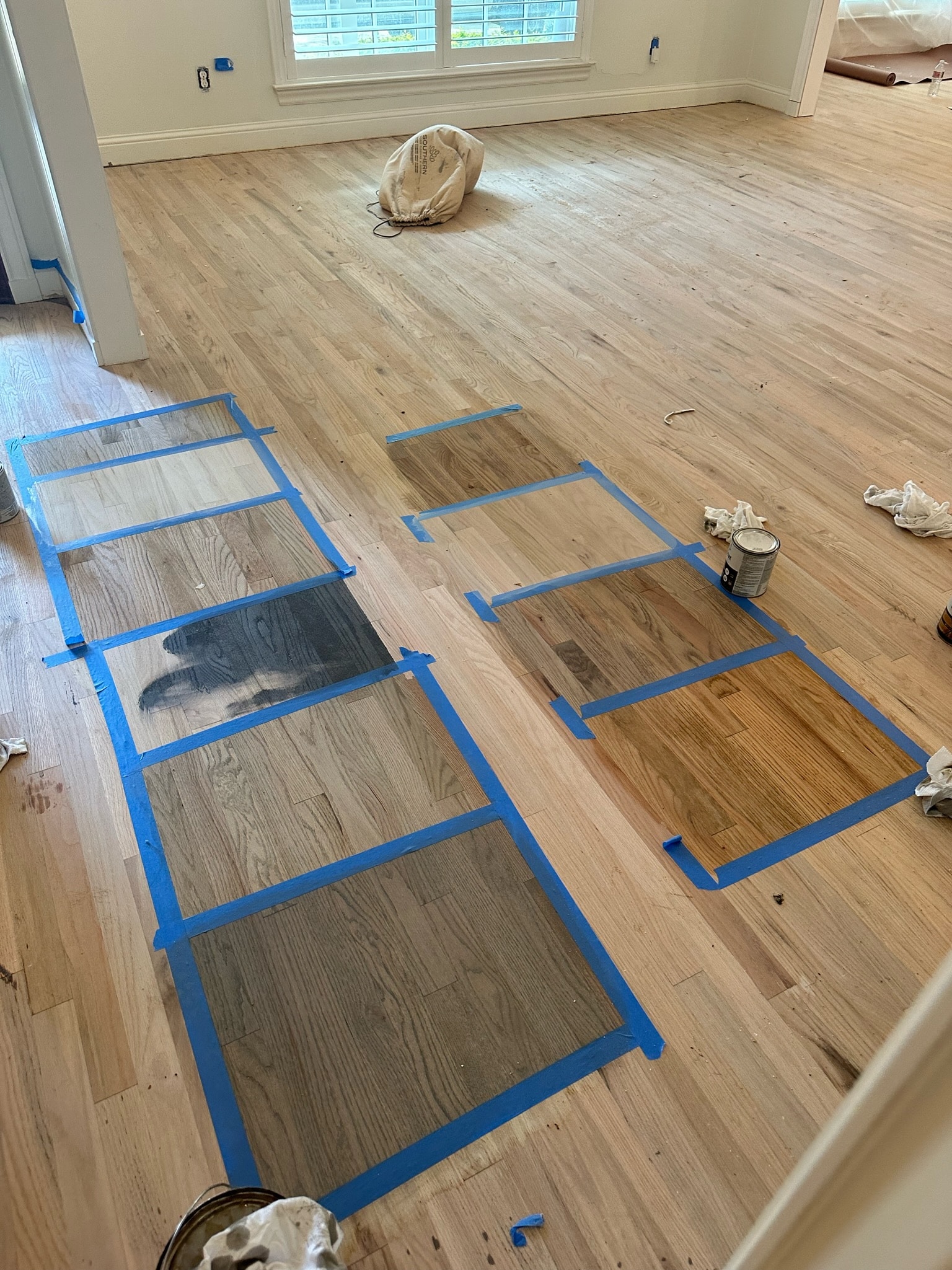
What Choices Shape the Look of a Solid Hardwood Floor?
Species, stain, and sheen get most of the attention, but two other decisions change the feel of a room just as much: how much natural character the wood shows, and how wide the planks are.
Grade decides how many knots, mineral streaks, and color shifts you will see across the floor. A cleaner grade reads calm and formal, while a character grade feels relaxed and rustic. Our article on deciding how many knots you want in your floor shows the range side by side.
Plank width sets the scale. Wider planks make a statement in large rooms, and narrower planks feel more traditional. Solid hardwood performs best in narrower widths in our climate, so compare wide and narrow plank hardwood before you settle on a size.
Planning a solid hardwood floor?
We will walk your rooms, test the subfloor, and help you settle species, grade, and width before anything is ordered.
Can Solid Hardwood Be Extended Into More Rooms?
Yes, and this is one of its biggest advantages. Because solid hardwood is finished on site, the stain and the level of hand scraping can be matched to the wood already in your home. New rooms blend with existing ones for a cohesive look throughout.
Engineered floors are harder to match later, since factory collections and colors change over time. Homeowners planning a solid hardwood installation in Preston Hollow can talk through matching an addition or remodel to original floors during the first walkthrough.
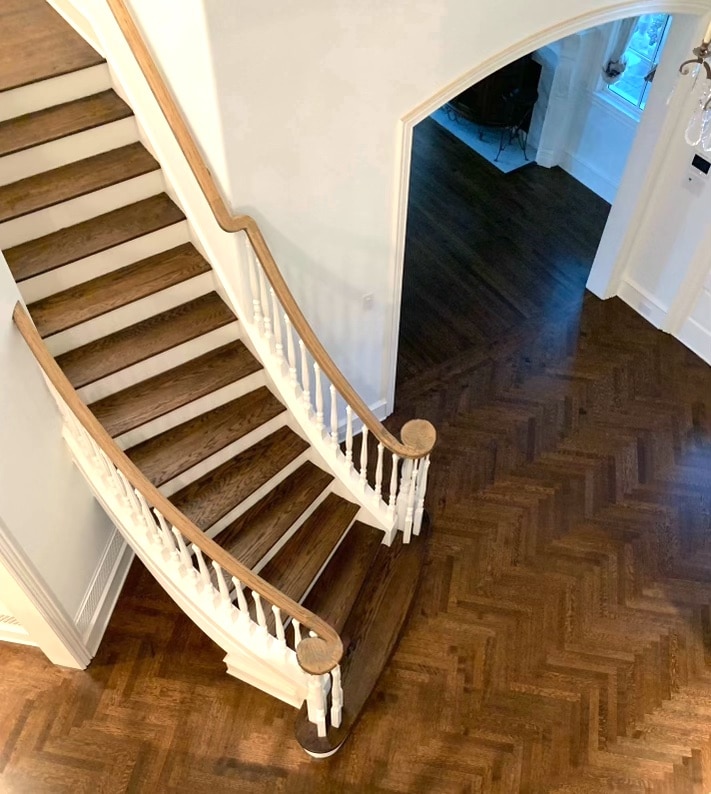
Solid hardwood carried onto the stairs so the whole space reads as one floor.
What Timeline Should You Plan For?
We recommend scheduling three to five days for the first 1,000 square feet and an additional day for every additional 1,000 square feet.
How Is Dust Handled?
Sanding on site creates dust, so we plan for it. We use a dustless sanding system, cover surfaces with plastic, and replace your air conditioning filters when the job is complete. Dust is managed so your home stays clean and comfortable for your family.
How Is Solid Hardwood Installed Over a Concrete Slab?
Solid hardwood can go over a slab with the right preparation. Each layer protects the floor from moisture rising through the concrete.
- Test the slab. The concrete is inspected and tested for moisture, which must be below 4%.
- Lay a moisture barrier. A 6-mil poly sheet goes down to protect against rising moisture.
- Anchor a plywood subfloor. Plywood panels are anchored into the concrete to give the hardwood a solid nailing surface.
- Add a felt layer. Roofing felt over the plywood adds another layer of moisture protection.
- Install the planks. Each plank is nailed through the tongue into the plywood, and the next plank’s groove slides over it.
- Finish on site. The floor is sanded, stained to your chosen color, and sealed with polyurethane for protection and shine.
What About Pier and Beam Homes?
The steps are nearly identical. We check the moisture level of the crawl space and make sure the joists are sound. Proper support and good air circulation underneath are essential for a long-lasting result.
Moisture comes first. Whether your home sits on a slab or a crawl space, the moisture reading decides whether installation can start. A floor installed over excess moisture can buckle or gap later, no matter how well it was nailed.
Why Does Installation Quality Matter So Much?
When shortcuts are taken, homeowners end up dealing with buckling, gaps, or early wear. We have been called in to fix many poorly installed floors. A careful, methodical approach is the only way to do it right.
Our solid hardwood installation service follows the same sequence on every project, carried out by trusted, long-tenured crews we’ve partnered with for years. A senior project manager or one of our owners is involved in every project from the first visit to the final coat.
Ready to compare species and stains in person?
See solid hardwood samples and talk through your rooms with someone who will be involved in your project.
Homeowners planning hardwood floor installation in the Park Cities often want new rooms to match original floors, and on-site staining makes that possible.
50+ yrsof experience behind our team
650samples in our Dallas showroom
On-sitefinishing to match your floor
NWFAmember
Start Your Solid Hardwood Project With a Clear Plan
Schedule a consultation and we will walk your rooms and talk through species, grade, and width for your home. You can also see 650 samples at our appointment-only Dallas showroom.
Frequently Asked Questions
Can solid hardwood be refinished more than once?
Yes. Because each plank is solid wood, the floor can be sanded and refinished multiple times over its life, which is a big part of why it lasts for generations.
Can a damaged area of solid hardwood be repaired?
Yes. Damaged planks can be replaced, and the floor can be refinished so the repaired area looks like the rest of the room.
Can new solid hardwood match the floors I already have?
Usually, yes. The stain and the level of hand scraping are applied on site, so both can be matched to existing hardwood in your home.
Can solid hardwood go over a concrete slab?
Yes, with the right preparation. The slab is moisture tested, then covered with a moisture barrier, an anchored plywood subfloor, and a felt layer before the planks are nailed in.