Refinishing Solid vs. Engineered Hardwood Floors

The quick answerBoth can be refinished, but not equally. Solid hardwood, typically ¾ inch thick, can usually be refinished five or six times. Engineered hardwood depends on its wear layer: 2mm is too thin to sand, 3mm to 4mm may allow one careful refinish, and 5mm or more is made to be refinished at least once.
Solid and engineered hardwood are two of the most popular floors in Texas homes, and both are real wood. One of the first questions homeowners ask about either is how long it will last. A big part of that answer is whether the floor can be refinished when it gets worn, and how many times.
What Does Refinishing a Hardwood Floor Involve?
Refinishing restores the look of a floor that has become faded, scratched, or dull. The floor is sanded to remove the old finish and surface wear, damage and imperfections are filled with wood filler, stain is applied if you want a new color, and then three to four coats of protective finish go on.
Not every floor can be refinished. Luxury vinyl plank, for example, is highly resistant to damage but cannot be sanded at all. For real wood floors, the deciding factor is how much wood sits above the core. Our hardwood floor refinishing team checks that before any sander touches the floor.
How Many Times Can Solid Hardwood Be Refinished?
Solid hardwood is made from a single piece of natural wood, and it is thick, which gives you a lot to work with. Refinishing is considered a standard part of maintaining a solid hardwood floor.
At a typical thickness of ¾ inch, solid hardwood can be refinished multiple times without losing the heart of the wood. Expect up to five or six refinishes before the floor needs replacing. Always have a professional do the work, since over-sanding removes wood you can never get back.
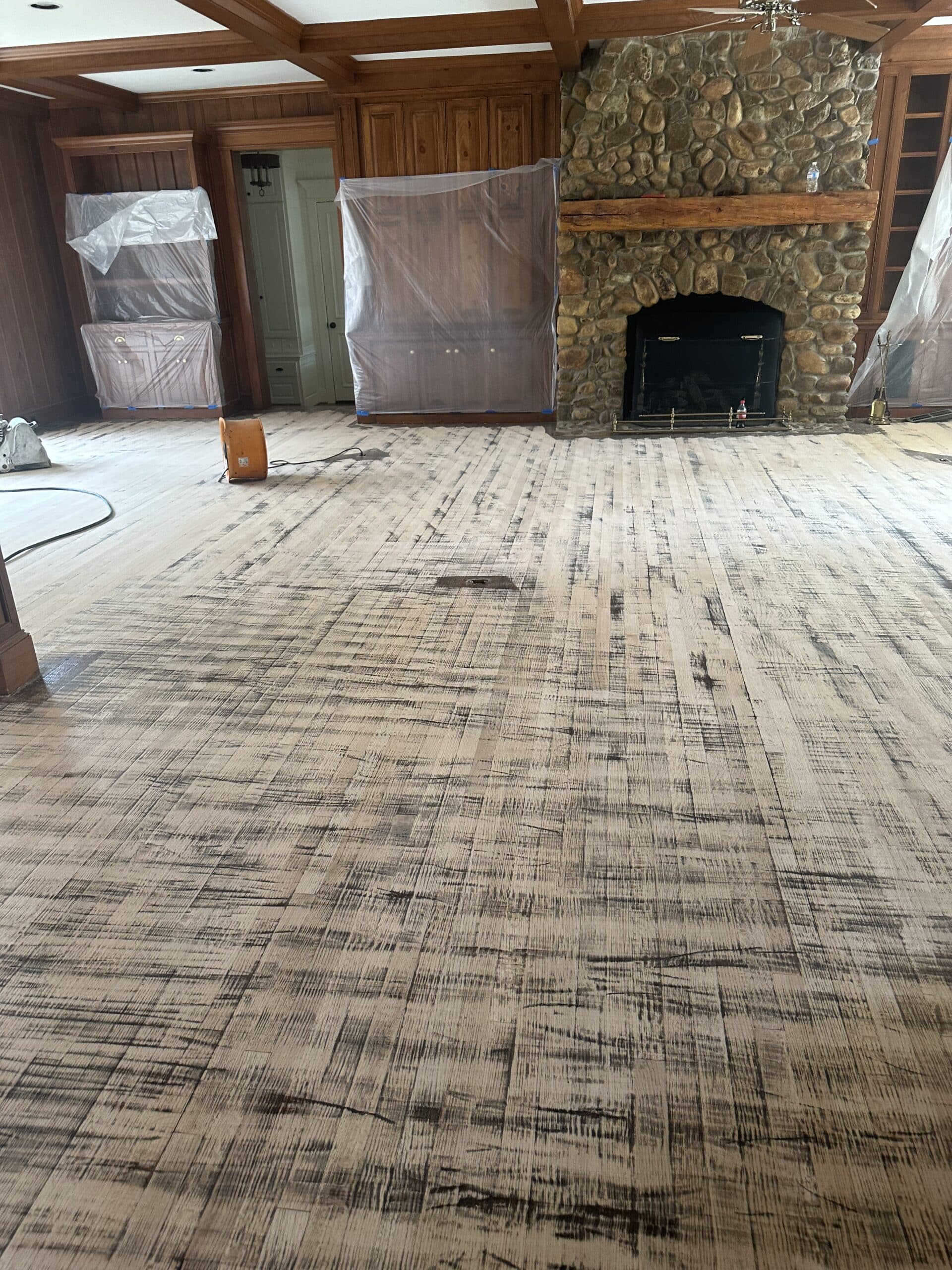

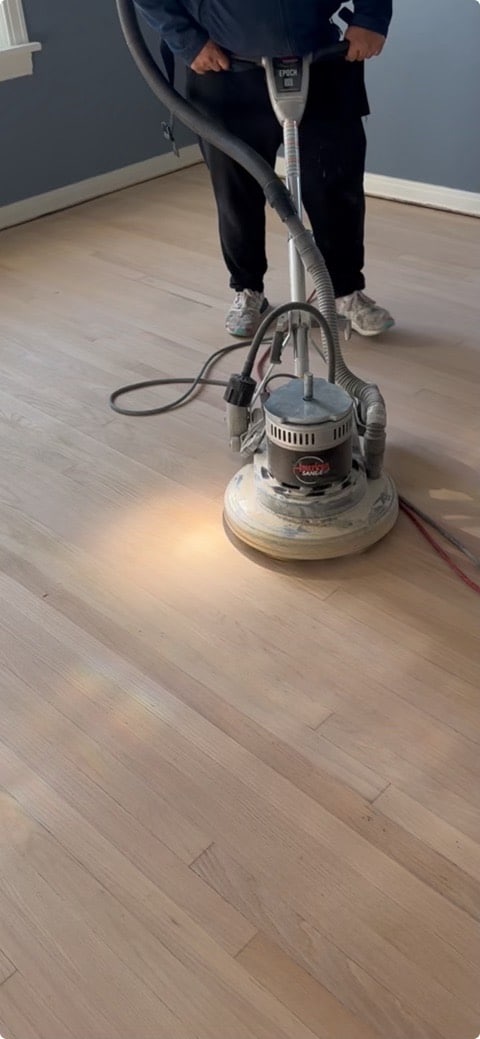
Solid hardwood refinishing, steps one to three: initial sanding, sanded and ready for stain, refinishing in progress.
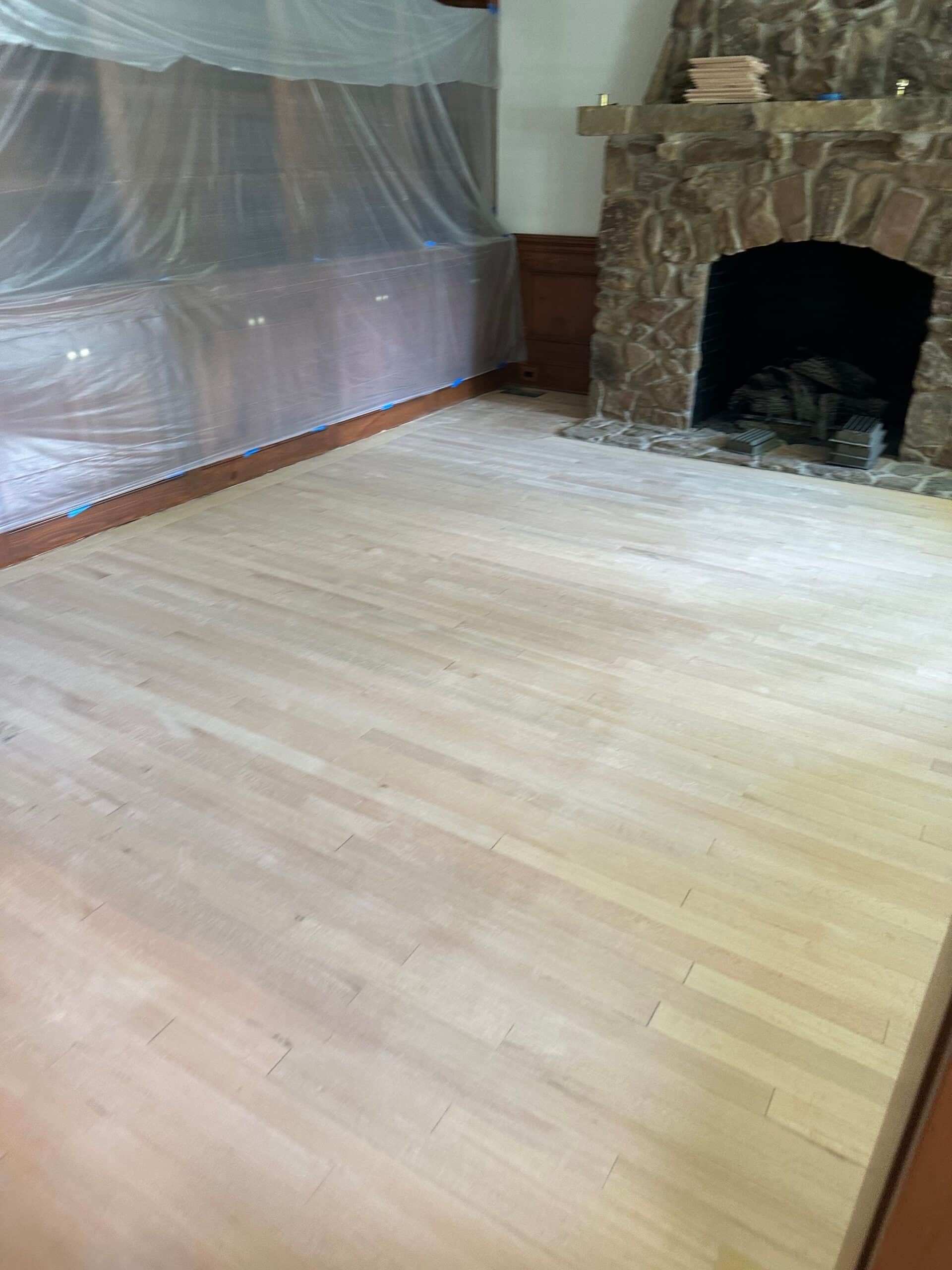

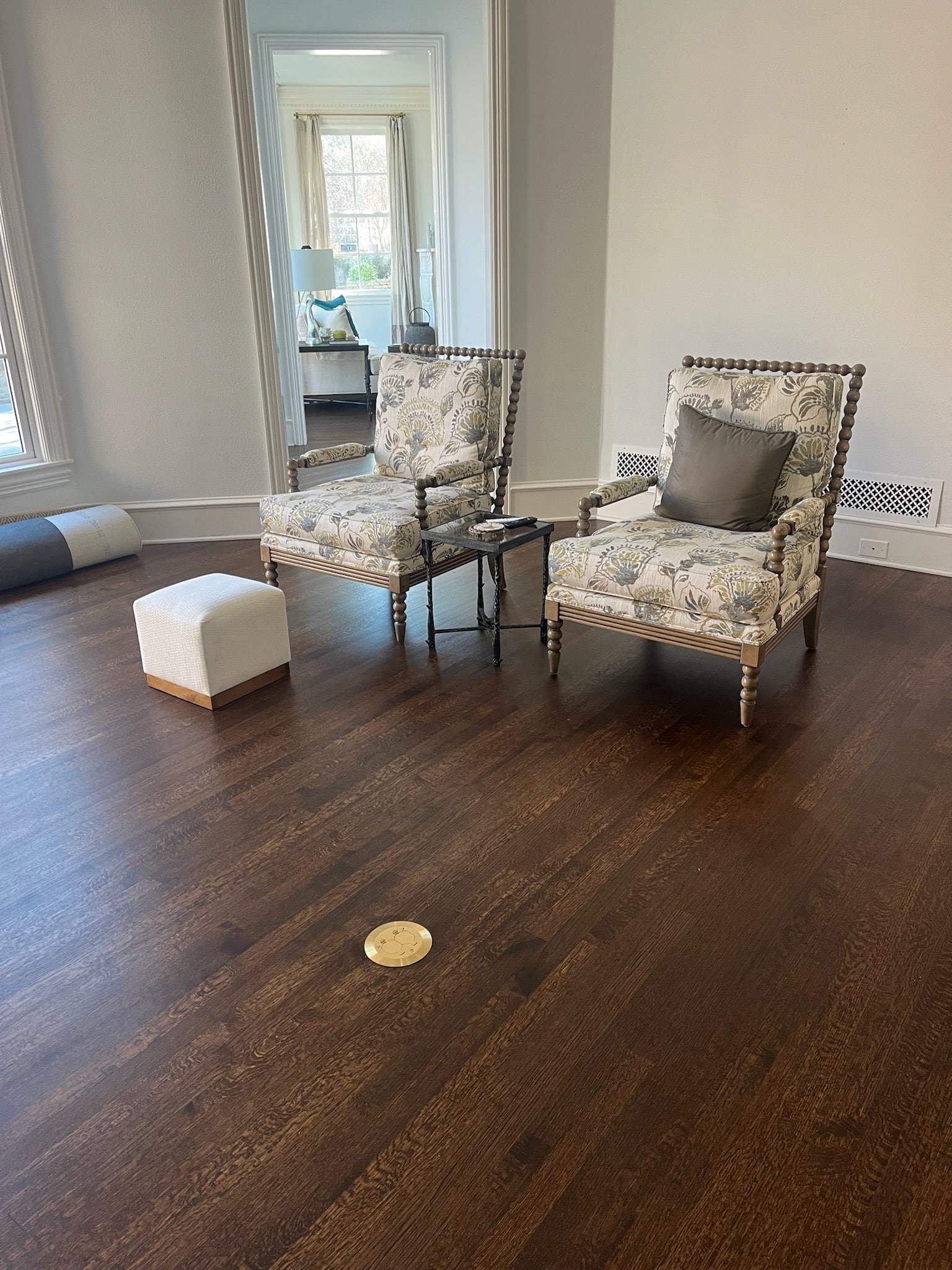
Steps four to six: sanding completed, stain samples on site, and the finished solid floor.
Solid or engineered, can your floor be sanded?
We confirm what your floor is made of and how much wood is left before recommending a refinish.
Can Engineered Hardwood Be Refinished?
Sometimes. Engineered hardwood is still real wood, but it is built from a thin real wood veneer over a plywood or HDF core. That veneer is usually only a few millimeters thick, though some higher-end engineered floors have as much as 6mm.
Because the top layer is thin, refinishing engineered hardwood is more difficult and riskier than refinishing solid. Whether it is possible depends entirely on the thickness of the veneer, which is why our guide to engineered flooring thickness and wear layers is worth reading before you buy or sand.
| Wear layer | Refinishing outlook |
|---|---|
| 2mm | Do not refinish. It is too thin. |
| 3mm to 4mm | Can potentially be refinished once, with some risk. |
| 5mm or more | Made to be refinished once. Some can be refinished a second time with expert guidance. |
The process is otherwise the same as for solid hardwood, but it calls for much more care, because any unnecessary sanding can cause damage that cannot be undone. Have your flooring company confirm the veneer thickness before any refinishing starts.
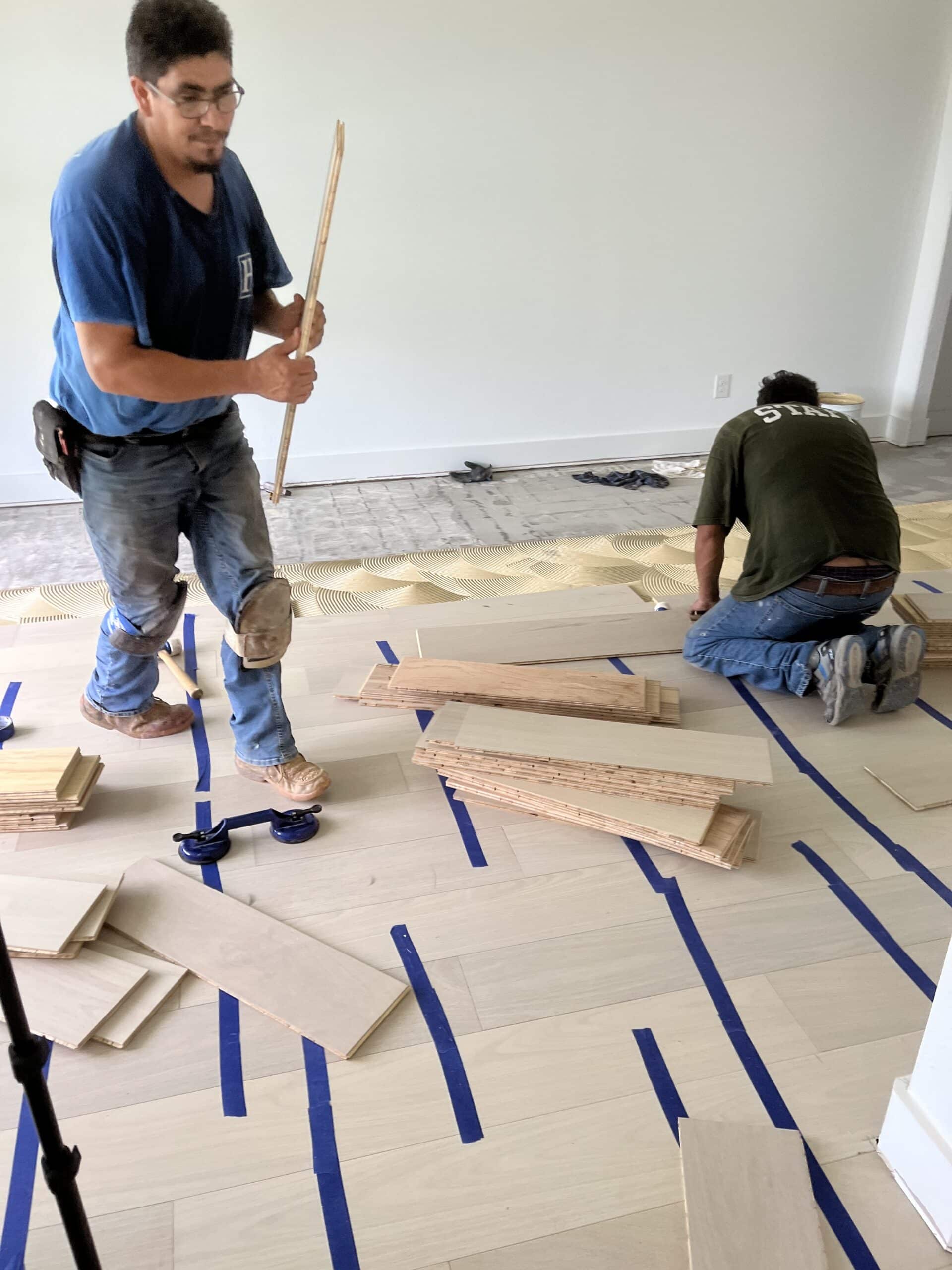
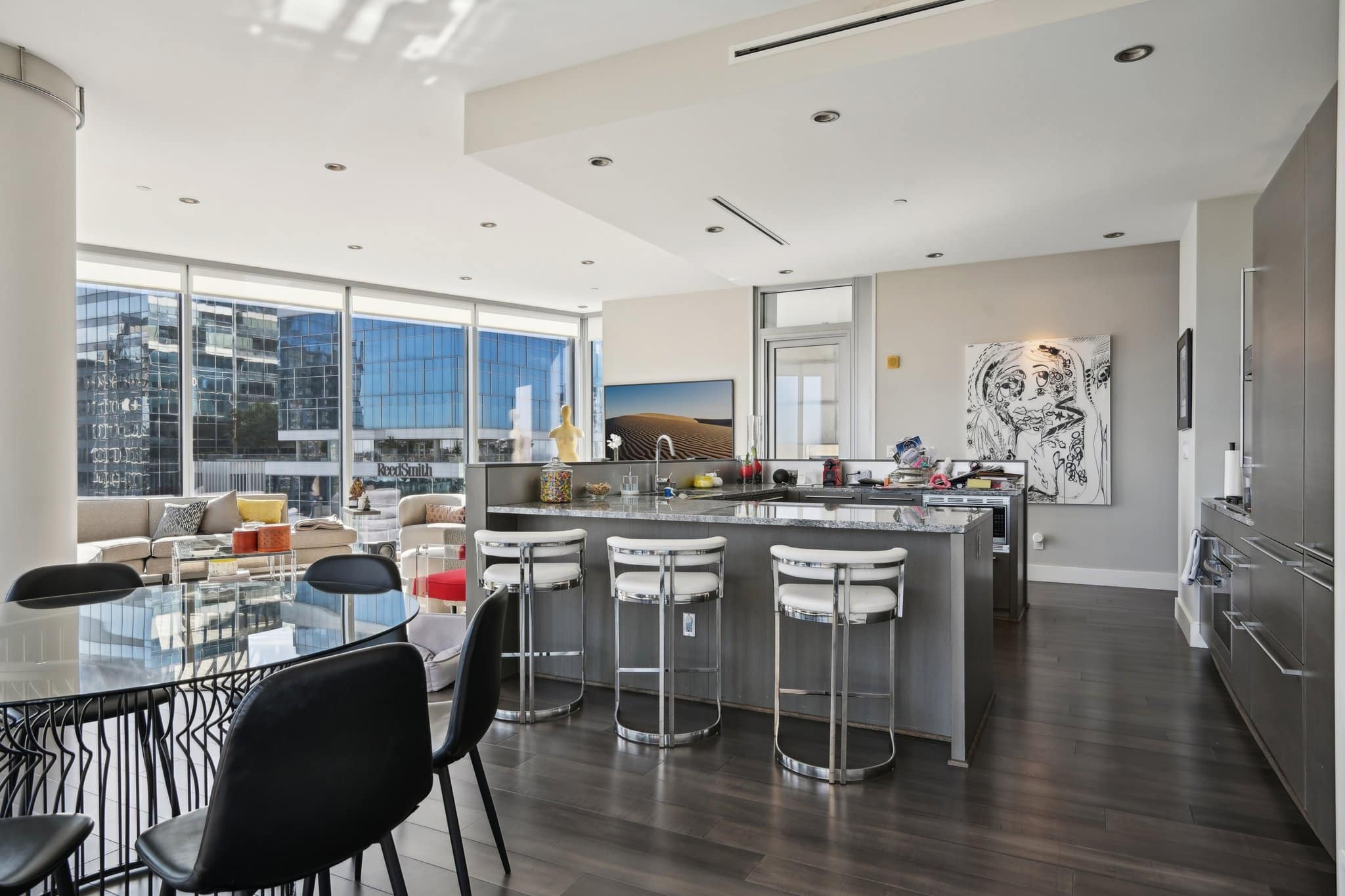
Engineered hardwood, steps one to four: setting up, installation, refinishing, and the completed floor.
Do not guess at the wear layer. A floor that looks like solid hardwood may be engineered. Sanding the wrong floor too aggressively can burn through the veneer, and at that point the only fix is replacement.
What If an Engineered Floor Has Water Damage?
Water adds another variable. Swelling or delamination in the core can rule out sanding even when the veneer is thick enough. Whether a wet floor can be dried and refinished, or needs sections replaced, depends on how long the water sat and what the moisture readings show. We cover that in detail in whether engineered hardwood can be saved after water damage.
Should You Choose Solid or Engineered for Your Next Floor?
If you are choosing a new floor, refinishing potential is one consideration, but it is not the only one. The deciding factors between solid and engineered are usually plank width, door and cabinet heights, and budget. Our comparison of solid and engineered hardwood for Texas homes walks through each of those in detail.
Planning a floor you can refinish for decades?
Compare solid and engineered samples with us and see which construction suits your rooms and plans.
50+ yrsof experience behind our team
650samples in our Dallas showroom
On-sitefinishing to match your floor
NWFAmember
Get a Refinishing Plan for Your Floor
Hardwood can last for decades when it is properly maintained. That is true of solid hardwood and of higher-end engineered floors with enough wear layer left. Call us to find out what your floor can handle.
Frequently Asked Questions
How thick is solid hardwood flooring?
Solid hardwood is typically ¾ inch thick, which is why it can be sanded and refinished many times over its life.
Can a 2mm engineered floor be sanded?
No. A 2mm wear layer is too thin to refinish safely. Damaged sections are replaced instead.
Can engineered hardwood be refinished more than once?
Some engineered floors with a 5mm or thicker wear layer can be refinished a second time. Have an expert you trust measure the veneer and explain the risks first.
Can luxury vinyl plank be refinished?
No. LVP resists damage well, but it cannot be sanded or refinished. Worn or damaged planks are replaced.