Red Oak vs. White Oak Flooring: Color, Hardness, and Stain Behavior
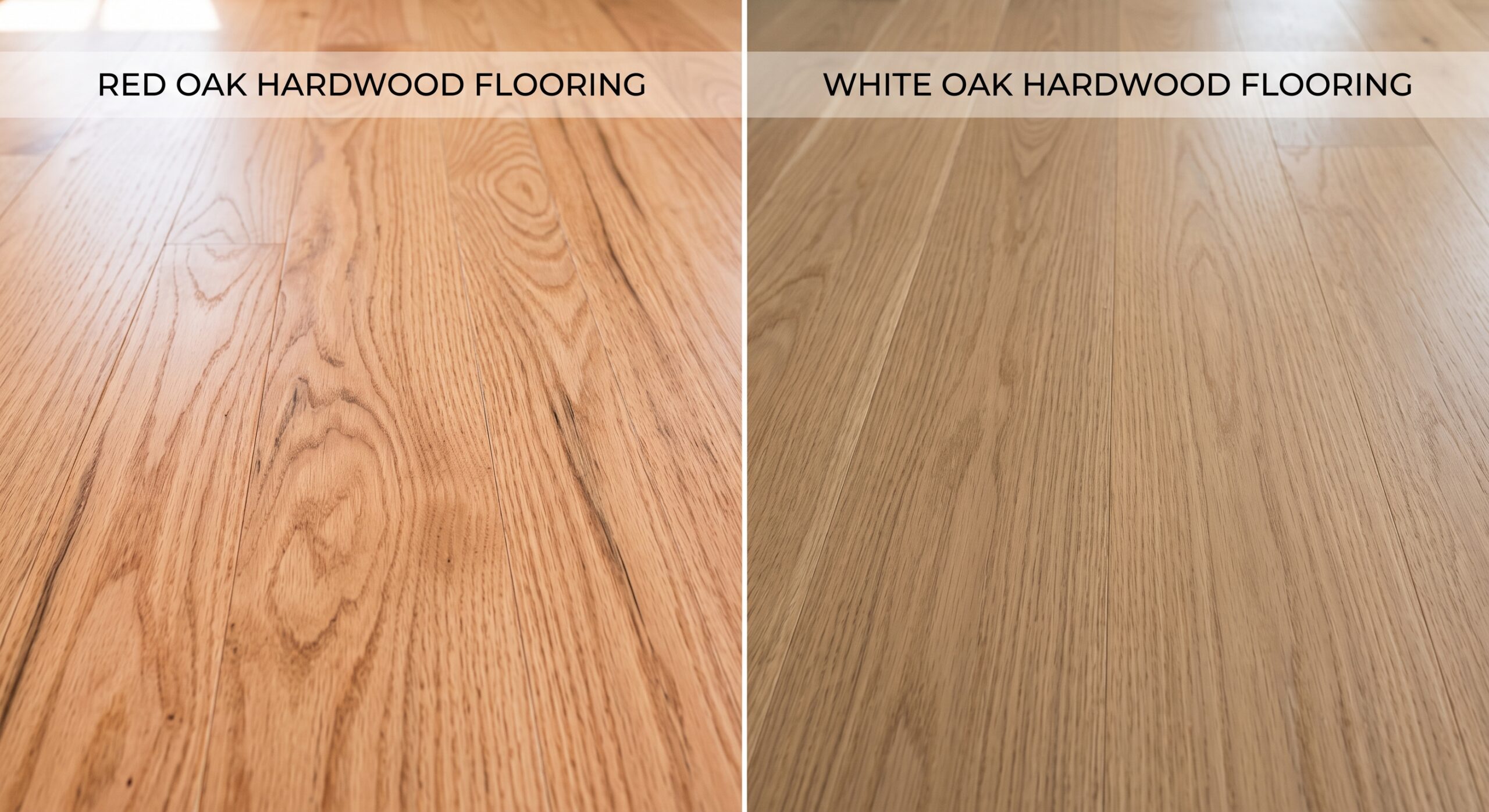
The quick answerWhite oak is slightly harder than red oak, but hardness is not the difference that will affect your project. Color is. Red oak carries a pink and amber undertone with an open, busy grain, and that undertone pushes through most stains, particularly cool greys and light naturals.
White oak runs browner and greyer with a tighter, straighter grain, and it accepts modern stain colors far more predictably. In DFW, red oak is what is already in most homes built before the mid 2000s, and white oak is what most homeowners are choosing today.
Is White Oak Harder Than Red Oak?
Red oak measures about 1290 on the Janka scale and white oak about 1360, a difference of roughly five percent that you will not perceive in a house. Both refinish the same way and take multiple refinishes over the life of a home.
What actually protects a floor from damage is the finish on top of it, the household walking across it, and whether felt pads make it under the furniture. A well-maintained red oak floor in a busy home will outperform a neglected white oak floor every time. If durability is your main concern, species is close to the least important variable, and how often the floor is sanded and refinished over the decades you own the house will do far more for it than the extra seventy points on the Janka scale.
How Do Red Oak and White Oak Grain and Pores Differ?
Red oak has open pores and long, pronounced grain rays, and you can feel the texture on an unfinished plank. White oak has the same general pattern, but the pores are largely blocked by tyloses, natural growths that plug the vessels. That is why white oak was chosen for whiskey barrels, and why it tolerates a spill left sitting slightly better than red oak. Neither is waterproof.
Red oak runs pink and busy; white oak runs browner and calmer.
Visually, red oak reads as busier and more rustic, while white oak reads calmer and more linear, which is part of why it suits the cleaner interiors people are building now. Red oak has one practical advantage that rarely gets mentioned: the busier grain forgives small imperfections in sanding, where white oak shows every drum mark and edger swirl. White oak also costs more, and the gap widens in wide plank and rift cuts where more log is wasted per plank. Our comparison of plainsawn, rift, and quartersawn white oak shows how each cut changes the look.
Why Do Grey Stains Fail on Red Oak Floors?
Red oak has a pink-to-salmon undertone in the raw wood, and stain sits in and on the wood rather than replacing its color, so that undertone stays present under whatever you apply. With warm colors and medium browns, it is an asset, giving the floor depth.

Testing stain on the actual floor shows how the undertone behaves.
With cool colors, it fights you. Apply a grey stain to red oak, and the pink underneath turns the result mauve rather than the clean greige on the sample chip; light washed naturals pick up a blush across the whole floor. Homeowners routinely discover this after the floor is stained, which is the worst possible time.
There are ways to manage it. A toner or reactive product can neutralize much of the undertone, and wire brushing changes how color settles into the grain. All of it adds cost, and none of it turns red oak into white oak.
The reliable way to know what you are going to get is to test on the actual floor. Applying the stain and finish to the wood in your home rather than buying a factory color is what makes that possible, because sample sections go down on your real planks and you approve the result before the whole floor commits to it. A chip finished on a different species tells you almost nothing about how your red oak will behave.
The same process solves a second problem people notice only after the fact. A floor finished in place has no beveled edge between planks, so the surface reads as one continuous plane instead of a field of individual planks, and the finish seals the seams rather than stopping at them.
Want a grey floor over red oak?
We will sample stains on your own floor so you see how the undertone behaves before the whole floor is stained.
Which Oak Is Probably Already in Your Dallas Home?
Knowing what is under your carpet is often the fastest way to narrow the decision.
- Homes built before roughly 2005 across DFW are overwhelmingly red oak, usually in 2 1/4 inch strip. That covers most of Richardson, older Plano, Carrollton, and the established parts of Garland and Mesquite. Homeowners planning hardwood floor installation in an older Carrollton home will often find red oak strip already under the carpet.
- Lakewood, the M Streets, and older East Dallas run to narrow strip red oak, or quartersawn white oak in the better built houses. The wood in these Lakewood homes is old growth, with a thicker wear surface than anything milled today, so restoring beats replacing.
- Highland Park and University Park have some of the finest original floors in the city, quartersawn white oak in the 1920s and 1930s houses. Many of these Park Cities floors are on their third or fourth refinish and still have decades left.
- Newer custom construction in Frisco, Prosper, and Southlake is where wide plank white oak dominates, frequently rift and quartersawn, frequently in a natural or very light finish.
If you have red oak and want a cool grey, the species question is already answered, and the real decision is whether to work with the undertone or against it. That is worth understanding before the sander arrives, because what a full sand and refinish involves is not something you want to repeat because the color came out wrong. Across Dallas proper and out into Frisco, that single conversation resolves more projects than any other.
Can You Match or Extend an Existing Oak Floor?
If you have red oak and are adding hardwood to an adjoining space, installing white oak there is almost always a mistake, and the difference will be most obvious at the threshold between the two rooms. The better approach is to install the same species, lace the new planks into the existing floor, and sand and finish everything together so the seam disappears. A factory-finished product cannot be blended into an existing floor after the fact. If you are planning hardwood floor installation in The Colony next to an existing red oak floor, staying with the same species is the safer choice.
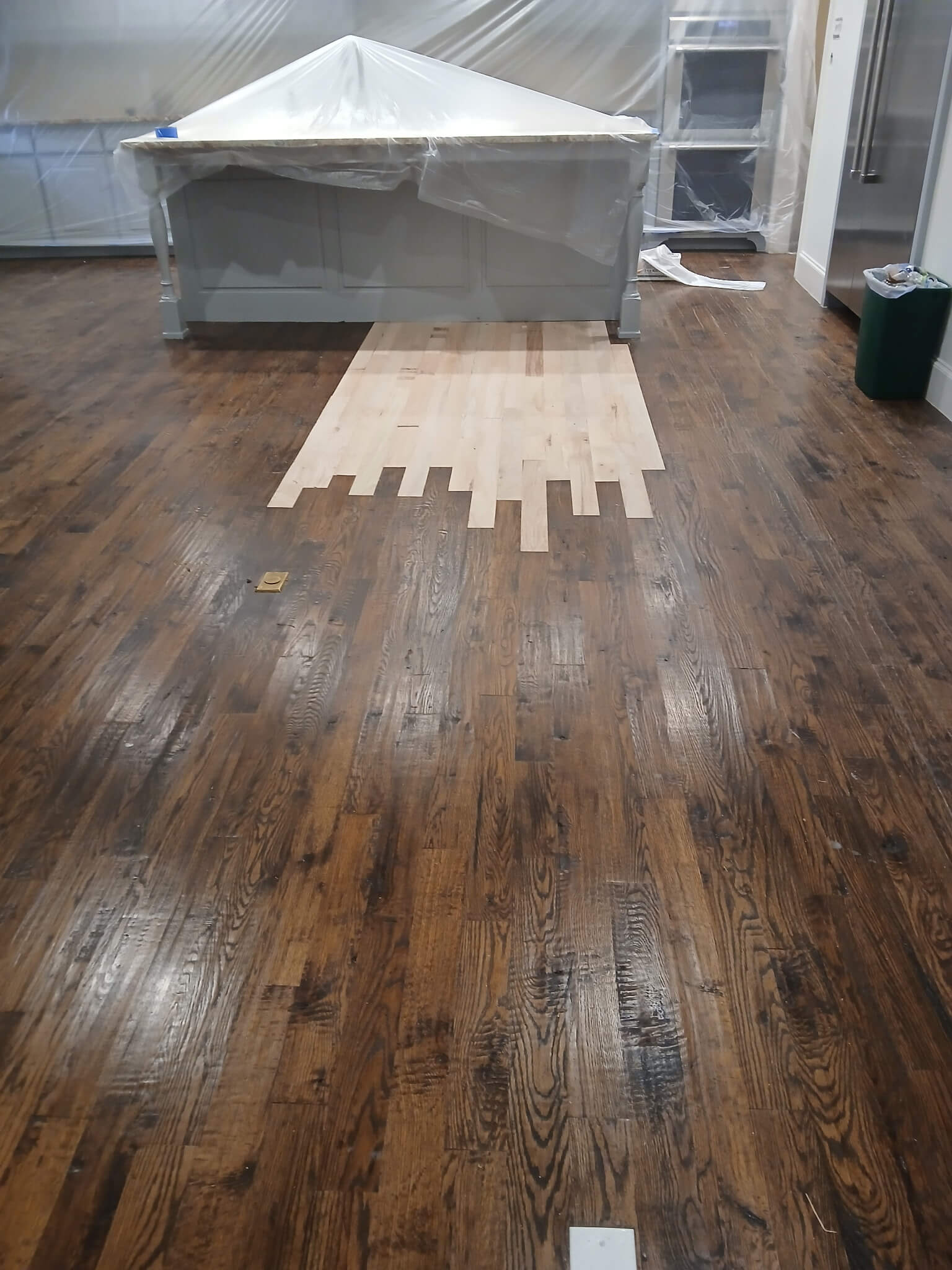
New sections laced into an existing floor so the seams disappear.
Where the existing floor is damaged rather than simply dated, pulling the bad planks and lacing in replacements keeps the original species in place and avoids introducing a second one entirely. Whether a floor needs care, repair, or replacement is usually obvious in person and almost never obvious in photographs, which is why we look before we quote.
How Do Red Oak and White Oak Compare Side by Side?
| Factor | Red Oak | White Oak |
|---|---|---|
| Janka hardness | About 1290 | About 1360 |
| Undertone | Pink to amber, warm | Brown to grey, cool to neutral |
| Grain | Open, busy, pronounced rays | Tighter, straighter, calmer |
| Pore structure | Open pores | Pores largely blocked by tyloses |
| Water resistance | Lower | Better, though not waterproof |
| Cool and grey stains | Difficult, undertone shows through | Predictable and clean |
| Warm and medium browns | Excellent, undertone adds depth | Very good |
| Hides sanding imperfections | Better, busy grain forgives more | Less, uniform surface shows technique |
| Relative cost | Lower, widely available | Higher, more so in wide plank and rift cuts |
| Common in DFW | Most homes built before the mid 2000s | Older Park Cities homes and newer custom builds |
Red oak or white oak for your house?
We will identify what is already down and show you both species under your own light before you decide.
Why Should Species and Stain Be Decided Together?
Species and stain get decided together, not separately, because the species determines what the stain will actually do. The 650 floor and stain samples in our appointment-only Dallas showroom on Irving Boulevard include a room built specifically for solid hardwood stain matching, which exists because comparing a red oak sample to a white oak sample under the wrong light produces exactly the wrong decision.
Texture belongs in the same conversation. A hand-scraped or wire-brushed surface changes how deeply stain settles into the open grain of red oak, which can work in your favor when you are fighting an undertone. Width and grade shift the result too, and the oak we stock in each width and cut is worth seeing before you settle on a species. Grade is its own decision, and our guide to how much knot character suits your floor walks through it.
Let the Undertone Decide
Hardness will not settle this, and neither will a catalog. The undertone in the wood, whether it is already down or still at the mill, is what determines if the color you picked is the color you get. Call (214) 399-1770 or schedule a consultation, and we will identify the species you have and sample stains on your own floor so you see the real result before anything is committed.
Frequently Asked Questions
Can you stain red oak to look like white oak?
You can move it closer, not eliminate it. A toner or reactive product neutralizes much of the pink, and wire brushing changes how color settles into the grain. The result can be very good, but it will not be identical to white oak finished the same way.
Which oak is better if we have large dogs?
The species difference is too small to matter. Finish, sheen, and texture matter far more, and a matte finish over a brushed surface hides scratches dramatically better than gloss over smooth. Keeping nails trimmed does more for the floor than this choice ever will.
I have red oak downstairs. Can I put white oak upstairs?
Yes, if the two floors are never seen at the same time and there is a clear visual break such as a carpeted stair run or a landing. If the staircase is hardwood and connects the two, the difference will be noticeable at the transition. In that situation, we usually recommend staying with one species and using stain color to differentiate the spaces if you want them to feel distinct.
Is white oak worth the extra cost?
It is if you want a cool-toned or light finish, because achieving that on red oak costs money too and the result is less reliable. It is if you want wide planks, because white oak is where the selection is. If you are going with a warm medium brown in a traditional width, red oak will give you a beautiful floor, and the premium is harder to justify.