3/8″ vs. 1/2″ vs. 5/8″ Engineered Flooring Thickness: What Difference Does It Make?
The quick answerEngineered hardwood thickness determines how your new floor meets doors, cabinets, and existing flooring, and which installation methods a manufacturer approves. It does not determine how many times the floor can be refinished. The wear layer governs that, and it is measured separately.
A 5/8 inch plank with a 2 mm wear layer and a 1/2 inch plank with a 4 mm wear layer are not equal, even though the first is the thicker plank: floors with thin wear layers are not typically candidates for refinishing. Any unevenness in the floor, however slight, or beveled edges between the planks are the two most common reasons these floors cannot safely be refinished.
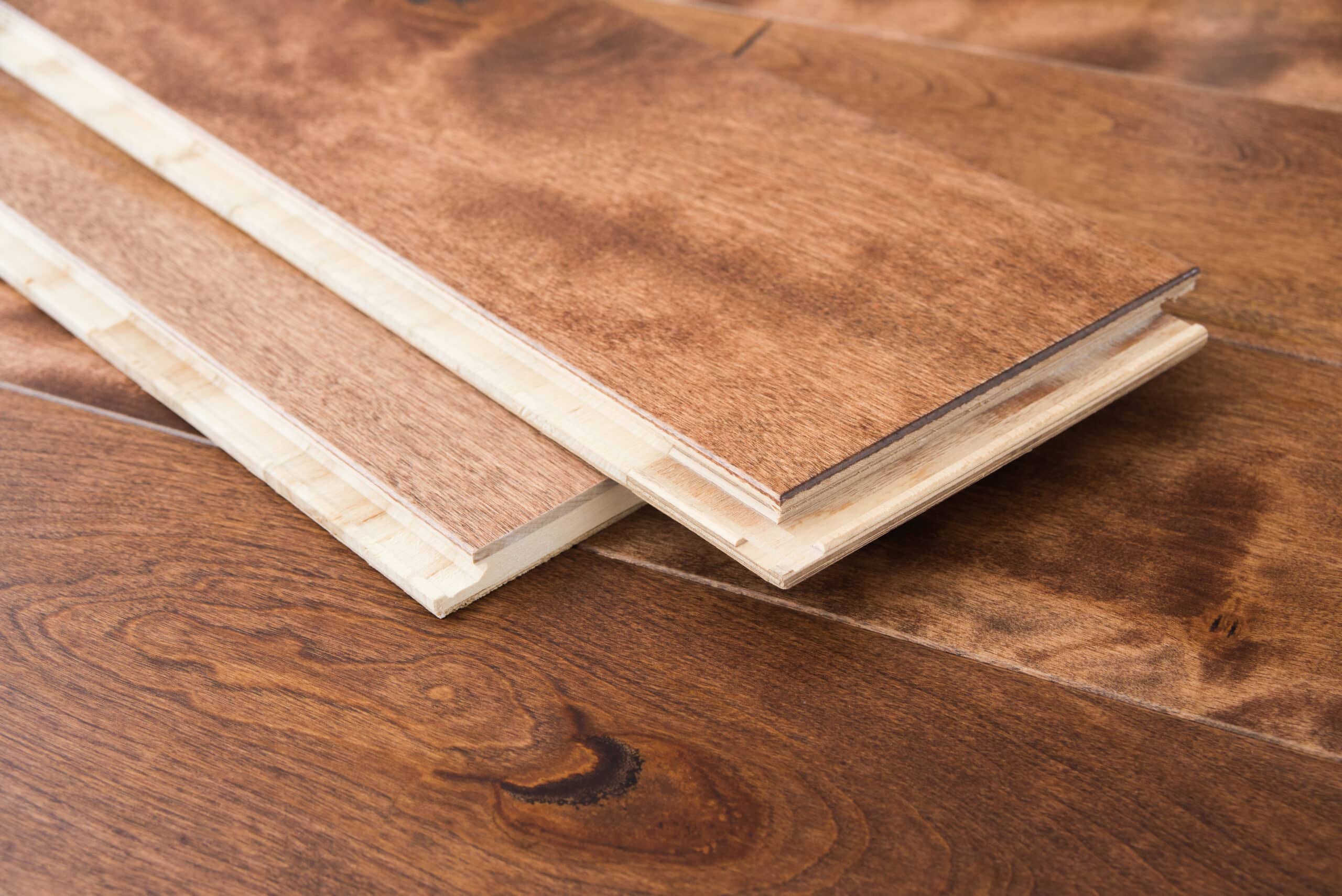
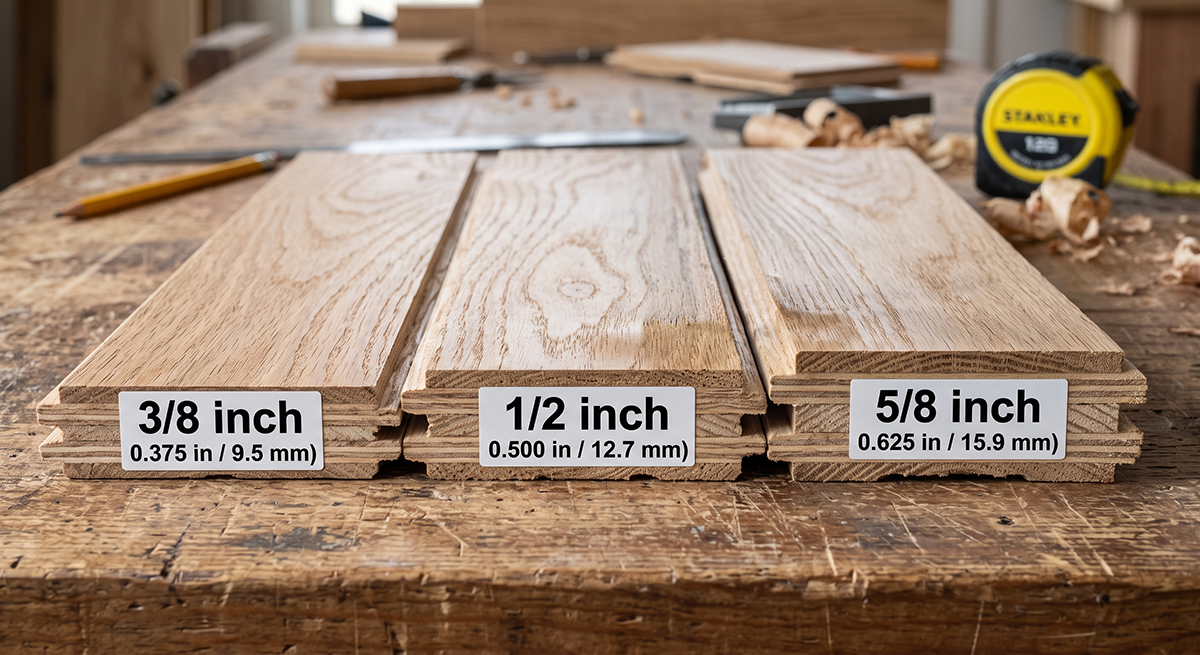
Overall thickness and wear layer are two different measurements on the same plank.
Is Engineered Flooring Thickness the Number That Matters Most?
Engineered hardwood is built in layers. A real hardwood veneer sits on a core of cross-laid plywood or high-density fiberboard, and when a product is described as 1/2 inch engineered, that figure covers the whole sandwich. The veneer is the part you walk on and the only part that can be sanded. It has its own measurement in millimeters, usually between 1 mm and 6 mm, and that number determines whether the floor can ever be refinished.
The two measurements are related, but they’re not locked together. Thicker planks tend to carry thicker veneers because there is more room for them, but a manufacturer can put a thin veneer on a thick core to hit a price point. If a sales sheet gives you overall thickness and stays quiet about wear layer, that silence is usually telling you something. A veneer under 2 mm generally cannot be sanded at all, while 4 mm and above may support one or more refinishes, so how many refinishes a wear layer will actually support is the number to settle before you compare prices.
3/8 Inch Engineered Hardwood, Roughly 10 mm
This is the thinnest engineered format in common use, and it is built for situations where height is the constraint.
- Typical wear layer: 0.6 mm to 2 mm. At the low end of that range, the floor is typically not a refinishing candidate at all.
- Usual installation: glue down or float. Some products accept staples over a plywood subfloor with the correct fastener, but many do not, and using the wrong one voids the warranty.
- Where it earns its place: remodels where a new floor has to slide under existing cabinetry, meet an existing tile height, or preserve door clearances that cannot be changed.
The trade-off is longevity. A 3/8 inch floor with a thin veneer gets replaced rather than renewed, which can be the right call in a space you expect to redo anyway, provided you know that going in.
1/2 Inch Engineered Hardwood, Roughly 12 to 13 mm
This is the most common thickness available, and for good reason. It sits close enough to the 3/4 inch height of solid hardwood that transitions stay manageable, and it is thick enough that most manufacturers approve all three installation methods.
- Typical wear layer: 2 mm to 4 mm, which generally translates to one to three refinishes over the life of the floor.
- Usual installation: nail or staple over a wood subfloor, glue down, or float, depending on the product and the substrate.
- Where it earns its place: most whole-home projects, and almost any situation where you want real wood with wide plank options and do not have an unusual height restriction.
At this thickness, the wear layer is where the meaningful differences hide. Two floors at the same overall thickness and similar price can carry a 2 mm and a 4 mm veneer, and the second is a materially different long-term proposition.
Not sure what your house can take?
We measure doors, cabinets, and transitions first, then show you which thickness and wear layer fit.
5/8 Inch Engineered Hardwood, Roughly 15 to 16 mm
At 5/8 inch, you’re approaching solid hardwood territory in both height and feel.
- Typical wear layer: 3 mm to 6 mm, may support multiple refinishes and puts the floor within reach of custom on-site finishing.
- Usual installation: nails and staples hold extremely well at this thickness over a wood subfloor. Glue down and float are usually approved by the manufacturer as well.
- Where it earns its place: wide plank installations, homes where the floor needs to last decades rather than years, and projects where you want the option to change the color later.
A 5/8 inch engineered plank with a 4 mm or thicker veneer can usually be sanded and stained in your home, which is what makes staining and finishing the wood on site possible on an engineered floor.
You’ll also see 3/4 inch engineered, which is uncommon and priced as a specialty product. At that height, the reasons to choose engineered over solid hardwood narrow to plank width, because the height advantage has gone. Engineered flooring is typically recommended for plank widths of 5 inches or more.
How Does Floor Thickness Affect Doors, Cabinets, and Transitions?
Thickness stops being an abstraction the moment installation begins, and it surfaces in four places.
- Interior doors: Every fraction you add comes off the gap under the door. A hollow core door in a 2015 build trims easily. The original solid doors in a 1930s Lakewood or Park Cities home are period millwork nobody wants to cut twice.
- Cabinets and appliances: In a kitchen with cabinetry already in, floor height decides whether the dishwasher can still come out for service. Toe kick clearance is unforgiving, and finding out afterward is expensive. If you are planning hardwood floor installation in a Carrollton kitchen, have that clearance measured before you choose a thickness.
- Transitions to tile: Matching the new wood to existing tile height produces a flush joint. A large difference means a reducer strip, which reads as a compromise in a formal space. Homeowners planning hardwood floor installation in The Colony next to existing tile should settle that height first.
- Stair nosings: Stairs magnify small differences, and unexpected height at the top of a run throws off the rise of the first step. We work that math before the product is ordered.
Why Do Some Engineered Floors Sound Hollow?
Thicker planks feel more solid underfoot, partly from the material and partly from the installation method thickness makes available. A floating floor rests on underlayment rather than being fastened down, and thin floating floors are where the drummy sound comes from. Thicker planks float more quietly because they flex less between contact points, and glue-down largely eliminates the issue at any thickness.
Thickness, Wear Layer, and Install Method Compared

| Factor | 3/8 inch (10 mm) | 1/2 inch (12 to 13 mm) | 5/8 inch (15 to 16 mm) |
|---|---|---|---|
| Typical wear layer | 0.6 to 2 mm | 2 to 4 mm | 3 to 6 mm |
| Refinishing potential | Rarely, often never | Possible, one to three times | Number of times depends on site conditions |
| Install methods | Glue or float, staple on some products | Nail, staple, glue, or float | Nail, staple, glue, or float |
| Door clearance impact | Minimal | Moderate | May need door trimming |
| Cabinet and appliance clearance | Best at preserving it | Usually workable | Needs checking first |
| Feel underfoot | Lightest, can sound hollow if floated | Solid in most installs | Closest to solid hardwood |
| On-site finishing possible | No | Only at the thick end of the range | Yes with a 4 mm or thicker veneer |
| Best suited to | Height-restricted remodels | Most whole-home projects | Wide plank and long-term installs |
These are general guidelines. A walk-through of your site and floor should be scheduled to determine what will work in your home.
What Should You Ask Before Buying Engineered Flooring?
- What is the overall thickness, and what is the wear layer in millimeters? If a salesperson can only answer the first, keep asking.
- Is the core plywood or high-density fiberboard, and how many plies?
- Which installation methods does the manufacturer approve for this product?
- Can this floor be sanded and refinished, and does doing so affect the warranty?
- Is this collection likely to remain available if I need a repair in five years?
That last one gets overlooked. A discontinued floor can turn a small repair into a room replacement or a whole-house replacement depending on the circumstances; for example, a discontinued product can be impossible to match.
Bring us the spec sheet before you buy
We will check the thickness, the wear layer, and the approved install methods against your doors, cabinets, and subfloor.
How We Measure for Thickness Before You Choose a Product
A 3/8 inch and a 5/8 inch plank next to each other on the same subfloor settle the question faster than any specification sheet, and the 650 samples in our appointment-only Dallas showroom on Irving Boulevard make that easy once we know what your house can take.
Trusted, long-tenured crews we have partnered with for years handle installation, and the project manager who quotes your job runs it. Thickness also ripples into scheduling, since acclimation, subfloor preparation, and the order the work happens in all shift with the installation method a product allows. Build era drives much of this too. A 1928 house in Lakewood and a 2018 build in Frisco often land on different thicknesses for entirely different reasons, one because of original doors and stair geometry and the other because of cabinetry that was set before anyone thought about the floor. We see the same patterns across Dallas, Carrollton, Lewisville, and the Park Cities.
Settle the Two Numbers, Then Choose
Thickness is a constraint your house sets, and the wear layer determines how long the floor lasts. Once you know both numbers, the rest of the decision gets much simpler. Call (214) 399-1770 or schedule a consultation, and a project manager will measure the doors, the cabinets, and the transitions before you commit to a product.
Frequently Asked Questions
Does a thicker engineered plank last longer?
Not by itself. Overall thickness affects stability and feel, but longevity comes from the wear layer, because that is the only part of the floor that can be sanded. A thick plank with a thin veneer will wear out at the surface long before the core gives up. Ask for both numbers.
Will 5/8 inch engineered hardwood fit under my dishwasher?
It depends on how the kitchen was built and what is on the floor now. Removing tile for a thinner plank may gain clearance, while going from carpet to a thick plank loses it. We measure this at the consultation, because the alternative is finding out when the appliance will not come out.
Can 3/8 inch engineered flooring be nailed down?
Some products can be stapled over a plywood subfloor with the correct fastener and schedule, and many cannot. Thin planks are more prone to splitting at the tongue, and using a fastener the manufacturer has not approved generally voids the warranty. Glue down and float are the more common approaches at this thickness.
I have 3/4 inch solid in one room. What thickness should I use in the room next to it?
Height is only half the question. Getting the surfaces flush matters, and so does whether species, width, and finish will read as one floor or two. Matching an existing solid floor usually means installing solid and finishing both on site so color and sheen are identical.