What to Do When Hardwood Floors Get Wet: A Step-by-Step Water Damage Guide

The quick answerStop the water at its source, remove standing water, and start drying within hours. Then document everything for insurance and get moisture readings before anyone sands. Most hardwood floors caught early can be saved by drying them properly, replacing only the damaged sections, and refinishing the connected area so the repair disappears.
Water on a hardwood floor feels like an emergency, and in the first few hours it is one. What you do that first day decides whether you end up with a refinishing project or a full replacement. This guide walks through each stage in order, from the moment you find the water to the day the floor looks like nothing happened.
What Should You Do in the First Hour?
Speed matters more than anything else at this stage. Wood absorbs water from the underside first, so the damage you can see is usually smaller than the damage that is happening.
- Shut off the source. Close the supply valve on the appliance or fixture. If you cannot find the leak, shut off the main.
- Remove standing water. Towels, mops, and a wet vac all work. Do not leave water sitting in seams or along baseboards.
- Get air moving. Run fans and a dehumidifier aimed at the affected area and keep the HVAC on. For large volumes or water inside walls, a professional drying company is worth the call.
- Photograph everything. Wide shots of each room, close shots of the wet area, and the failed part if you can safely reach it.
If the water came from an appliance, our walkthrough of what happens after a dishwasher leaks under the floor covers the next few days in more detail.
Water on your floor right now?
We take moisture readings, document the damage, and tell you plainly what the floor needs. Consultations are typically scheduled within the same week.
What Is Happening to the Wood?
The top of your floor is sealed by its finish, while the underside is bare wood. When water gets underneath, the bottom of each plank swells faster than the top, and the edges rise above the center. That washboard shape is called cupping, and it is the most common sign of water damage on a hardwood floor.
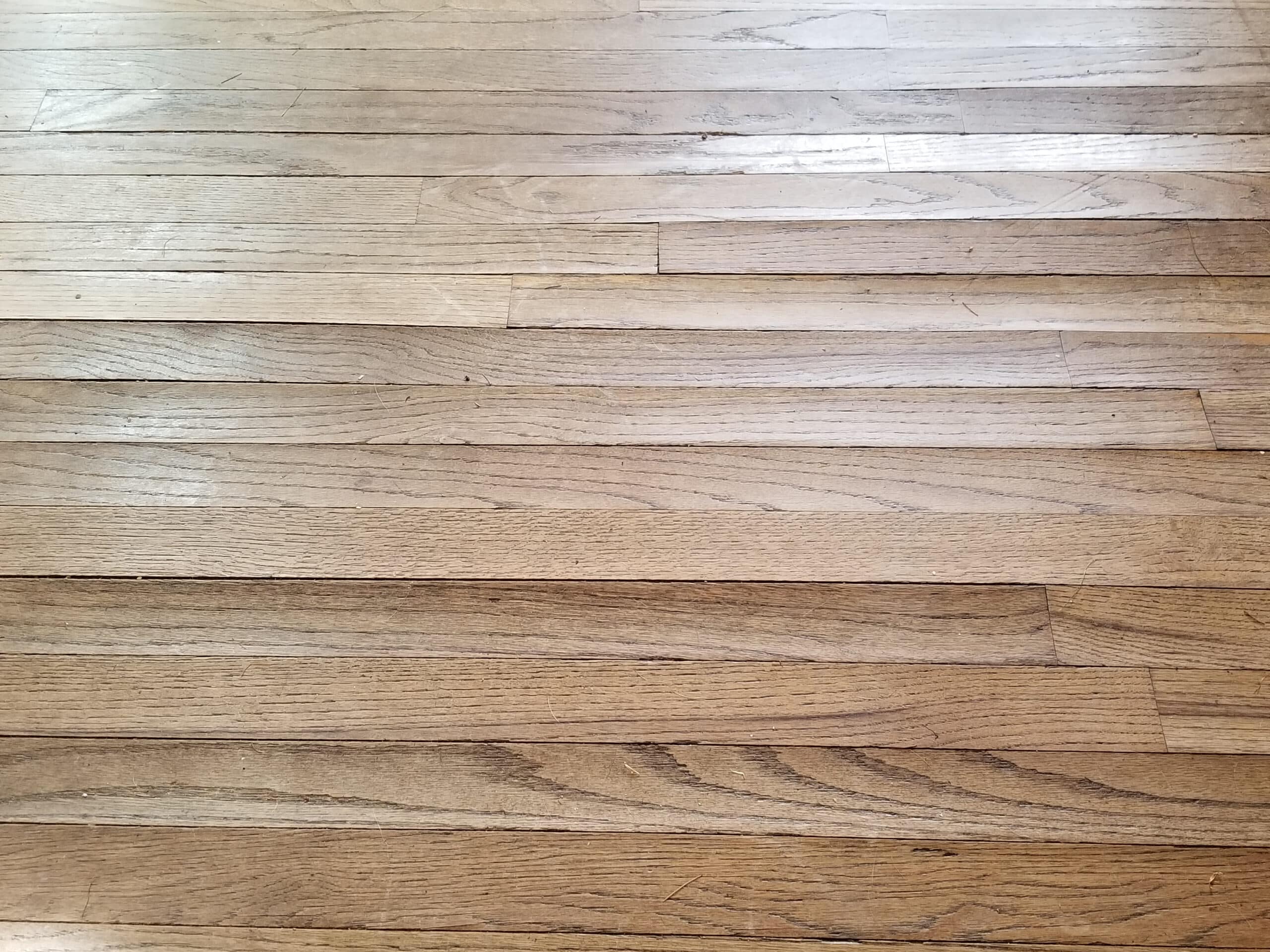
Cupping: the underside of the floor is holding more moisture than the finished surface.
Mild cupping can relax as the floor dries. Severe or long-standing cupping often leaves permanent compression at the seams. We explain the difference, and when a floor will flatten on its own, in our article on why hardwood floors cup.
How Long Should You Wait Before Repairs?
Longer than most people expect. A floor is ready for repair when moisture readings on the flooring and the subfloor have stabilized over several days, not when the surface looks dry. Depending on how much water was involved, that usually takes one to several weeks after the source is fixed.
The calendar does not decide it, the meter does. Our breakdown of how long water damage repair takes on a hardwood floor shows what each stage looks like and why rushing it costs more.
Never sand a wet floor. Sanding a cupped floor flat grinds down the raised edges. When the wood finishes drying, the center rises and the floor crowns, which means another full sanding and less wood left for the life of the floor.
Can the Floor Be Saved, or Does It Need Replacing?
Most floors caught early can be saved. The answer depends on how deep the damage goes compared with how much wood the floor has to give.
- Minor damage: cloudy marks or light cupping that flattens as it dries. Usually a sanding and refinishing project.
- Moderate damage: some sections permanently swollen or stained. Those sections are replaced, then the connected area is refinished as one surface.
- Severe damage: buckling, delamination, soft spots, or deep black staining across large areas. Replacement is the reliable fix.
A test sanding during the walkthrough usually settles it in minutes. For a closer look at the limits, read whether water-damaged floors can be refinished or need replacing.


Floors restored by Texas Hardwood Flooring after water damage.
How Do You Make the Repair Invisible?
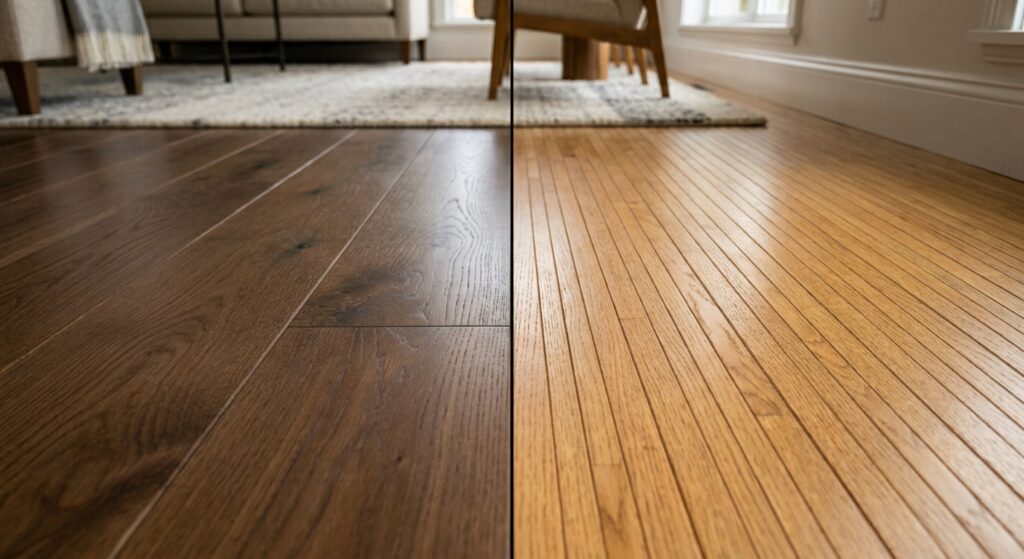
New wood is lighter and more uniform than a floor that has aged for years, so finishing only the patch leaves a visible outline. The repair disappears when replacement sections are woven into the existing layout and the whole connected space is sanded and finished together.
Because we finish on site, the stain is built in layers against your existing floor instead of picked from a factory color. That is how our water damage repair work matches floors that have been in place for decades, using the same custom on-site finishing we use on new installations.
Will Insurance Cover It?
Sudden and accidental events, like a burst supply line or a failed appliance, are usually covered. Slow leaks that developed over months usually are not. Report the loss quickly, but don’t let anyone finalize the scope until the floor has dried and been measured.
We provide moisture documentation, photos, and a line-item scope your adjuster can work from, and we can walk the property with them. Here is how we help with insurance claims from first reading to finished floor.
Get the floor into the estimate before it’s finalized
A scope written with flooring input reflects what the repair actually needs, including matching and finishing.
How Can You Prevent It From Happening Again?
- Wipe up spills right away, even small ones.
- Keep the finish in good shape. A worn finish lets water reach the wood.
- Clean with a barely damp mop, never a wet one.
- Check supply lines under sinks, behind the refrigerator, and at the dishwasher once a year.
- Have appliances with water lines installed by a professional.
- Shut off the main water valve before you travel.
What Our Customers Say
“We had a water leak, and it became apparent some of our hardwoods were damaged and needed replacement… Most importantly, he was our advocate when dealing with our Homeowner’s insurance carrier in making sure the claim went smoothly. It feels like we have literally just bought a new house!”Bryan P., Dallas
“From the first consultation following a dishwasher leak, to dealing with the loss adjusters to installation of a new floor, Texas Hardwood Flooring was a pleasure to work with and provided a really good quality service… Definitely worth five stars!”Alan D., Dallas
50+ yrsof experience behind our team
On-sitefinishing to match your floor
Insurancedocumentation for adjusters
NWFAmember
Find Out If Your Floor Can Be Saved
Call us before anyone sands or tears out flooring. We will take readings on the floor and subfloor, run a test sanding if needed, and give you a written scope for repair and finishing.
Frequently Asked Questions
How fast does water damage a hardwood floor?
Cloudy marks can appear within hours, and cupping often shows up within a day or two. The longer water sits, the more likely sections will need replacing instead of refinishing.
Should I pull up wet flooring myself?
Usually not. Removing more than necessary makes matching harder. Dry the area, document it, and let a flooring professional decide what has to come out.
Can I run a dehumidifier on my own?
Yes, and it helps. Keep the drying steady rather than aggressive, since drying the surface too fast can cause the wood to check or split.
Do I need a restoration company and a flooring company?
For large events, often both. The restoration company dries the structure. A flooring company replaces damaged sections and refinishes the floor so it matches.