Why Are My Hardwood Floors Cupping, and Will They Flatten Back Out?
The quick answerCupping happens when the underside of the wood holds more moisture than the finished surface, causing the edges to swell and rise higher than the center. Mild seasonal cupping often flattens on its own as the wood equalizes. Cupping caused by a leak will not correct until you find the moisture source and dry the floor.
What Is Actually Happening Inside the Wood?
Wood moves with moisture, and it moves more across the grain than along it. The top of your floor is sealed with finish, so it gives up and takes on moisture slowly. The underside is bare, so it responds much faster to what’s happening below.
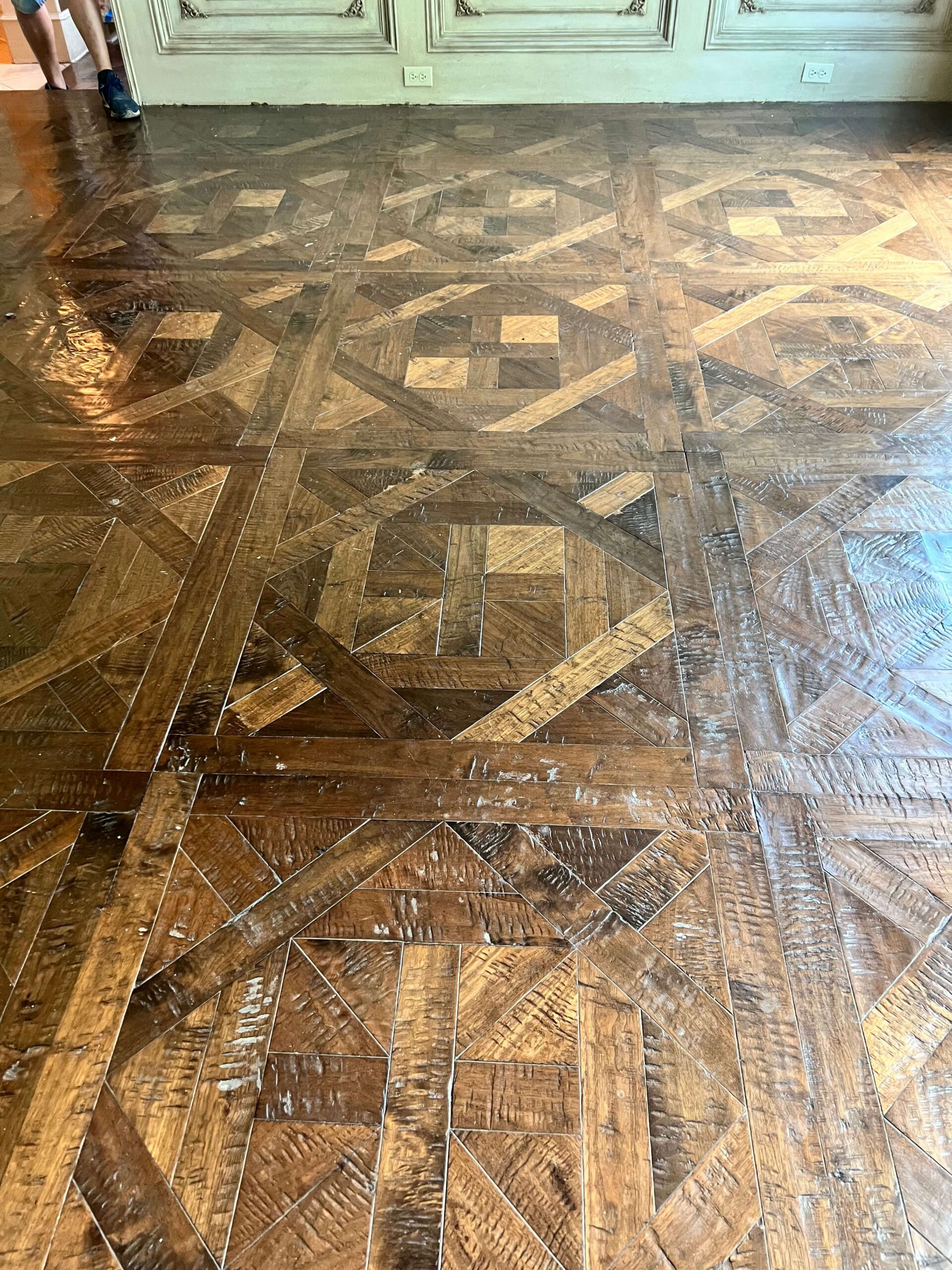
Cupping on a high end walnut floor.
When the bottom becomes wetter than the top, the lower fibers expand while the upper fibers stay put. The edges have nowhere to go but up. That is a cup. Run your hand across the floor, and you can feel the ridges at every seam before you can see them.
The reverse condition is called crowning, where the center sits higher than the edges. Crowning is often self-inflicted, and we explain why in a moment.
What Causes Cupping in North Texas Homes?
The two causes look similar for the first few days and then diverge sharply.
Solid hardwood cupping after water damage.
Seasonal humidity change is the benign one. Our summers are humid, our winters are dry, and a floor that gains a few percentage points of moisture in August may show slight cupping that disappears by November. This is normal wood behavior, and it is one of several reasons our climate treats floors differently than most of the country.
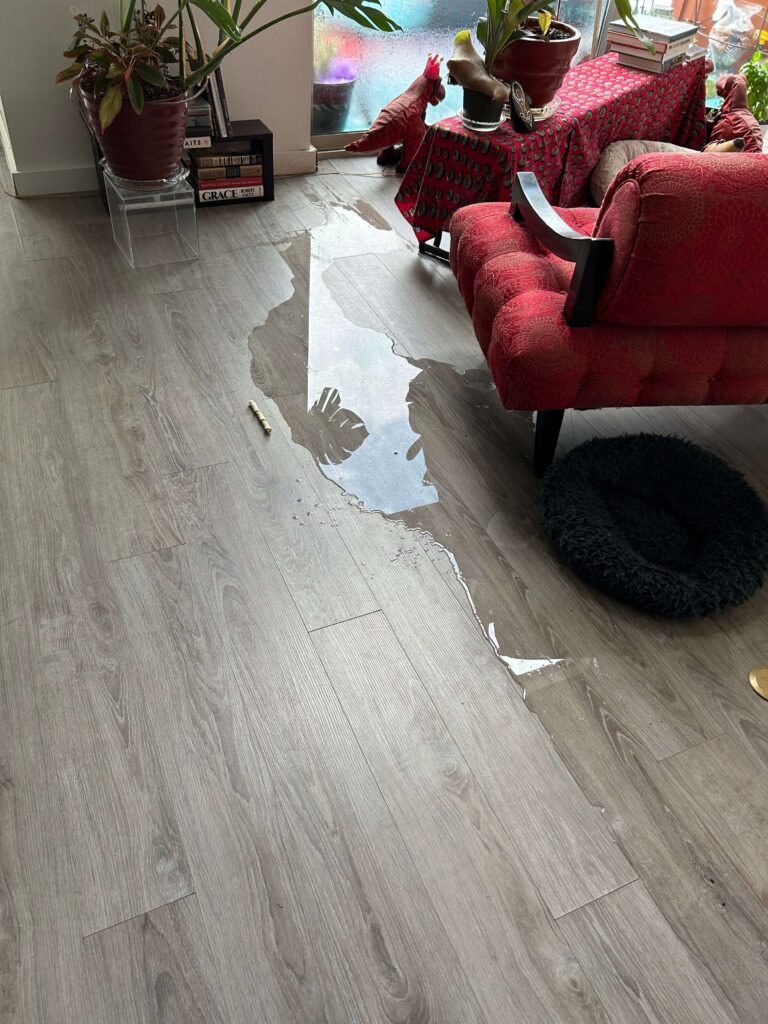
A moisture source is the serious one. A supply line, an appliance, a slow drip inside a cabinet, or a humidity problem in the space below the floor will keep feeding the underside indefinitely. This kind of cupping gets worse rather than better, and it usually appears in a defined area rather than across the whole house.
There is also an installation cause. Wood that was never allowed to acclimate to the home, or that was installed over a subfloor with a moisture content far off from the flooring itself, can cup within the first season. When that happens, the problem is the moisture differential built into the floor on day one, and we get into the details in our walkthrough of the installation process.
How Can You Tell Which Kind You Have?
- Look at where it is. Cupping that follows a path, spreads outward from one point, or stops at a doorway almost always has a source. Cupping that appears evenly across an entire floor at the same time of year is more likely seasonal.
- Look at how it is changing. Seasonal cupping is subtle and slow. Cupping from an active leak deepens week over week and is often accompanied by a musty smell, darkening stains, or areas that feel soft underfoot.
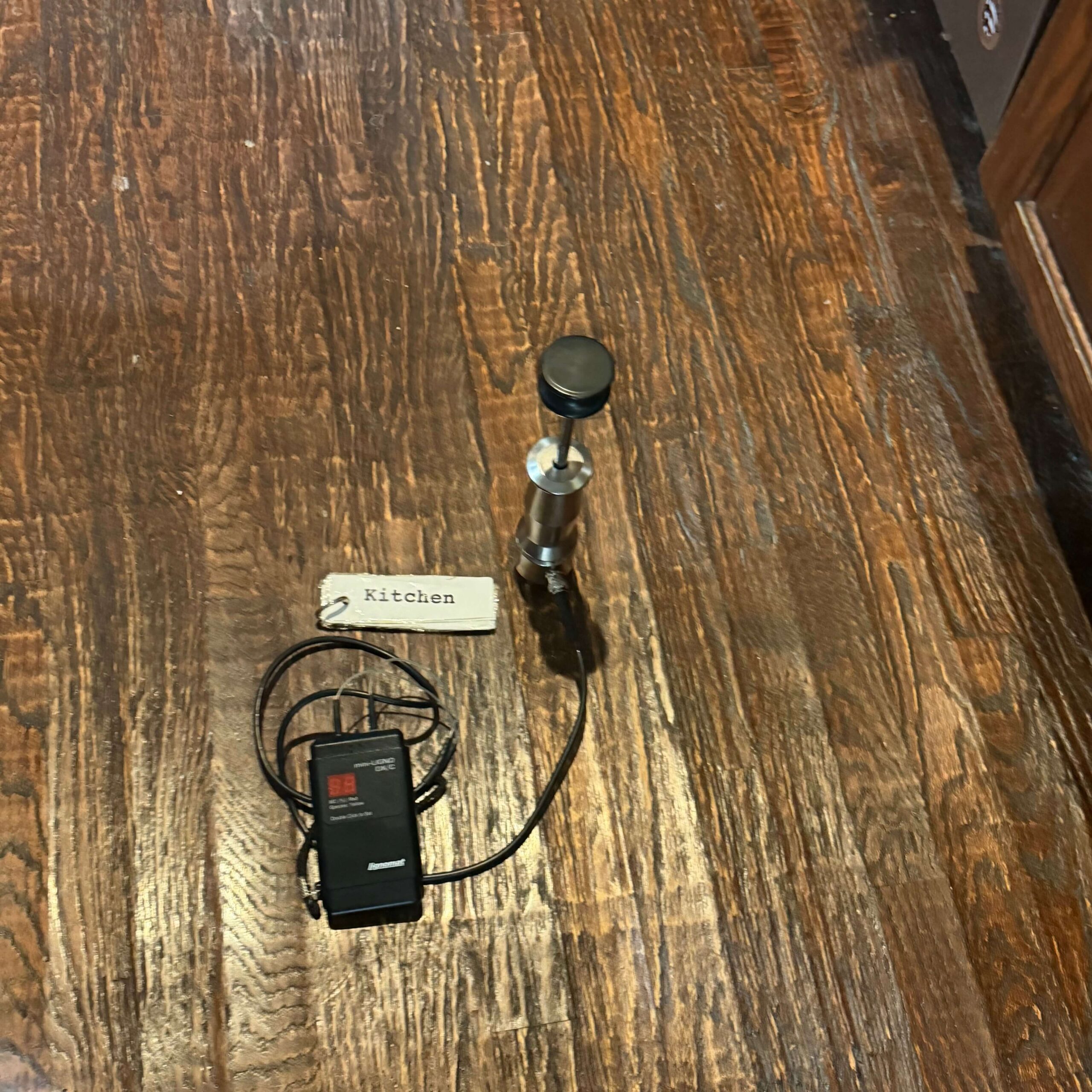
- Then measure it. A moisture meter reading on the flooring and on the subfloor tells you in a few minutes what guessing cannot. If the two readings are more than a few percentage points apart, something is feeding the floor from below.
Seasonal movement or an active leak?
Readings on the flooring and the subfloor answer that in minutes, before the cupping has a chance to deepen.
Will Cupped Floors Flatten Back Out on Their Own?
Sometimes, and that is a real answer rather than a hedge. If the cause was seasonal and the interior conditions return to normal, a floor with mild cupping will usually relax back to flat over several weeks with no intervention beyond running the HVAC as you normally would.
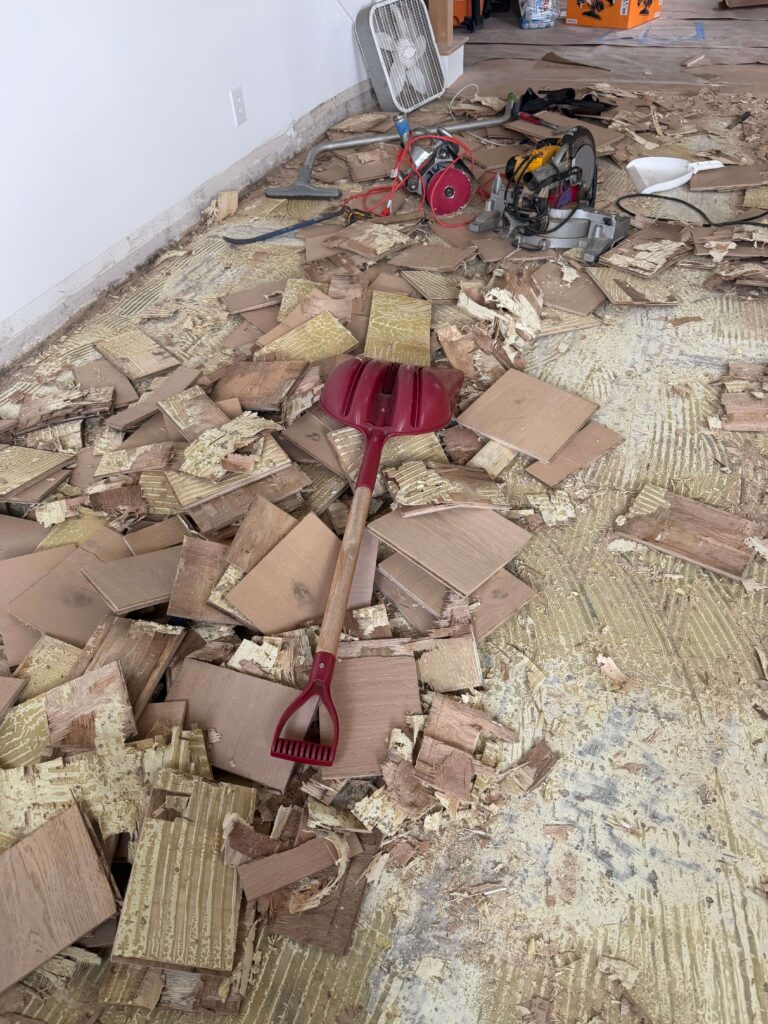
If the cause was a leak, flattening begins only after you fix the source and properly dry the floor. Even then, wood that swelled hard against its neighbors may have crushed its own edges under the pressure, and crushed fibers do not spring back. The floor can return to flat and still carry permanent compression marks at every seam.
Severe cupping left wet for weeks rarely recovers fully. At that point, the conversation shifts toward how much of the area needs to come out, which we cover in our comparison of when a floor needs care, repair, or replacement.
Why Does Sanding a Cupped Floor Too Early Ruin It?
This is the single most expensive mistake in water damage work, and it is worth understanding before anyone brings a sander into your home.
A cupped floor is not flat, so sanding it flat means grinding the raised edges down while the center is still swollen low. Weeks later, the wood finishes drying, the center rises back to where it always wanted to be, and now the center sits higher than the edges. That is crowning, and the only fix is another full sanding that removes even more material from a floor that has a finite amount to give.
The right sequence is to fix the source, dry the floor, and then verify with meter readings taken over several days that the moisture content has stabilized and matches the subfloor. Only after the readings hold steady does sanding make sense. Depending on the region and the season, that wait runs anywhere from a week to well over a month, and our stage-by-stage repair timeline shows where the time goes.
Someone ready to sand before the readings settle?
Get a second set of moisture readings first, so the floor is sanded once and stays flat.
What Does the Repair Actually Involve?
Once the floor is dry and stable, most cupped floors are corrected by sanding and refinishing the affected area. Solid hardwood at three-quarters of an inch has enough material above the tongue to be sanded several times over its life, so a single correction is well within what a healthy floor can absorb.
Where wood has swollen permanently, delaminated, or stained through, those sections come out and get replaced before any sanding begins. We explain where that line falls in how to tell if a water-damaged floor can be refinished. New wood is woven into the existing floor so the seams do not line up in an obvious row, and then the whole area is sanded as one surface.
Color is the last step and the one that decides whether the result looks intentional. Because we finish in place, the crews we work with can adjust tone and sheen against your existing floor rather than accepting a factory color. You can see the range of what that makes possible on our page for solid hardwood installation, and our approach to correcting a cupped floor follows the same sequence.
50+ yrsof experience behind our team
On-sitefinishing to match your floor
NWFAmember
Same weekconsultations typically
Get a Moisture Reading Before the Floor Gets Worse
Cupping that is caught early is usually a refinishing project. Cupping that sits wet for a month often becomes a replacement. If your floor has developed ridges you can feel, call (214) 399-1770 and we will come out, take readings on the flooring and the subfloor, and tell you honestly whether you are looking at a seasonal condition or an active problem. We typically schedule consultations within the same week.
Frequently Asked Questions
How long does it take for a cupped floor to dry enough to sand?
It varies with how much water was involved and how long it sat, but one to four weeks is typical after the source is fixed. The calendar does not decide it. Stable moisture readings do.
Can engineered hardwood cup?
Yes. When engineered flooring does cup badly, the concern shifts to whether the layers have separated, since delamination cannot be sanded out.
Should I run a dehumidifier on a cupped floor?
Careful drying helps, but drying the surface too aggressively can cause the wood to check or split. Slow and steady beats fast, and it is worth having the floor looked at before you set equipment.
My floor cups every summer and flattens every winter. Is that a problem?
Mild seasonal movement is normal wood behavior in our climate. It becomes a concern when the cupping deepens year over year, does not fully reverse, or is accompanied by gaps that keep widening.