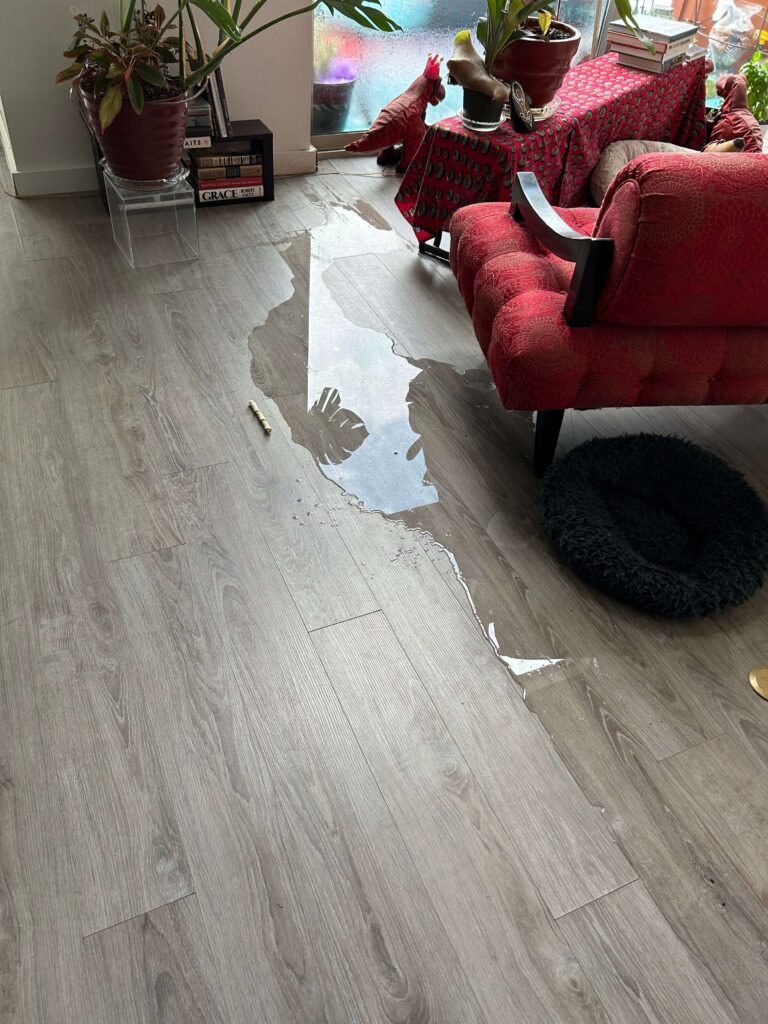
Who Repairs the Floor After Water Damage?
The quick answerTwo different trades handle two different halves of the job. A restoration company dries the structure and removes material that cannot be saved. A hardwood flooring company replaces damaged sections and then sands, stains, and finishes the floor so it matches. Most homeowners need both, in that order.
What Does a Restoration Company Actually Do?
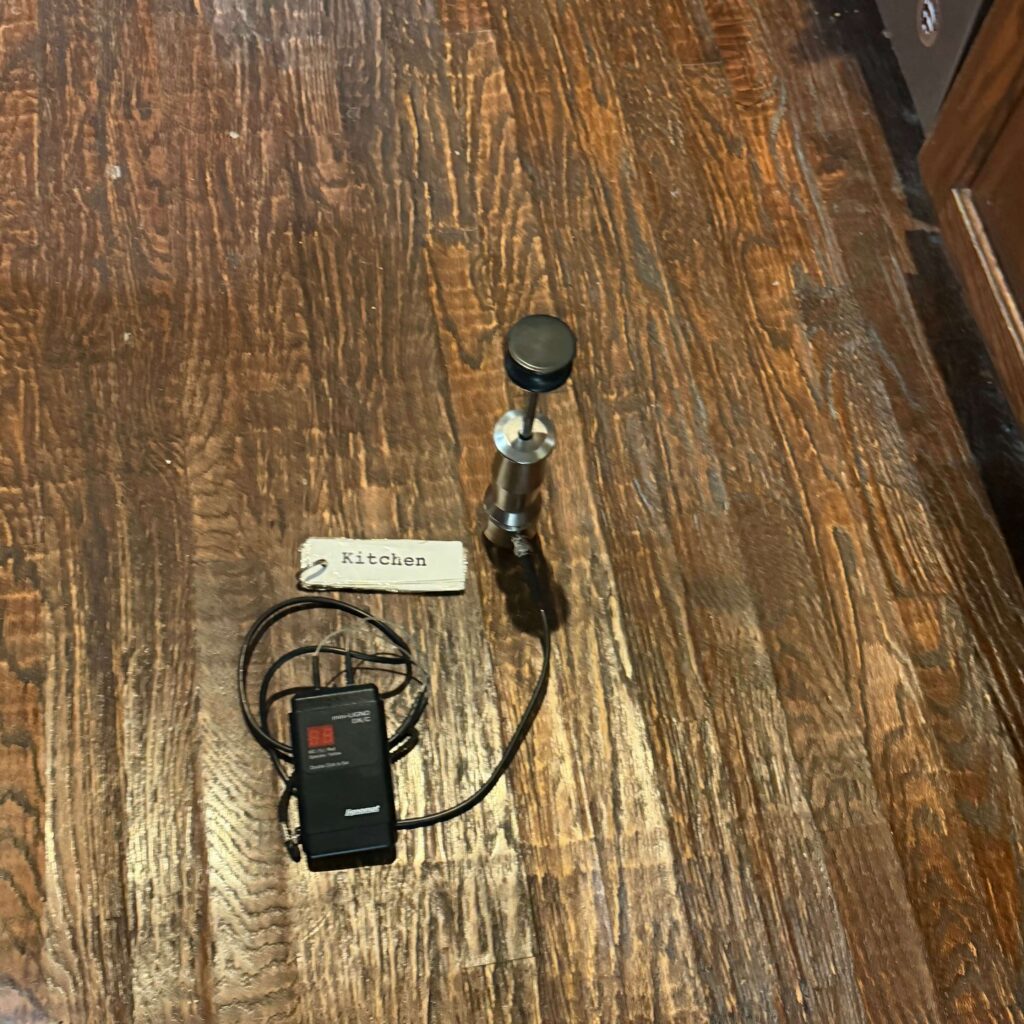
Restoration work is about the building. Crews extract standing water, set air movers and dehumidifiers, monitor moisture, remove saturated drywall and insulation, and address any growth that has developed.
This work is urgent, it is skilled, and it is the right call in the first hours after a significant water event. Getting equipment in place quickly is one of the few things that meaningfully shortens the overall timeline. Our step-by-step plan for saving a wet hardwood floor covers what to do before the equipment arrives.
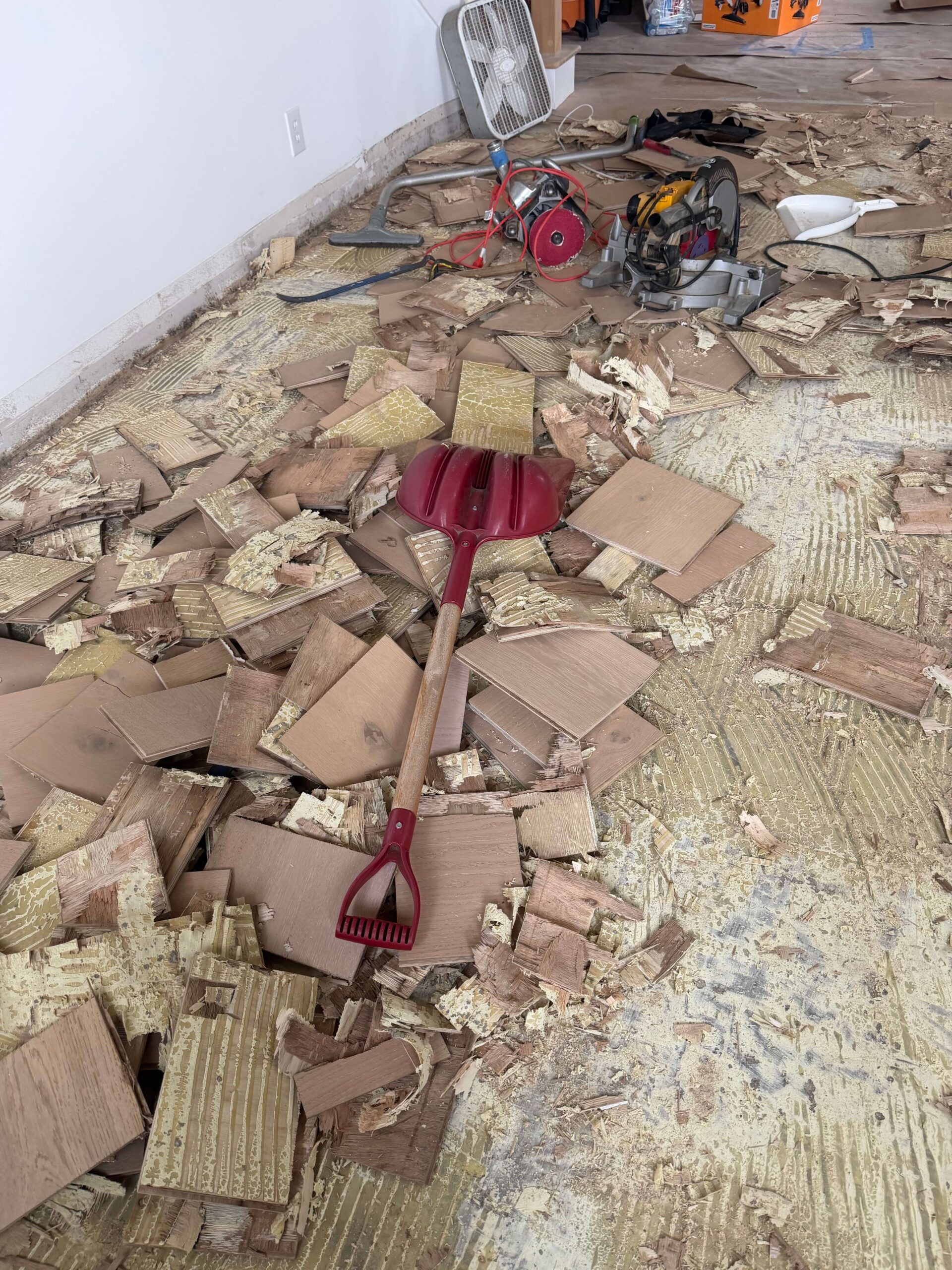
That work generally does not include restoring a hardwood floor to a finished condition. Removing wet flooring is demolition. Putting a floor back so new wood is indistinguishable from twenty-year-old wood requires a different skill set and different tools.
Where Does the Flooring Work Begin?
It begins once the structure is dry and moisture readings have stabilized. At that point, the questions become which sections have to be replaced, how the replacement wood gets woven into the existing layout, how far the finishing needs to extend, and how the color gets matched.
Flooring work starts once the structure is dry.
Every one of those is a flooring question. You have to identify the species and width, stagger the seams so the repair has no outline, and build the color in layers against the surrounding floor rather than selecting it from a sample.
That is the trade that actually restores the floor, and it is the half homeowners most often discover late, after the drying is finished and the floor is still sitting unrepaired.
Drying underway and no one has looked at the floor?
We can take readings and write the flooring scope while the restoration equipment is still running.
Why Does the Handoff Cause So Many Delays?
Because nobody owns it. The restoration company finishes its scope and moves on. The adjuster closes on an estimate that may or may not reflect what the floor needs. And the homeowner is left with a dried-out floor and a number that doesn’t cover matching.
The gap costs time, and it often costs money, because a scope written without flooring input tends to underestimate the finishing area. An estimate that covers replacing eighty square feet of damaged wood but not refinishing the connected room produces a repair the homeowner can see from the doorway.
Bringing a flooring company in during the drying phase rather than after solves most of this. The scope gets written with accurate numbers, and the crew is scheduled for the week the readings clear.
Can One Company Do Both?
Some offer both, and it can work well. The question worth asking is who does the finishing, because that determines whether the repair is visible.
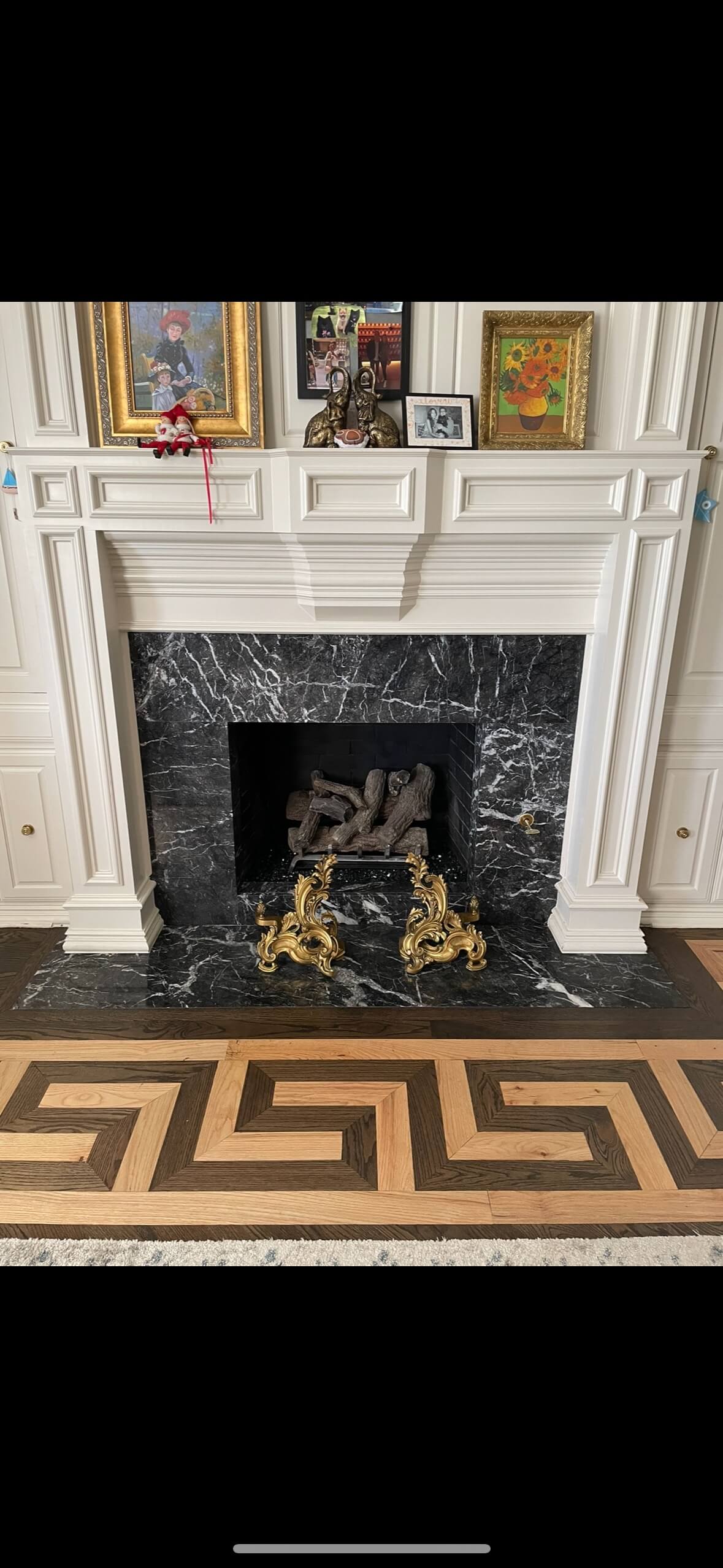
A finished custom floor after water damage repair.
Ask directly whether the floor will be finished on site or whether pre-finished product will be installed. Pre-finished flooring comes in a factory color, which means matching an aged floor is limited to the closest option in the catalog.
On-site finishing means we mix the stain and test it against your floor. That is what allows new wood to read as part of an existing surface, and it is described in more detail on our page for custom on-site finished flooring.
Want a repair no one can spot from the doorway?
We build the stain on site against your existing floor, so new sections read as part of the original surface.
What Should You Ask Before Anyone Starts?
Ask who is responsible for the floor after the drying equipment leaves, and get the answer before the equipment arrives. Ask whether the estimate includes finishing and how large an area it covers.
Ask how they’ll match the color, and be skeptical of an answer that amounts to ordering the same product. Ask whether the moisture readings that clear the floor for sanding will be taken by someone who works with hardwood.
Texas Hardwood Flooring has restored floors after water damage across North Texas for decades, with more than 50 years of experience behind our team and trusted, long-tenured crews we have partnered with for years. We work with homeowners, adjusters, and restoration companies on claims across the region.
50+ yrsof experience behind our team
On-sitefinishing to match your floor
Xactimatedocumentation for adjusters
Same weekconsultations typically
Bring a Flooring Specialist in Before the Scope Is Written
The cheapest time to get the floor into the estimate is before the estimate is finished. If your floor has taken on water, call (214) 399-1770 to schedule a consultation. We will take readings, document the affected area, and give you a written scope covering replacement and finishing that you can put in front of your adjuster. We serve homeowners across Dallas, Fort Worth, and the surrounding communities.
Frequently Asked Questions
My restoration company said they will handle the flooring. Should I use them?
It depends on whether they finish on-site and how they plan to match your existing floor. Those two answers tell you most of what you need to know.
Do I need a restoration company at all for a small leak?
For a contained leak caught quickly, often not. For anything involving significant volume, saturated drywall, or water in a ceiling cavity from a leak upstairs, professional drying is worth it.
Can you start work while the restoration company is still drying?
We can take readings, document the damage, and write the scope during drying, which saves real time. The physical flooring work begins once readings stabilize.
Who decides when the floor is dry enough to sand?
It should be settled by meter readings taken over several days, not by a schedule. Our article on the water damage repair timeline explains what those readings need to show.