How Long Does Water Damage Repair Take on a Hardwood Floor?
The quick answerDrying and moisture verification usually run one to several weeks, depending on how much water was involved and how far it traveled. Replacing damaged sections takes a day or two. Sanding and finishing the connected area takes several more days, with drying time between coats. Total time is typically three to six weeks.
Why Does Drying Take the Longest?
Because it is the part that cannot be compressed. Everything after it depends on the wood reaching a stable moisture content, and no amount of equipment changes how fast wood gives up water from its interior.
Surface moisture leaves quickly. The water held in the wood below the surface and in the subfloor leaves slowly, and that is the moisture that matters. A floor can feel completely dry and still be well above where it needs to be.
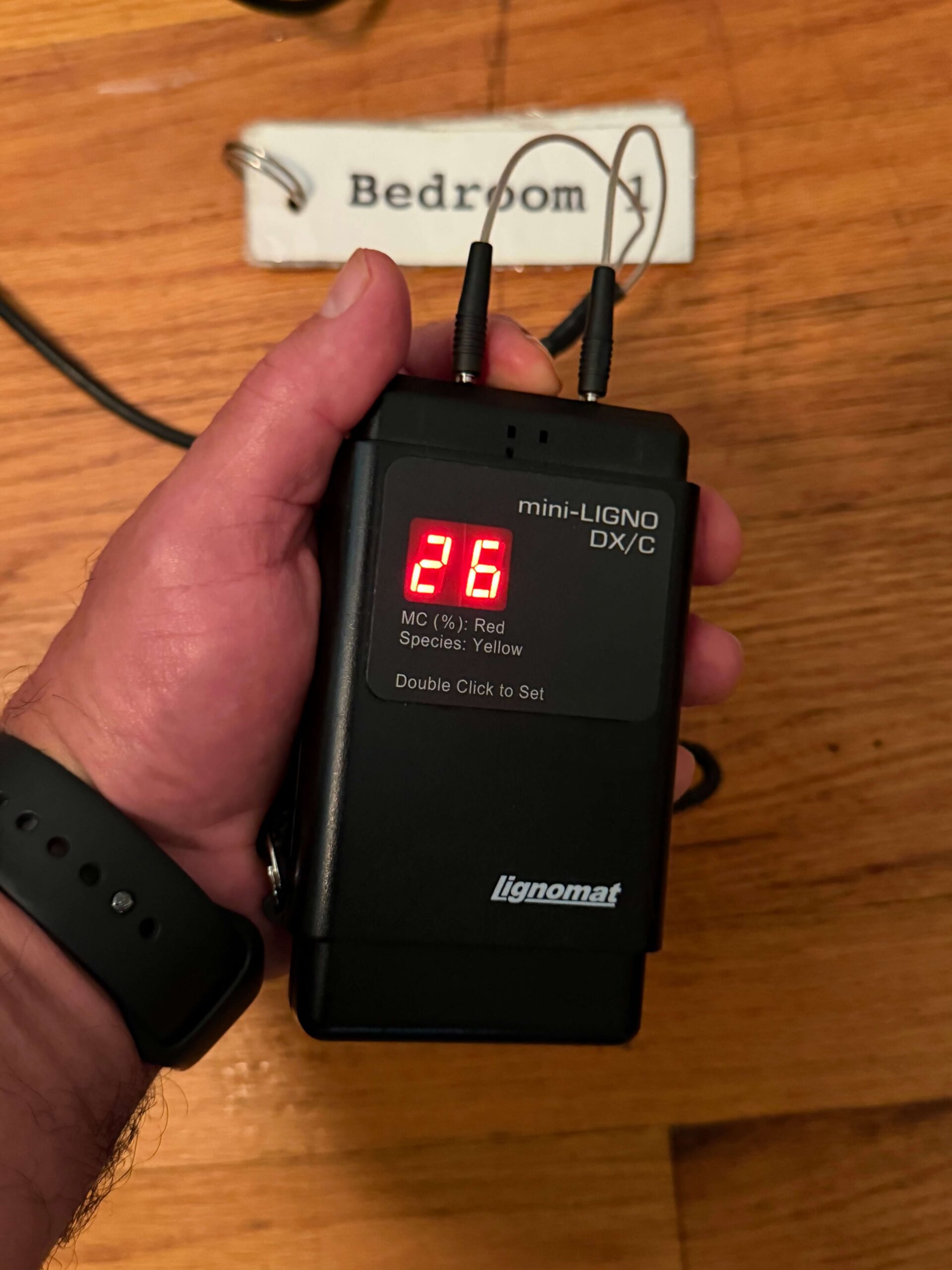
This is why the work is driven by meter readings rather than the calendar. Readings are taken across several days, and the floor is considered ready when they hold steady and sit close to the subfloor reading. Understanding the stages a damaged floor moves through makes the waiting easier to accept.
What Determines Whether Drying Takes One Week or Six?
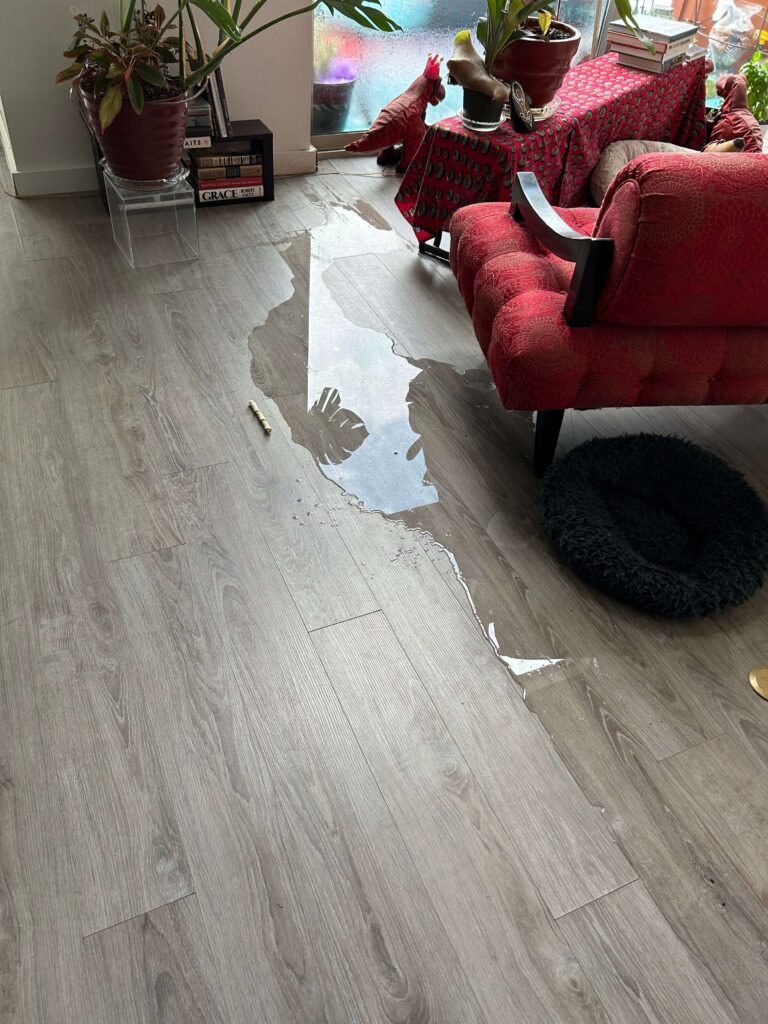
Volume is the first factor. A dishwasher that leaked slowly puts far less water into a floor than a supply line that ran at pressure for two hours.
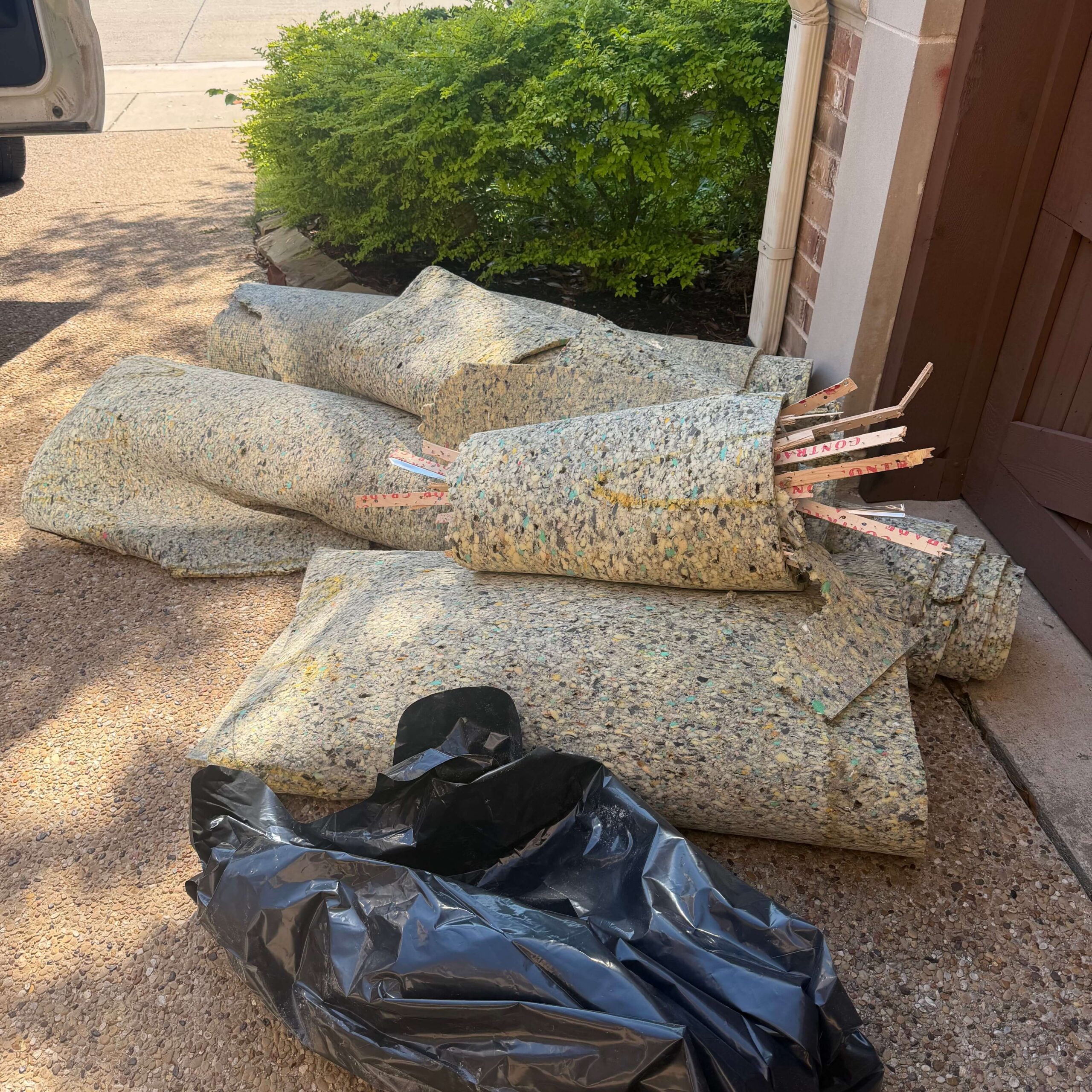
A water damage job in Plano, TX.
Duration is the second, and it matters more than people expect. Water sitting for a day behaves very differently than the same water sitting for three weeks, because time is what lets moisture penetrate deep into the wood and the structure below.
Then there is what sits underneath. A floor over a subfloor that also got soaked takes considerably longer, because the flooring keeps drawing moisture from below. Season also plays a role: humid summers slow drying, while dry winters speed it.
Wondering how wet your floor still is?
We take meter readings on the flooring and the subfloor and tell you where drying actually stands.
What Happens During Each Stage?
- Extraction and stabilization. The first days are extraction and stabilization. We remove standing water, set up equipment, and confirm the source is fixed. Nothing about the floor itself is decided yet.
- Drying and monitoring. The following weeks are drying and monitoring, with readings taken periodically until they stabilize. This is also when the full extent of the damage becomes visible, because wood that will cup or stain will have done so by then.
- Replacement and finishing. Once readings hold, the crew removes and replaces damaged sections, which usually takes a day or two. Then the connected area is sanded, stained, and finished, typically over several days with time between coats.
Can Any of It Be Sped Up?
Some of it, and it is worth knowing which parts. Getting equipment in place quickly shortens overall drying meaningfully, so the first twenty-four hours genuinely matter.
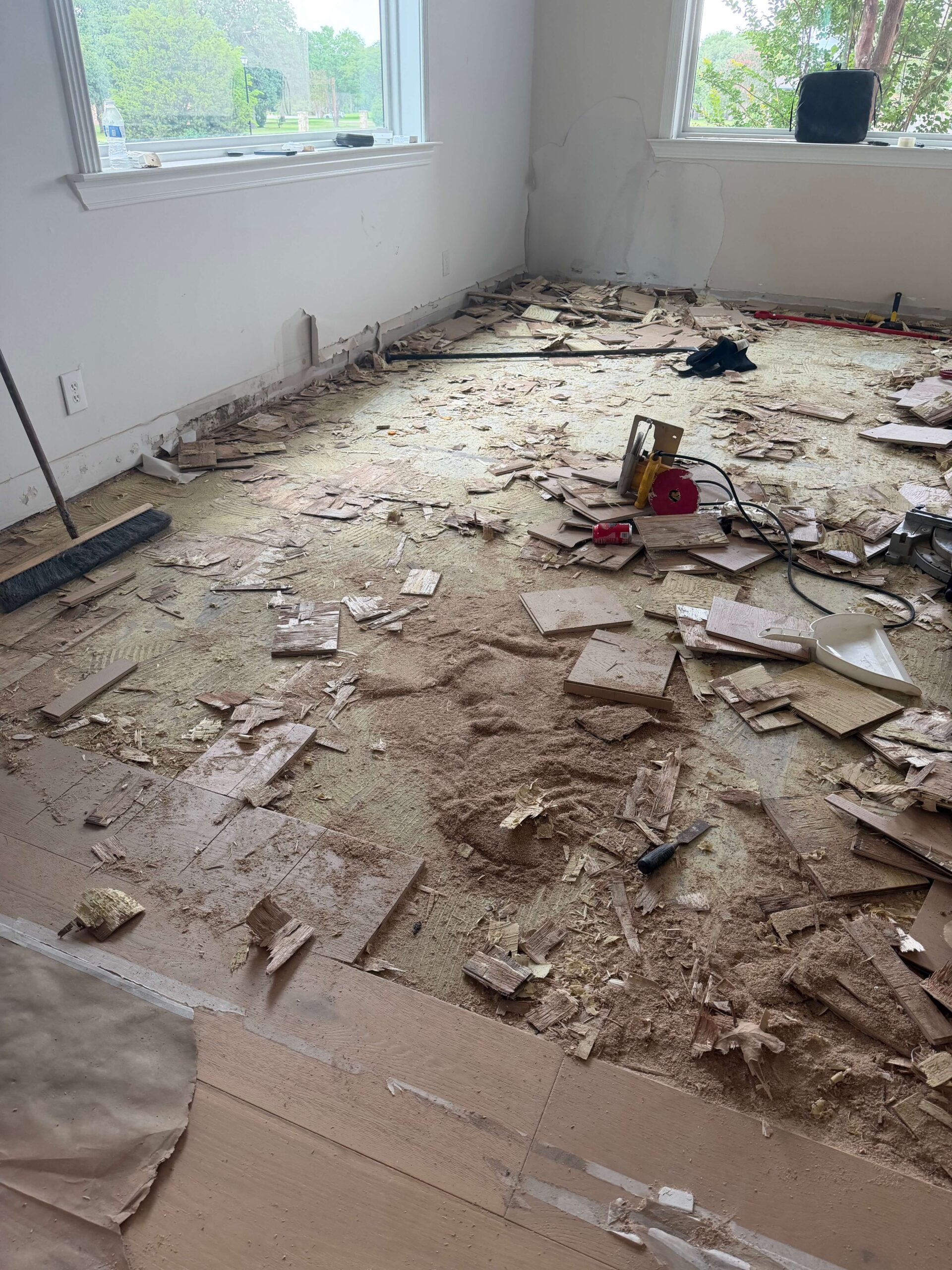
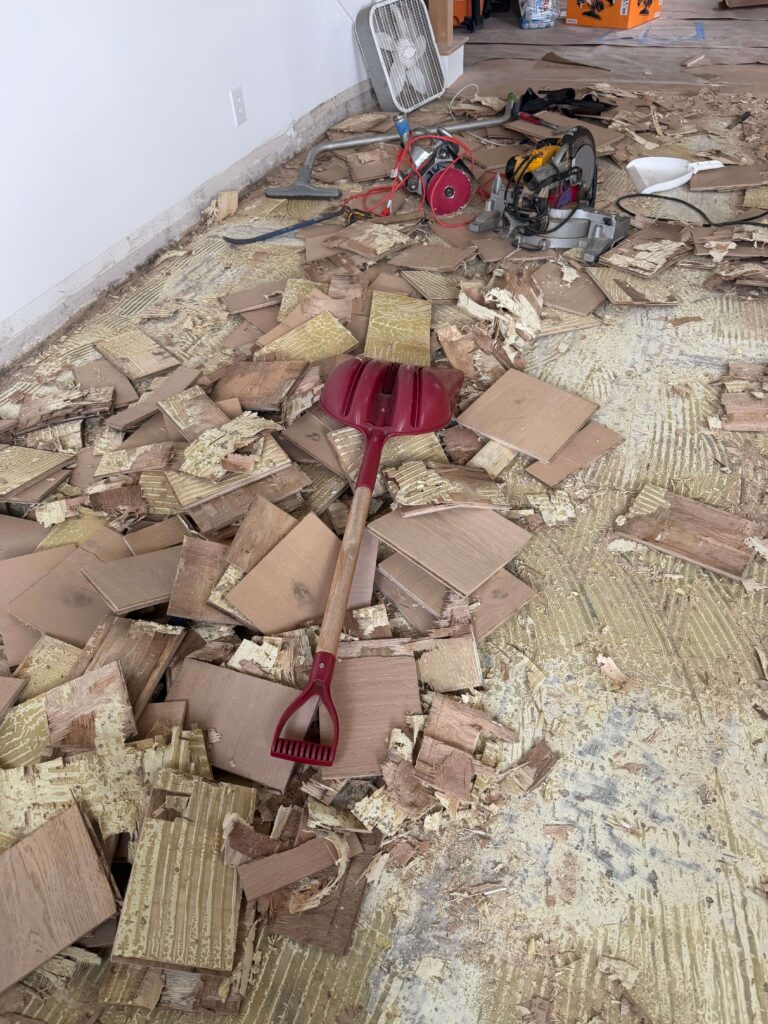
Removing a wide plank engineered floor after a leak.
Scheduling the flooring work before drying finishes also saves real time, because the crew is ready the day the readings clear rather than starting a search then. If you are unsure who does that work, here is who repairs the floor once the drying company leaves.
What cannot be rushed is the drying itself and the time between finish coats. Sanding a floor that is still wet leads to crowning and a second full sanding, which costs weeks rather than saving them. We explain that failure mode in our article on why floors cup and what it means.
Get on the schedule before the readings clear
Booking the flooring work during drying means repairs can start the day your floor is ready.
Can You Stay in the House?
Usually yes during drying, though the equipment is loud and runs continuously. Most homeowners find it manageable in a room they can close off and difficult in an open plan.
During sanding and finishing, the affected area needs to stay clear of foot traffic. Many homeowners stay and work around the sequence room by room, and others choose to be out for the finishing days. It is worth deciding early, because it affects how the work is staged.
Get a Realistic Timeline for Your Floor
A timeline given before anyone has measured your floor is a guess. Call (214) 399-1770 to schedule a consultation. We will take readings, tell you where your floor actually sits, and give you a schedule built on those numbers rather than an optimistic estimate we cannot hold. We typically schedule consultations within the same week across the communities we serve in Dallas and Fort Worth.
Frequently Asked Questions
Can I put furniture back as soon as the finish is dry to the touch?
No. A finish that is dry to the touch has not fully cured, and furniture placed too early can mark it. Light foot traffic comes first, with furniture and rugs following on a schedule we give you.
What if the floor is still reading wet after several weeks?
That usually means the source was not fully resolved or moisture is coming from below. At that point the priority shifts back to finding it, because no amount of additional drying time fixes an active leak.
Does insurance cover the extra time and equipment?
Drying equipment and mitigation are generally part of a covered loss, and additional living expenses are sometimes included. Our overview of how carriers handle these claims covers what to ask about.