Does Homeowners Insurance Cover Water-Damaged Hardwood Floors?
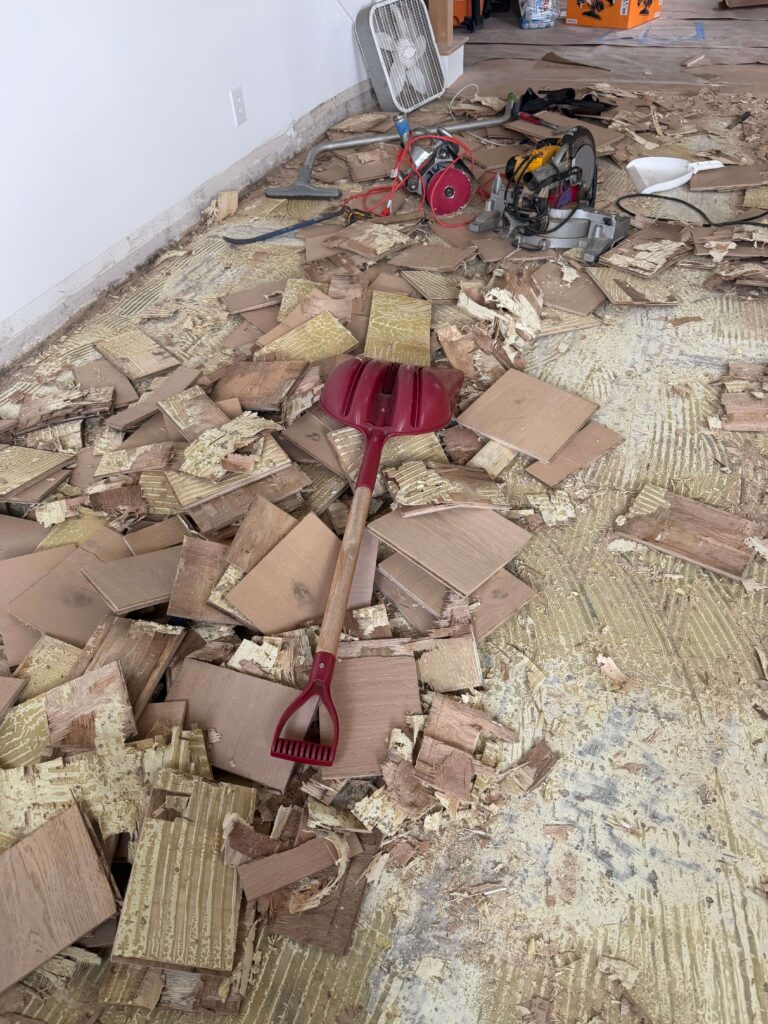
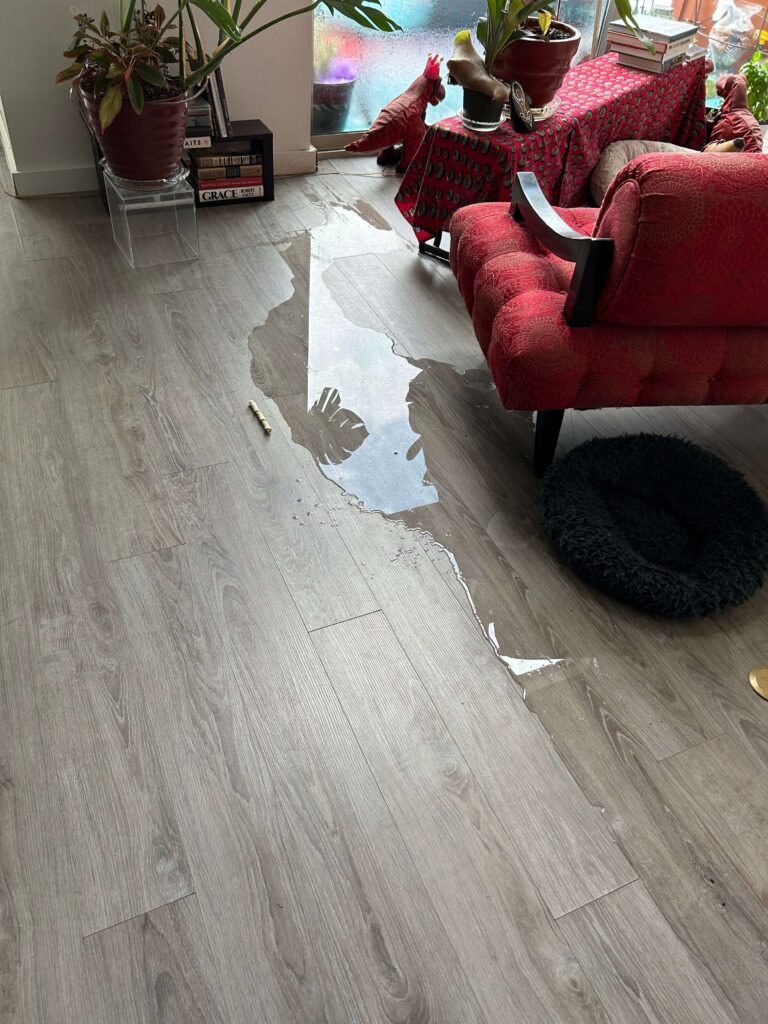
The quick answerMost homeowners’ policies cover hardwood floor damage when the water event is sudden and accidental, such as a burst supply line or a failed appliance. Damage that developed slowly from a long-running leak, seepage, or deferred maintenance is usually excluded. Water that enters from outside the home requires separate flood coverage.
What Does “Sudden and Accidental” Actually Mean?
Insurers draw the line at whether the event happened all at once and without warning. A supply line behind the refrigerator that lets go on a Tuesday afternoon is sudden. A shutoff valve that fails while you’re out of town is sudden. A split washing machine hose is sudden.
The common thread: a reasonable homeowner couldn’t have seen it coming or stopped it sooner. In that case, the resulting floor damage is typically part of the covered loss, along with the cost of drying the structure.
The plumbing failure itself is treated differently than the damage it caused; policies generally pay to repair what the water ruined, not to replace the broken part. That distinction surprises people, so it’s worth reading your declarations page before you assume anything.
What Does Homeowners Insurance Usually Not Cover?
Slow leaks are the most common denial we see. A drip under a dishwasher that ran for six months leaves a very different signature in the wood than a one-day flood, and adjusters are trained to spot it. Dark staining that has spread well beyond the leak point, along with cupping that has already tried to flatten and reverse, both read as long-term exposure.
Wear and tear is also excluded. A floor that has grayed near an exterior door over many winters is not a claim; it is a maintenance item, and that kind of surface condition is usually handled through sanding and refinishing the affected area rather than an insurance file.
The other frequent exclusion is damage the homeowner made worse. If the water was shut off but the floor sat wet for two weeks before anyone called anyone, an insurer may argue that mitigation was unreasonably delayed. A floor left wet that long is also where signs of mold under the hardwood tend to show up.
Why Is Flood Damage Treated Separately?
A standard homeowners policy covers water that originates inside the home. Water that rises from outside, a creek, a storm drain, or saturated ground, falls under flood insurance, a separate policy most North Texas homeowners don’t carry.
This matters more here than people expect. A heavy spring storm that backs a drain up into a first floor can produce a claim outcome very different from an identical-looking loss caused by a burst pipe, even though the floor looks the same in both cases.
Not sure how your adjuster will read the damage?
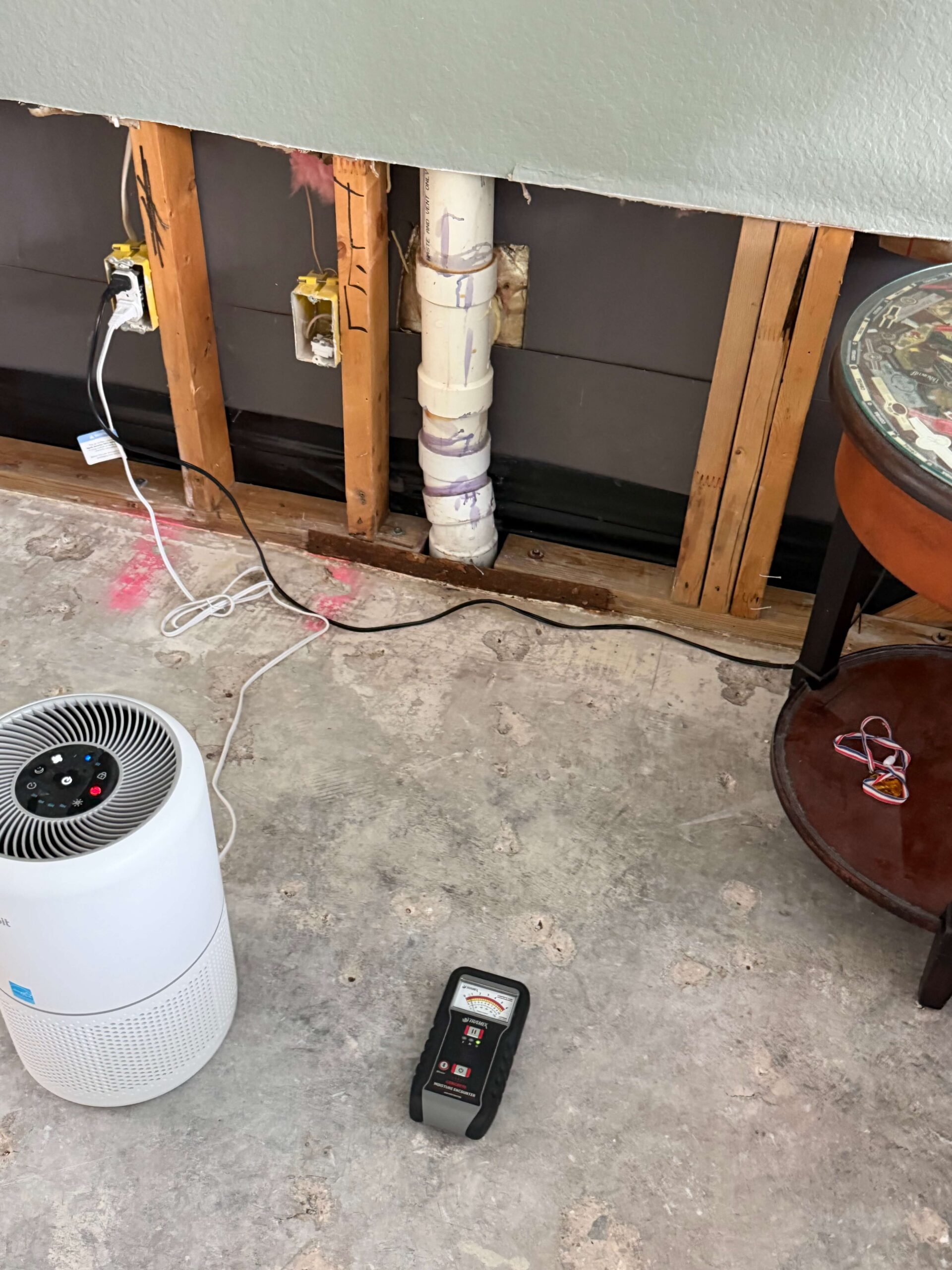
We document the floor with moisture readings and photos before anything is moved, so the record shows what happened.
What Should You Document Before Calling Your Adjuster?
- Photograph everything before anything is moved or dried: wide shots of each affected room, close shots of the wet area, and a shot of where the water came from. If you can safely capture the failed component itself, do it.
- Write down the date and time you discovered the water and what you did next. Keep receipts for fans, dehumidifiers, and any emergency service. Save a section of the removed flooring, since species, width, and finish all matter later when the replacement has to match.
- Note the square footage of every room the water reached, including areas where the floor still looks fine. Moisture travels along the flooring and under the surface, so the wet zone is almost always larger than the visible damage. We cover the full sequence in our guide to saving a floor after a water event.
Will the Claim Cover the Whole Floor or Only the Wet Part?
This is the question that decides the size of the project, and the answer depends on how your policy handles matching. Some policies pay to restore a uniform appearance across a continuous area. Others pay only for the damaged square footage and leave the homeowner to absorb the visual difference.
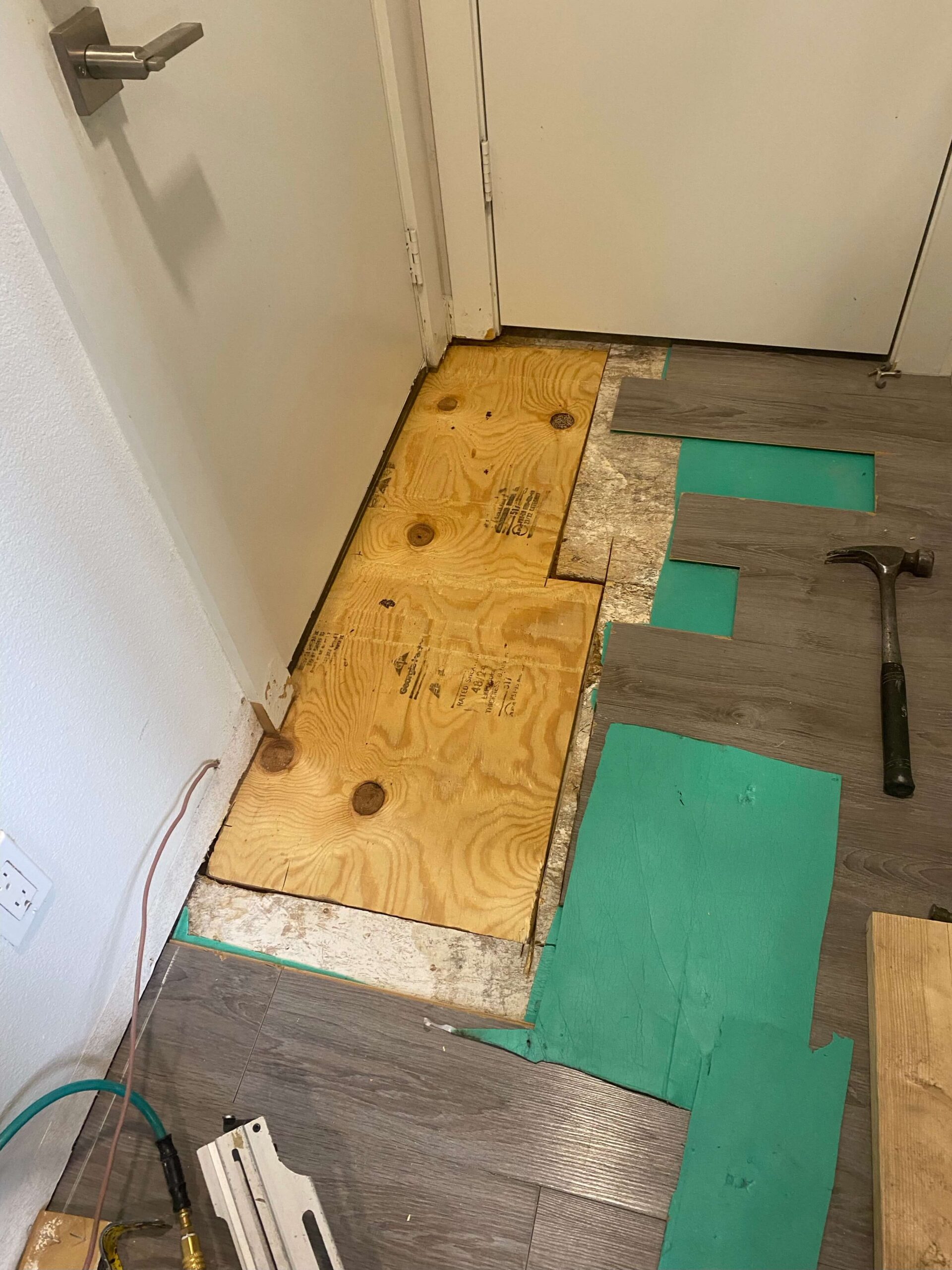
A Dallas water damage job opened to the plywood subfloor.
The practical problem: new wood doesn’t match aged wood. Even the same species from the same mill will read lighter and more uniform than a floor that’s been in place for fifteen years. When the damaged area opens into a hallway or connected living space with no threshold between them, a patch is visible from every angle.
In those situations, we usually recommend replacing the damaged area and then sanding and finishing the connected space as one floor. Because we do our finishing on site rather than using pre-finished product, we can build the color in layers until the new wood reads as part of the original floor. That approach is often what makes a partial claim payment produce a result the homeowner is actually happy with.
Make sure the scope covers matching, not just the wet planks
We write a line-item flooring scope your adjuster can work from, including the connected area that has to be finished.
Where Does a Flooring Company Fit Into the Claim?
We recommend calling us first. We’ll partner with one of the restoration companies we’ve worked with over the years so the first appointment is more productive; their team assesses the water damage while we assess the hardwood flooring, helping streamline the process and speed up the claim. The restoration crew handles the emergency: they extract standing water, set drying equipment, and remove material that can’t be saved. They get authorization before doing any work and bill the insurance company directly. What they generally don’t do is install, sand, stain, match, and finish a hardwood floor; that’s a different trade with different tools.
Assessing water damaged hardwood on a Plano job.
That handoff is where many homeowners lose time. The structure dries out, the claim gets adjusted, and then the floor sits waiting while someone figures out who restores it. Bringing a flooring company in early means the estimate reflects what the floor will really need. We explain how restoration and flooring crews split the work in more detail.
Our team has walked homeowners through this in Plano, the Park Cities, and across the rest of the communities we serve in North Texas. We provide documentation an adjuster can work from, and we have assisted on insurance claims for decades.
It also helps to understand what restoring the floor itself actually involves before the scope is written, because sanding, matching, and finishing carry costs that a drying invoice does not capture.
Xactimatedocumentation for adjusters
50+ yrsof experience behind our team
On-sitefinishing to match your floor
Same weekconsultations typically
Schedule a Consultation Before You Finalize the Claim
An adjuster’s estimate is easier to negotiate before approval than after. If water has reached your floors, call (214) 399-1770 to schedule a consultation. We will take moisture readings and give you a written scope of what the floor needs so the number in your file reflects the actual repair. We typically schedule consultations within the same week.
Frequently Asked Questions
Should I file a claim before the floor has dried?
Report the loss right away, but don’t let anyone finalize the scope until the floor has dried and been measured with a moisture meter. Damage that appears in week two is common, and a scope written on day one often misses it.
Will filing a water damage claim raise my premium?
That depends on your carrier, your claims history, and the size of the loss. It’s a fair question to ask your agent directly before you file, particularly if the damage is limited to a small area.
My floor looks fine, but the wall got wet. Should I still have it checked?
Yes. Wood absorbs moisture from the underside first, and cupping often doesn’t appear for several days. A moisture reading now takes minutes and can prevent a much larger problem later.
Can you work directly with my adjuster?
Yes. We provide moisture documentation, photographs, and a line-item scope, and we’re glad to walk the property with your adjuster so everyone works from the same measurements. We also use Xactimate, the same estimating and pricing platform most insurance carriers use, which helps adjusters recognize our experience with insurance claims and keeps the process moving smoothly.