How Many Knots Do You Want in Your Floor?
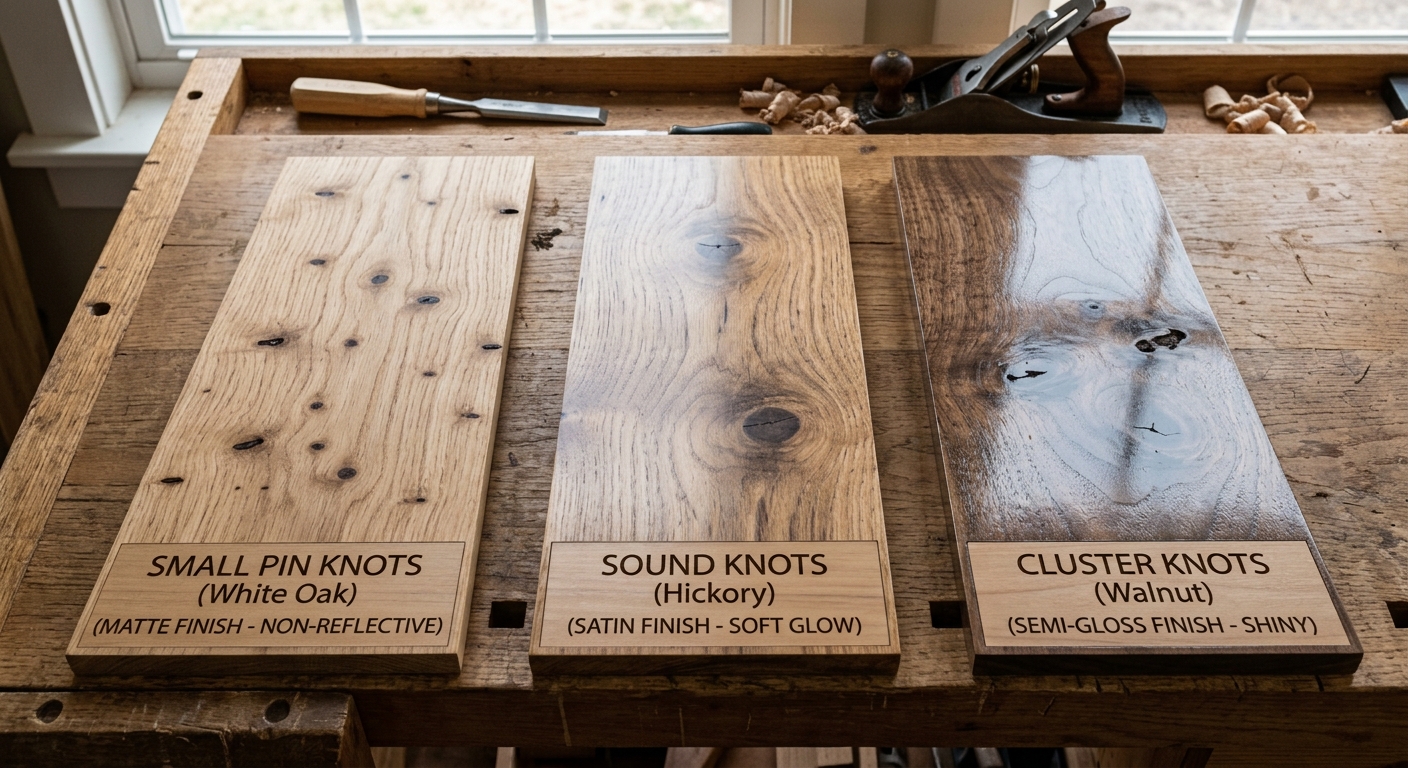
The quick answerKnots, color swings, and dark mineral streaks are not defects. They are a grade, and you decide the grade at purchase. A plank full of character is exactly as hard, as stable, and as long-lived as a perfectly clear one from the same species.
What changes is how much the floor draws the eye, how well it hides scratches, and how much material you need to order. Cleaner floors cost more and show every mark. Busier floors cost less and forgive almost everything.
Are Knots in Hardwood Flooring a Defect?
Every plank is sorted at the mill by appearance. Graders count and limit knots, color variation, mineral streak, and sapwood, and they measure how long the average plank runs. Nothing in that process tests strength, because strength comes from the species and the finish.
Grade is sorted at the mill by appearance, not by strength.
That is worth saying plainly, because the names sound like quality rankings. A floor sold as number one common is not second rate. It simply has more of the wood visible in it.
What Does a Clear or Select Grade Hardwood Floor Look Like?
Sold as select and better, or clear. Consistent color, very few knots, long planks, almost no sapwood. The floor reads as calm and formal and lets the room around it do the talking.
This is the grade for a light natural finish and for contemporary interiors. It is also the least forgiving surface in the house, because with nothing else going on, every scratch and every sanding imperfection shows. That is a reason to be particular about who sands and finishes it.
What Is Number One Common Hardwood Flooring?
Sold as number one common. Noticeable color variation, small tight knots, some mineral streaks, shorter planks. This is what most DFW homes have had for decades, because it looks like wood without looking rustic. Homeowners planning hardwood floor installation in Plano who want a floor that suits the house for the long run often start their comparison here.
It is also forgiving in a practical sense. Variation across the field means a repair plank or a later addition blends more easily than it would into a uniform floor, and small imperfections in sanding disappear into the pattern.
Want to compare grades in full planks?
We will show you select, number one common, and character grade side by side in the species you are considering.
What Is Character Grade Hardwood Flooring?
Sold as character, rustic, tavern, or cabin depending on the mill. Open knots, wide color swings, heavy mineral, short planks. Those names are not standardized, so character from one supplier and rustic from another can look nothing alike. Judge from a large sample rather than the label.
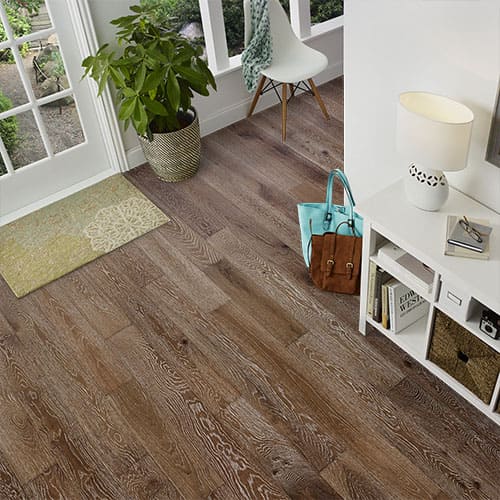
Character grades put knots and color swings on display.
This grade suits wide planks, textured surfaces, and rooms where the floor is meant to be a feature, which is why deciding between wide and narrow planks usually happens alongside the grade decision. It fights a formal interior. It pairs naturally with hand-scraped and wire brushed surfaces, where the texture and the variation reinforce each other instead of competing.
Does Wood Grade Change How Much Flooring You Need to Order?
Here is the practical consequence people get caught by. Busier grades contain more planks with features the installer will cut around, and shorter average lengths mean more end cuts. Both raise the waste factor.
A clear floor might run near the low end of normal overage. A character floor can need meaningfully more, and more again if the room has angles, a stair landing, or a lot of doorways. If you are planning hardwood floor installation in Lewisville in a home with open layouts and stairs, factor that in before the order is placed.
Don’t order a character floor at clear grade quantities. It is a reliable way to run short at the worst possible moment, since mill runs shift over time and the replacement box may not match.
What Do You See at Each Hardwood Grade?
| Select and Better | #1 Common | Character or Rustic | |
|---|---|---|---|
| Knots | Very few, small and tight | Small tight knots present | Open and prominent knots |
| Color variation | Minimal | Moderate | Wide |
| Mineral streak | Rare | Some | Common |
| Average plank length | Longest | Moderate | Shortest |
| Extra material needed | Least | Moderate | Most |
| Hides scratches | Poorly | Reasonably well | Very well |
| Hides sanding flaws | Poorly | Reasonably well | Very well |
| Suits | Formal, contemporary, light finishes | Most homes | Textured, wide plank, rustic interiors |
| Hardness and lifespan | Identical | Identical | Identical |
Choosing a grade for a whole-home floor?
We will walk the rooms, look at your light, and set the overage after seeing the space so the order comes out right the first time.
How Does Stain Color Affect Knots and Grade Variation?
Stain changes how much variation you see. A dark color narrows the visual gap between a pale plank and a dark one, so a busy floor under a deep stain reads as far more uniform than it does raw. A light natural finish does the opposite and puts every knot and streak on display. Species plays a part as well, since red oak and white oak take stain differently.
So if you want a pale floor and a calm surface, grade matters more than almost anything else you will choose. And if you want a pale floor on material that is already in the house, sampling on the actual planks is the only way to know what you are getting, which is exactly what finishing the floor in your home allows.
650samples in our Dallas showroom
On-sitefinishing to match your floor
50+ yrsof experience behind our team
NWFAmember
See a Whole Floor, Not a Sample Chip
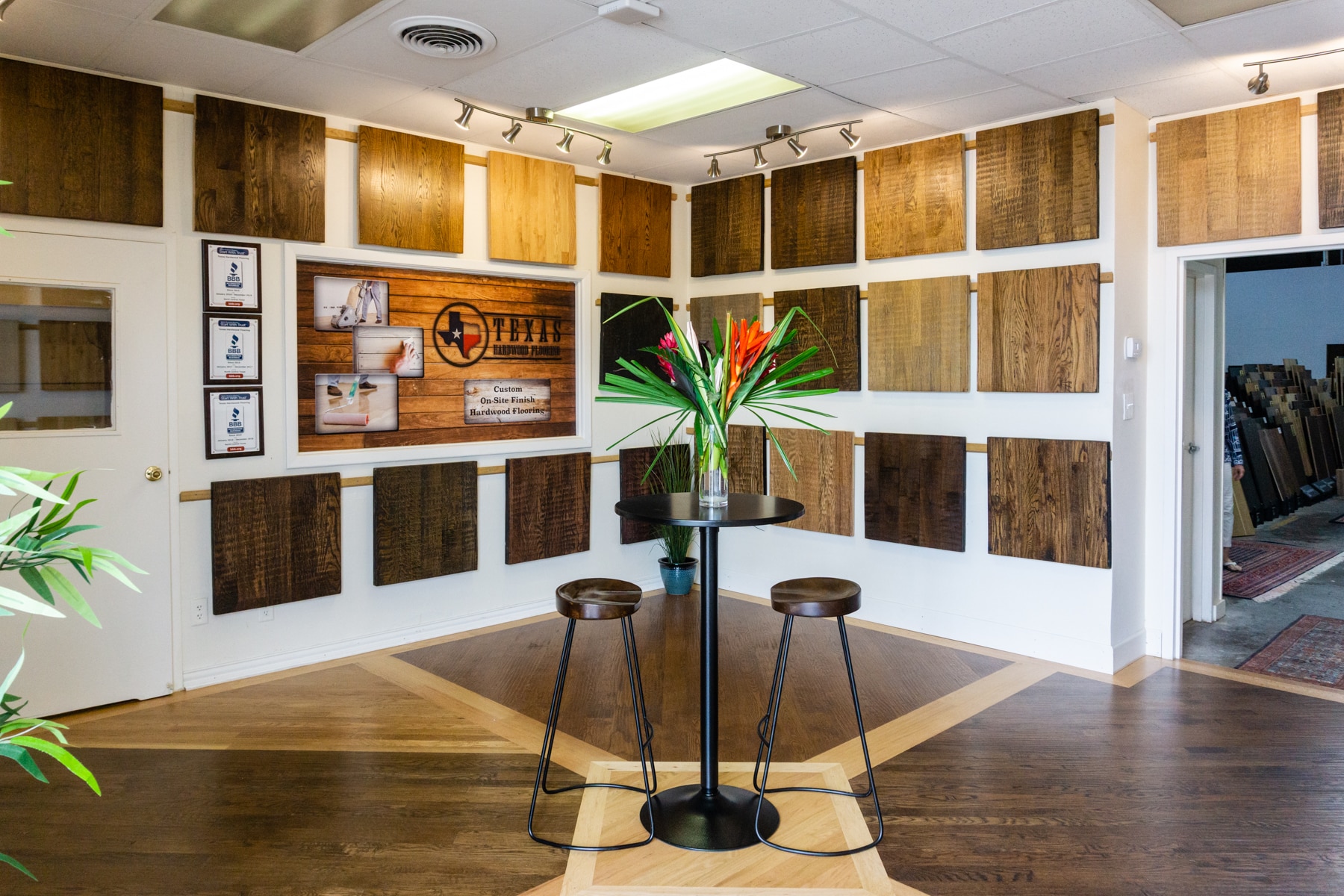
Grade changes nothing about how long a floor lasts and a great deal about how it looks, and it is the decision most often misjudged from a small sample, because a four-inch chip cannot show the color range across a room. The 650 samples in our appointment-only Dallas showroom include full planks so you can compare grades in the same species and finish. Call (214) 399-1770 or schedule a consultation, and we will bring options to the room instead.
FAQs About Knots and Wood Grades
Are knots in a hardwood floor a sign of low quality?
No. Knots are a grading characteristic, not a defect. A character-grade plank and a clear plank from the same species have identical hardness, stability, and refinishing potential. You are paying for uniformity, not for strength.
Which grade hides scratches and daily wear best?
Character and number one common hide wear noticeably better, because the eye already has knots and color variation to look at. A clear floor in a light finish shows scratches most clearly. Sheen and texture matter as much as grade here.
Do grade names mean the same thing everywhere?
For domestic oak, select, number one common, and number two common follow recognized rules. Marketing names like character, rustic, tavern, and cabin are not standardized, so two products with the same name can look quite different. Judge from a large sample.
How much extra material should I order for a character grade floor?
More than for a clear grade, and the exact figure depends on the room. Angles, stairs, and numerous doorways all increase cutting waste. Your installer should set the overage after seeing the space, since running short mid-job risks a visible mill run difference.