Can Engineered Hardwood Be Saved After Water Damage?
The quick answerIt depends on wear layer thickness. An engineered floor with a thick wear layer, roughly three millimeters or more, can usually be sanded and refinished once water damage is addressed. A thin wear layer cannot be sanded meaningfully, so replacing the affected area is normally the outcome. Delamination makes it a replacement regardless.
What Is the Wear Layer and Why Does It Decide Everything?
Engineered flooring is real wood over a plywood core. The top layer is the same species you would get in a solid floor, and it is the only part a sander can work with.
Wear layers vary widely, from under a millimeter on entry-level product to six millimeters or more on premium flooring. That range is the difference between a floor that can be restored and one that cannot, and it is why wear layer thickness matters so much long before any water is involved.
Sanding removes roughly a third of an inch, or about 2.5 millimeters. On a two-millimeter wear layer, that is most of what you have. On a five-millimeter wear layer, it is a modest fraction.
How Do You Find Out What You Have?
- Check the paperwork. The original invoice or product specification is the fastest route if you still have it. Manufacturers list wear layer thickness in millimeters.
- Look at a cut edge. Without paperwork, the practical method is to look at a cut edge, usually at a floor vent, a threshold, or where the flooring meets a transition. The wear layer is visible as a distinct band above the layered core.
- Lift a small section. If none of that is accessible, a small section can be lifted where it will not show.
This is worth doing before any decisions get made, because the answer changes the entire plan.
What Does Water Damage Look Like on Engineered Flooring?
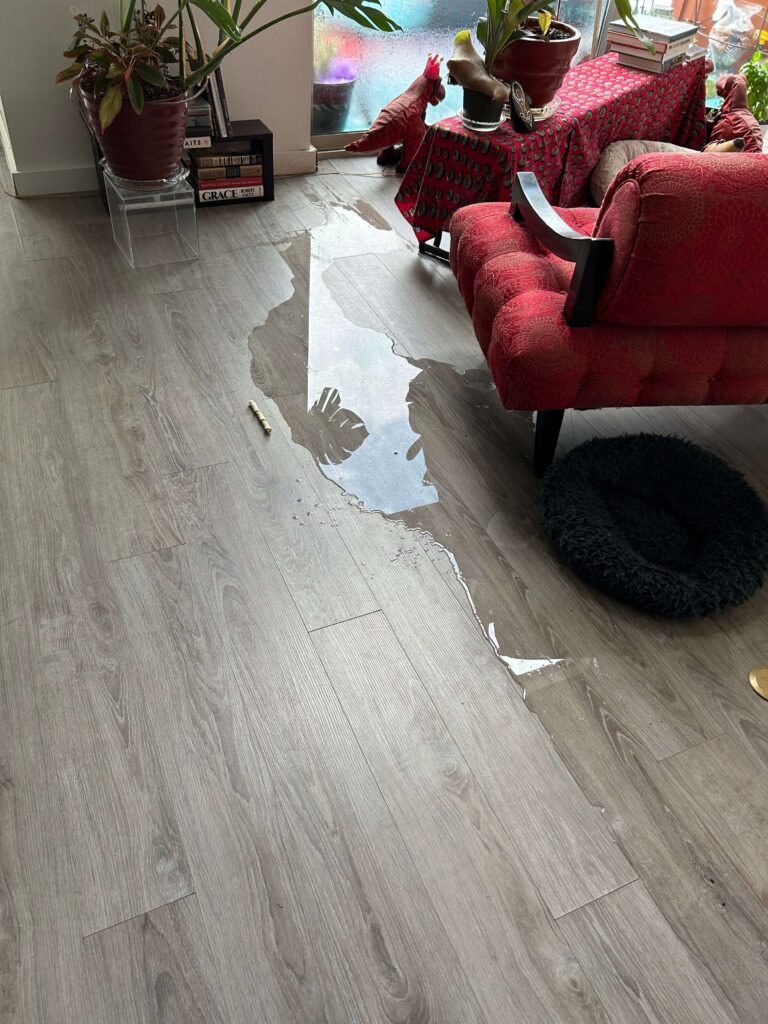
Edge swelling shows up first, where the wear layer meets the core and moisture gets in. Sometimes the surface still looks acceptable while the edges have lifted enough to feel.
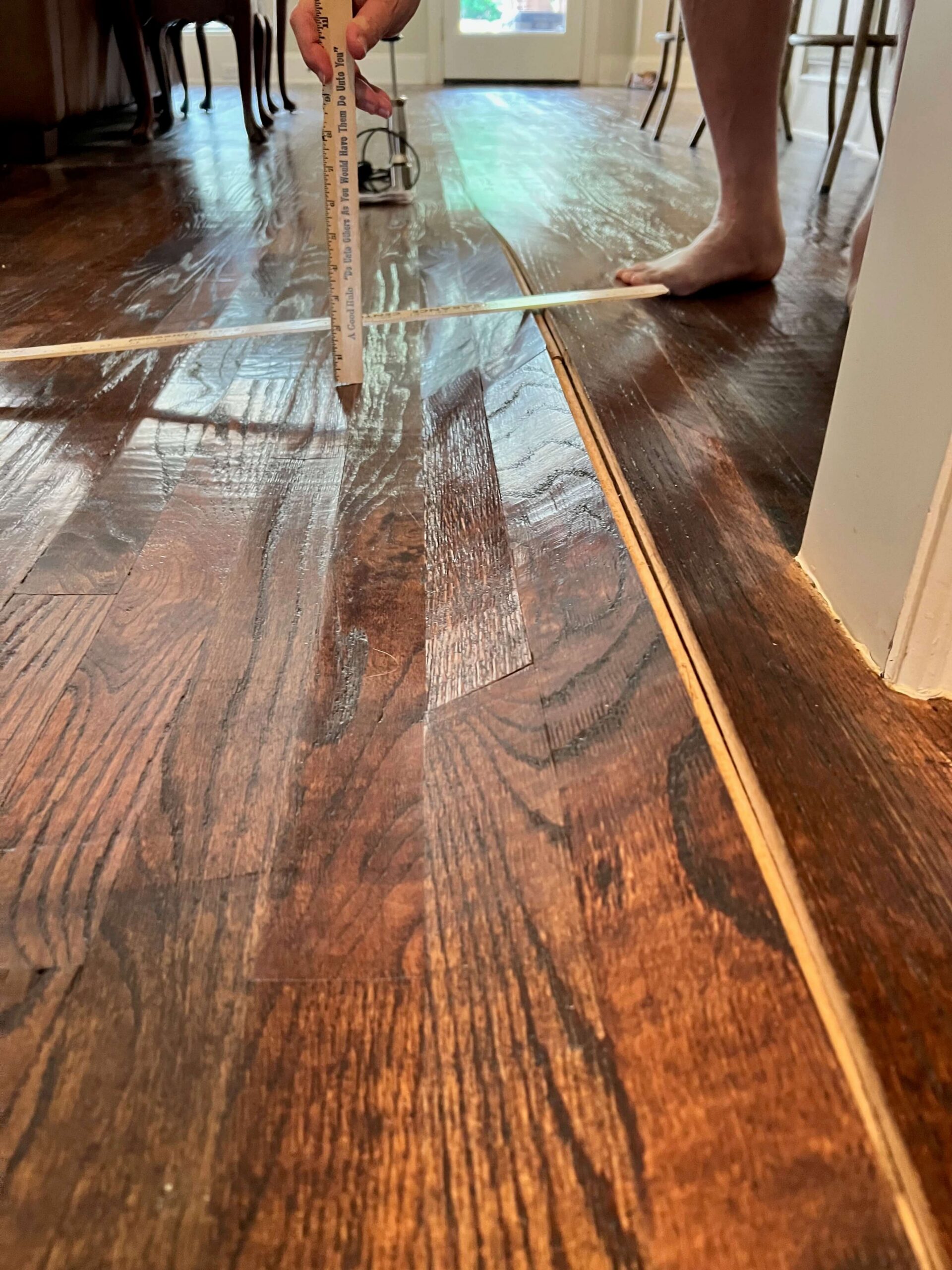
Buckling and warping measured on a water damaged floor.
Delamination is the serious one. When the wear layer separates from the core, the floor no longer has a bonded surface, and there is nothing stable to sand. Tapping the area often produces a hollow sound that the rest of the floor does not make.
Cupping happens on engineered floors too, though it tends to be less pronounced than on solid wood. When an engineered floor cups severely, the concern is usually whether the layers have begun to separate rather than whether it can be flattened.
Hollow spots or lifted edges?
We test for delamination and measure the wear layer, so you know which path your floor is on before anything comes up.
Why Is Engineered Flooring Often Replaced Rather Than Repaired?
Partly the wear layer math, and partly what replacement involves. Much engineered flooring is installed as a floating floor or glued down, and neither lends itself to lifting a few rows in the middle of a room the way a nailed solid floor does.
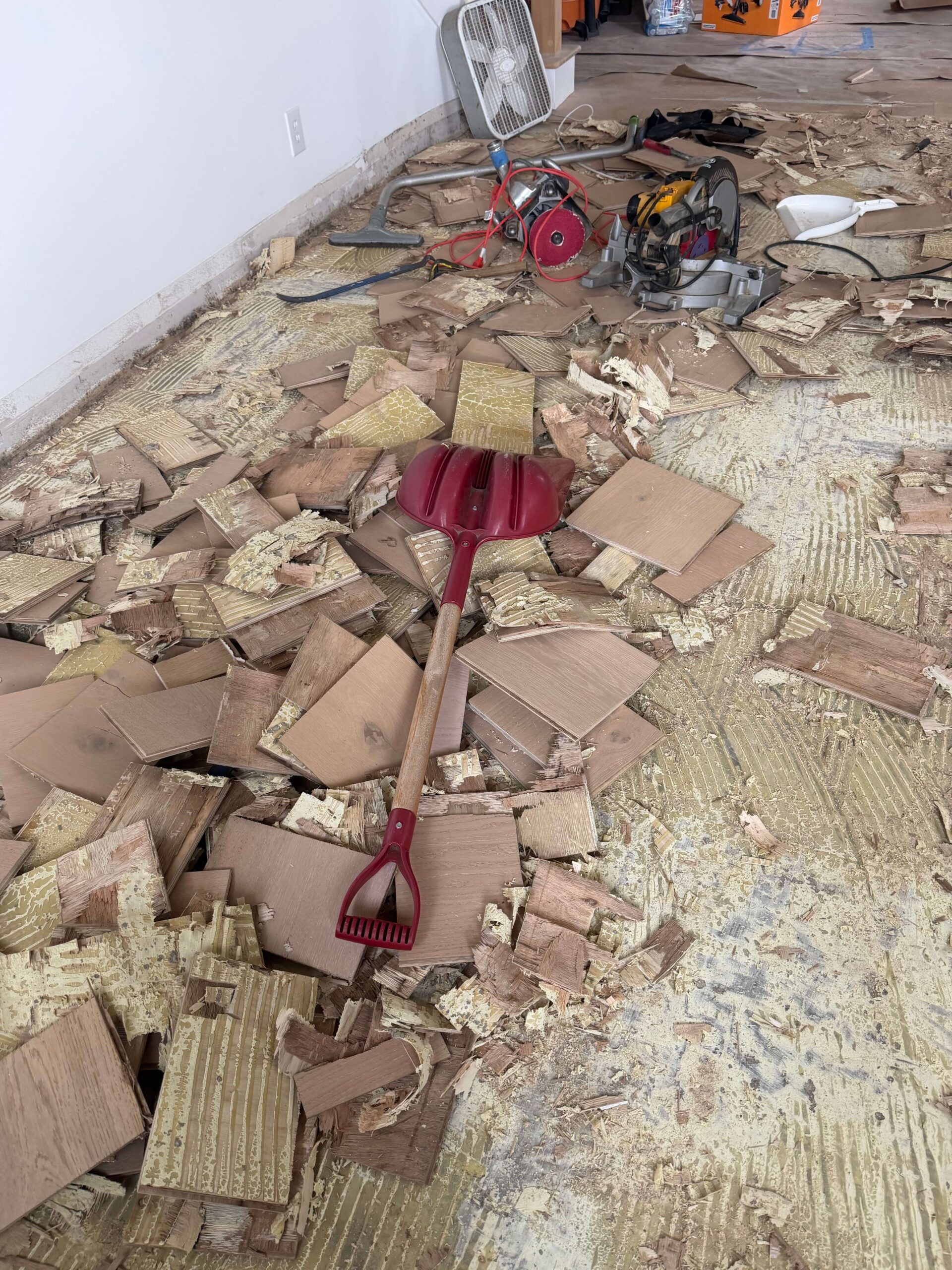
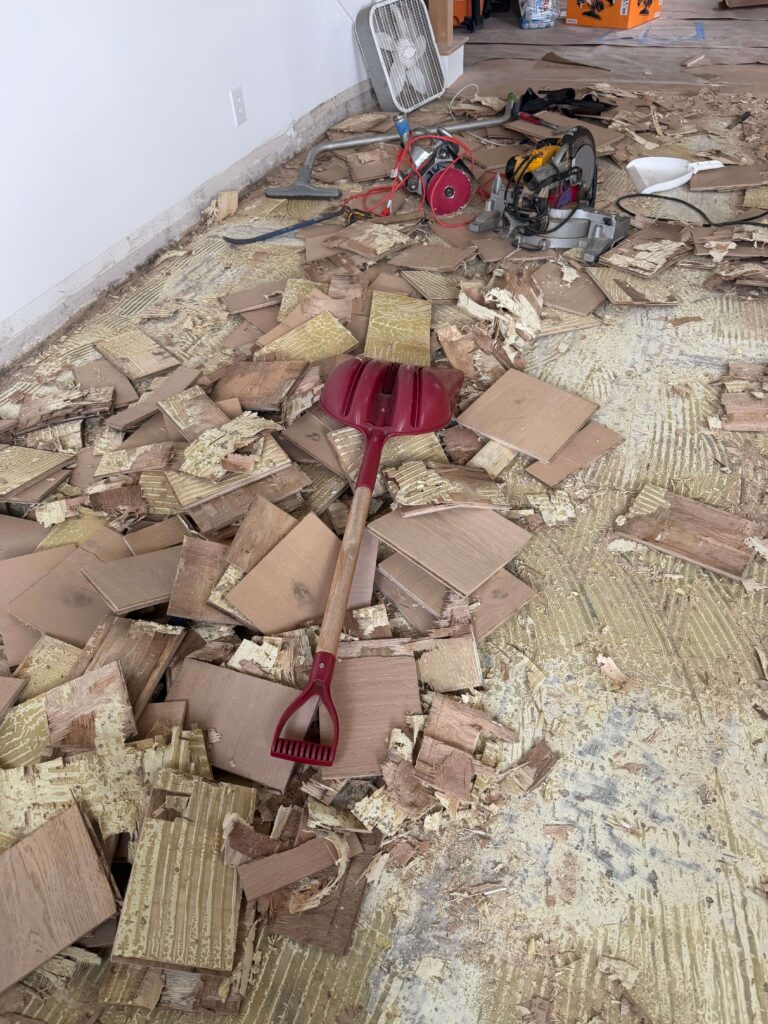
Engineered hardwood removed after water damage.
With a floating installation, the floor comes apart from an edge, which means working across a room to reach a damaged area in the center. With a glue-down installation, removing sections cleanly without damaging the surrounding flooring takes real care.
Product availability is the other factor. Engineered lines change frequently, and a floor installed six years ago may no longer be made. Sourcing a close match is often harder than matching solid wood, where species and width are more standardized. It is worth having an engineered floor evaluated before assuming either path.
Weighing repair against replacement?
We will look at how your floor was installed and whether matching product is still available before you commit to either.
What Should You Consider If You Are Replacing?
This is a reasonable moment to reconsider the flooring itself rather than defaulting to what was there. The factors that actually drive the decision are plank width, the heights of your doors and cabinets, and budget.
Solid hardwood gives you a floor with far more refinishing life in it, generally three to four sandings over the years, which matters if you plan to stay in the home a long time. Our comparison of solid and engineered floors in Texas homes walks through the trade-offs.
If you stay with engineered, wear layer thickness is the specification worth paying attention to when choosing and installing a new engineered floor, because it determines whether the next water event is a repair or another replacement.
Find Out Whether Your Floor Has Enough Wear Layer Left
Five minutes at a threshold or a floor vent usually answers the question that decides everything else. Call (214) 399-1770 to schedule a consultation. We will check your wear layer, test for delamination, and tell you honestly whether the floor can be refinished or whether replacement is the better use of your money. We serve homeowners throughout the Dallas and Fort Worth communities.
Frequently Asked Questions
How many times can engineered hardwood be refinished?
Once or twice with a thick wear layer. Thin wear layers cannot be sanded at all without going through to the core. It depends entirely on the product, and we compare how refinishing works on solid and engineered floors in a separate article.
Can a single damaged area of engineered flooring be replaced?
Sometimes, and it depends on how it was installed and whether matching product is still available. A glued-down floor is generally easier to address in sections than a floating one.
Is engineered flooring more water resistant than solid hardwood?
It handles moisture somewhat differently, but neither is waterproof, and both are damaged by standing water. Anything that reaches the underside will cause problems in either material.
What if only the finish is damaged?
Then a screen and recoat may be enough; it removes very little material and works on most engineered floors, regardless of the wear layer. Our refinishing guide explains the difference.