Matte vs Satin vs Semi-Gloss Hardwood Floors
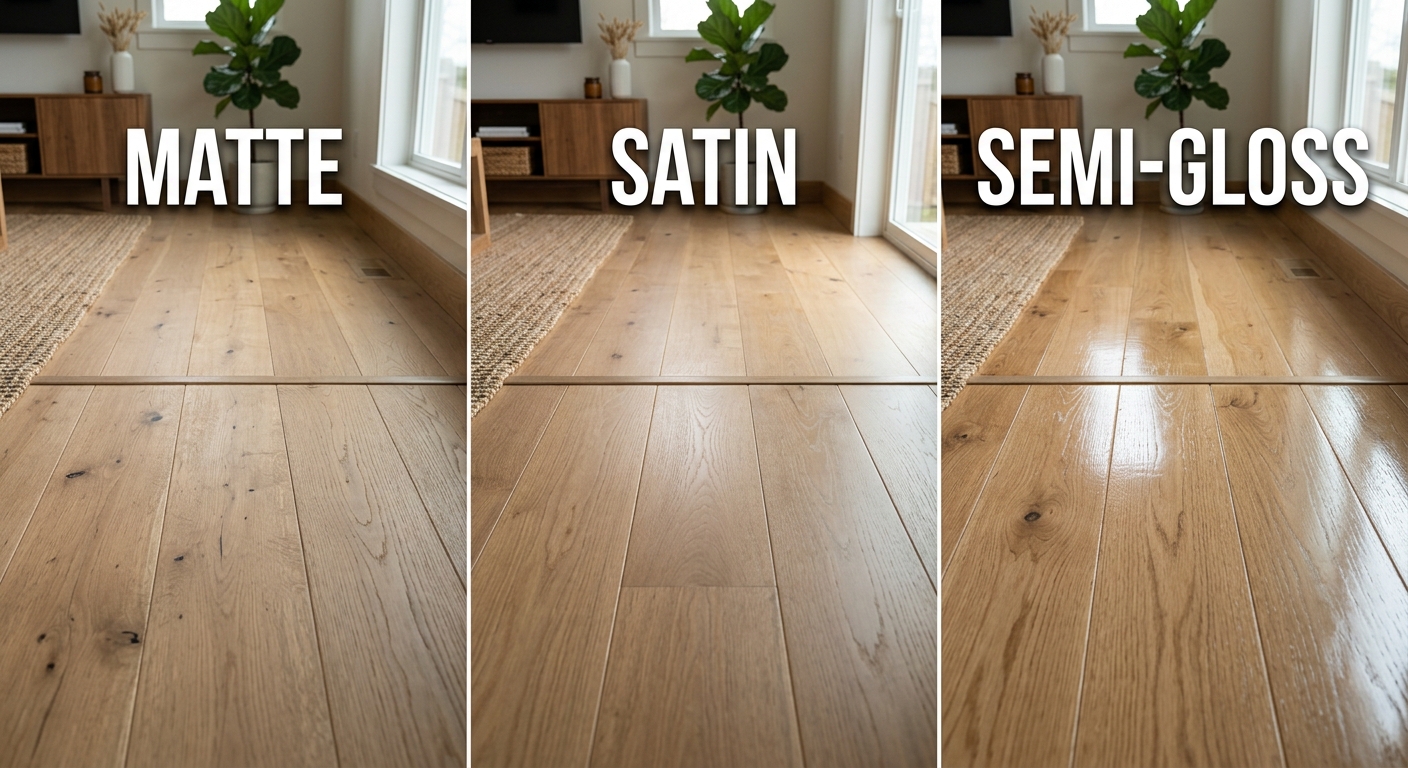
The quick answerMatte hides the most. Semi-gloss hides the least. Sheen measures how much light a finish reflects, and reflected light is what makes a scratch, a dust film, or a paw print visible. Satin sits between them and is what most homes choose. None of the three is more durable than the others, since the finish underneath is identical.
A matte floor scatters light and swallows minor damage. A semi-gloss floor returns light in a sharp line, so every scratch across that line shows as a bright mark.
Is a Higher Sheen Floor Finish More Durable?
This gets confused constantly. A semi-gloss floor is not more protected than a matte floor. Manufacturers produce the same finish at different sheen levels by adjusting flattening agents. Wear resistance comes from the resin system and the number of coats. The resin also decides color and drying time, which is the real story behind how oil-based and water-based finishes differ.
The same finish can be made at several sheen levels.
What changes is visibility. Two identical floors can take identical damage, and the semi-gloss one will look considerably worse.
How Do Matte, Satin, and Semi-Gloss Handle Light?
Matte
Reflects very little. The floor reads as wood rather than as a surface, and grain and texture come forward. It is forgiving of scratches, dust, and footprints, which makes it the practical choice for households with dogs or children.
The trade-off is that a very flat finish can look slightly dry in a room without much natural light, and some matte products show cleaning streaks if you use the wrong product.
Satin
A soft, low reflection. Enough light to give the wood depth, not so much that it turns into a mirror. This is the default in most DFW homes, and it is genuinely the safest choice when you are uncertain. If you are planning hardwood floor installation in Dallas and can’t decide, satin is the sensible place to start your samples.
Semi-gloss and gloss
High reflection and high formality. It suits period interiors, entry halls where a bit of drama is intended, and certain traditional settings. In an open plan house with west-facing glass, which describes a great many DFW homes, it becomes a liability. Afternoon sun across a semi-gloss floor turns every scratch into a bright line and shows every particle of dust.
Not sure which sheen suits your light?
We will put matte, satin, and semi-gloss samples down in your own rooms so you can judge them where the floor will live.
Which Floor Sheen Is Best for Each Room?
| Space | Best choice | Workable | Reason |
|---|---|---|---|
| Kitchen | Matte | Satin | Highest traffic, most dropped objects |
| Open living areas | Satin | Matte | Balances depth against visible wear |
| Homes with dogs | Matte | Satin | Nail marks scatter instead of catching light |
| West facing rooms | Matte | Satin | Afternoon sun exposes every flaw at higher sheen |
| Formal dining or entry | Satin | Semi-gloss | Lower traffic supports more reflection |
| Period home restoration | Satin | Semi-gloss | Higher sheen is historically consistent |
| Stairs | Matte or satin | Not semi-gloss | Reflection on treads reduces perceived footing |
| Bedrooms | Any | Any | Low traffic, sheen is purely aesthetic |
How Does Sheen Interact With Floor Color and Grade?
A dark floor at high sheen is the least forgiving combination available. Dark wood shows dust more clearly, and gloss shows scratches more clearly, so the two problems compound. Dark floors are usually best kept at matte or low satin. That is worth keeping in mind if you are planning hardwood floor installation in Lakewood with a deep, dark stain.
Grade matters too. A select grade floor at high sheen has nothing to distract the eye from a scratch, whereas a character grade floor at matte hides nearly everything. If the goal is a floor that stays looking new with minimal fuss, matte over a mid- or character-grade floor is the combination that gets you there, and choosing the grade is part of the same conversation as choosing the sheen.
Thinking about changing your floor’s sheen?
We will check whether your finish can be screened and recoated at a new sheen or needs a full sand and refinish.
Can You Change Your Hardwood Floor Sheen Later?
Sheen is not permanent, which makes it lower stakes than the color decision. A floor in sound condition with an intact film can be screened and recoated at a different sheen without a full sand, so a semi-gloss floor can be brought down to satin or matte in a couple of days.
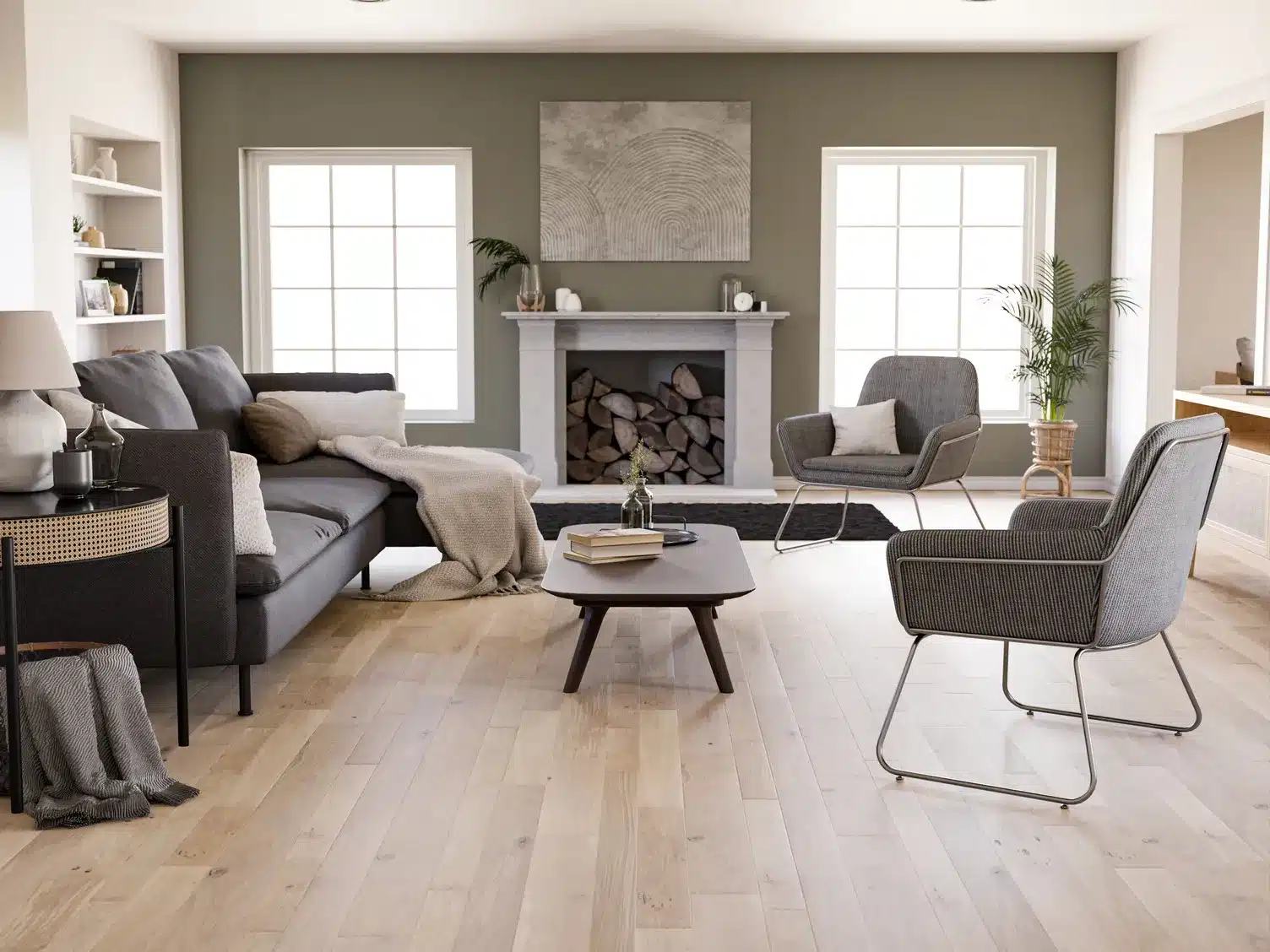
A sound finish can be recoated to a new sheen without sanding.
Recoat before the finish wears through. That only works as long as the existing finish is still continuous. Once wear has broken through to bare wood in traffic lanes, the floor needs a full sand and refinish instead, which is a larger job.
Sheen changes are one of the better reasons to recoat before a floor actually looks worn out. If a full refinish is on the table, it helps to know what to expect from a hardwood refinishing project before you pick a sheen.
On-sitefinishing to match your floor
50+ yrsof experience behind our team
Same weekconsultations typically
NWFAmember
Sheen Is Reversible, So Get It Right
Of every decision in a refinishing project, sheen is the one you can change later without sanding, which makes it worth getting right now while it costs nothing to test. It also behaves completely differently under showroom lighting than under afternoon sun through your own windows. Call (214) 399-1770 or schedule a consultation, and we will put matte, satin, and semi-gloss on your floor so you can look at all three at four in the afternoon.
Questions About Floor Sheen
Which sheen hides dog scratches best?
Matte, by a clear margin. Scratches are visible because they interrupt reflected light, and a matte finish reflects very little to begin with. Pairing matte with a mid- or character-grade floor and a mid-tone color hides more still.
Do matte floors look dull or unfinished?
They look like wood rather than like a coated surface, which most people find appealing once they see it in a room. In a space with limited natural light a very flat finish can read as slightly dry, and low satin is often the better call there.
Can I change the sheen without refinishing the whole floor?
Yes, if the existing finish is intact. A screen and recoat abrades the surface and applies fresh finish at the new sheen, usually in a couple of days with far less disruption. Once wear has broken through to bare wood, a full sand is required instead.
Is high gloss ever the right choice?
In formal, low-traffic settings and in period homes where it is historically appropriate. It is a poor fit for open plan living areas, for households with pets or children, and for the west-facing rooms common in DFW, where afternoon sun exposes everything.