An Upstairs Leak Damaged the Floor Below: What Are My Options?
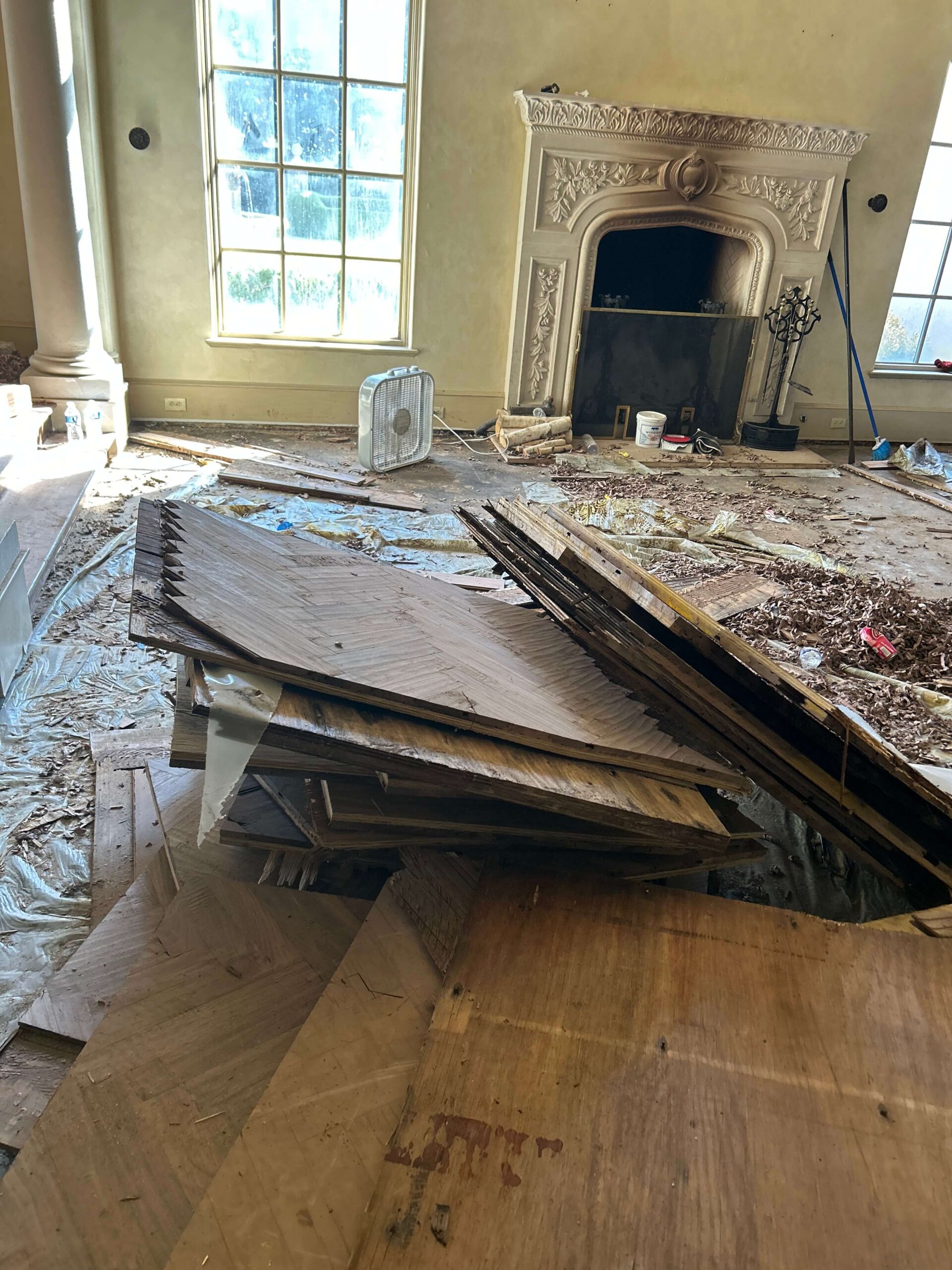
The quick answerA leak from an upper level damages the floor it started on, the ceiling below, and often the floor beneath that. The upstairs flooring is usually worse because it sat in the water. Both levels need moisture readings, and the ceiling cavity between them has to be dried before either floor is repaired.
Why Is the Upstairs Floor Usually the Worse Damage?
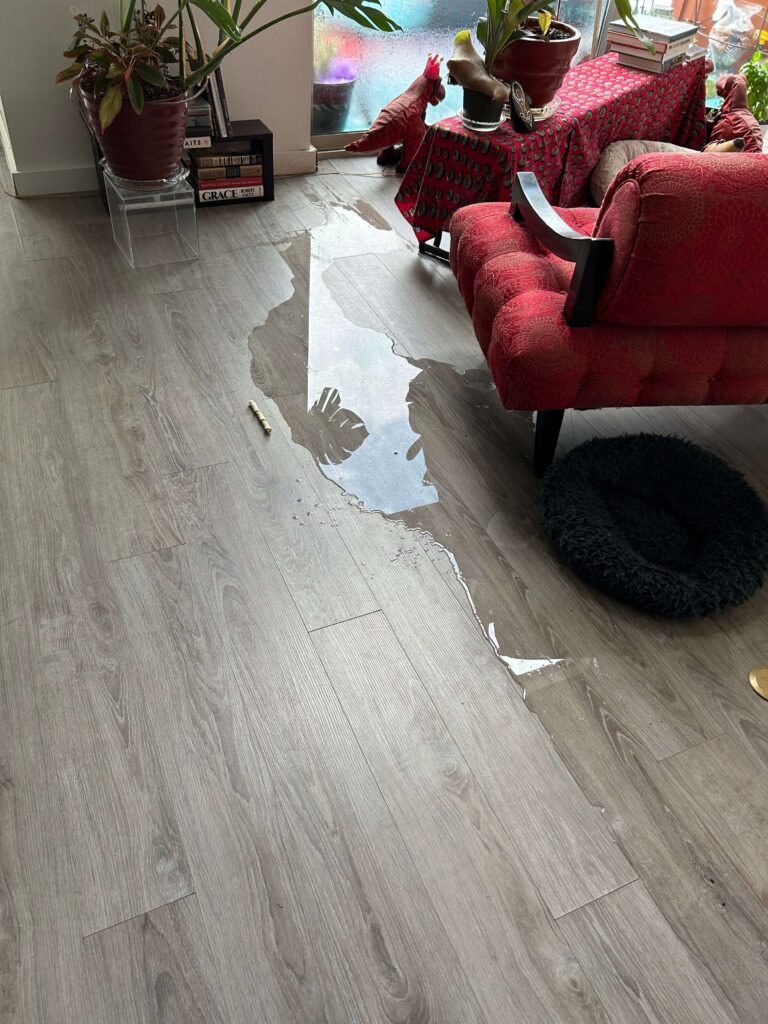
The floor where the leak happened held the water. The floor below only received what made it through the ceiling assembly, which is typically a fraction of the total.
That seems backward to most homeowners, because the visible drama is downstairs. A stained ceiling and water dripping onto a living room floor look far worse than a slightly uneven upstairs hallway.
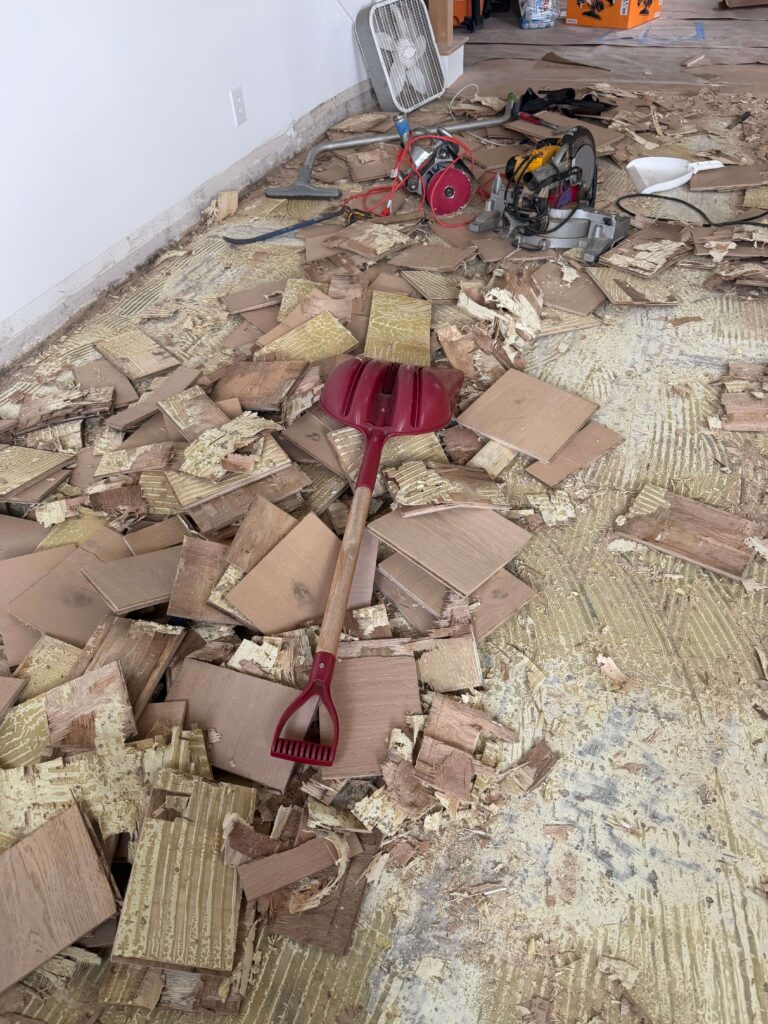
The upstairs flooring, though, was sitting in standing water for however long it took to notice. That material is most likely to have swollen, cupped, or stained through, even when it presents less dramatically.
What Happens in the Space Between the Floors?
The ceiling assembly holds insulation, framing, and often ductwork, and all of it can absorb and hold water. This cavity is the part most commonly under-dried, because nobody can see into it.
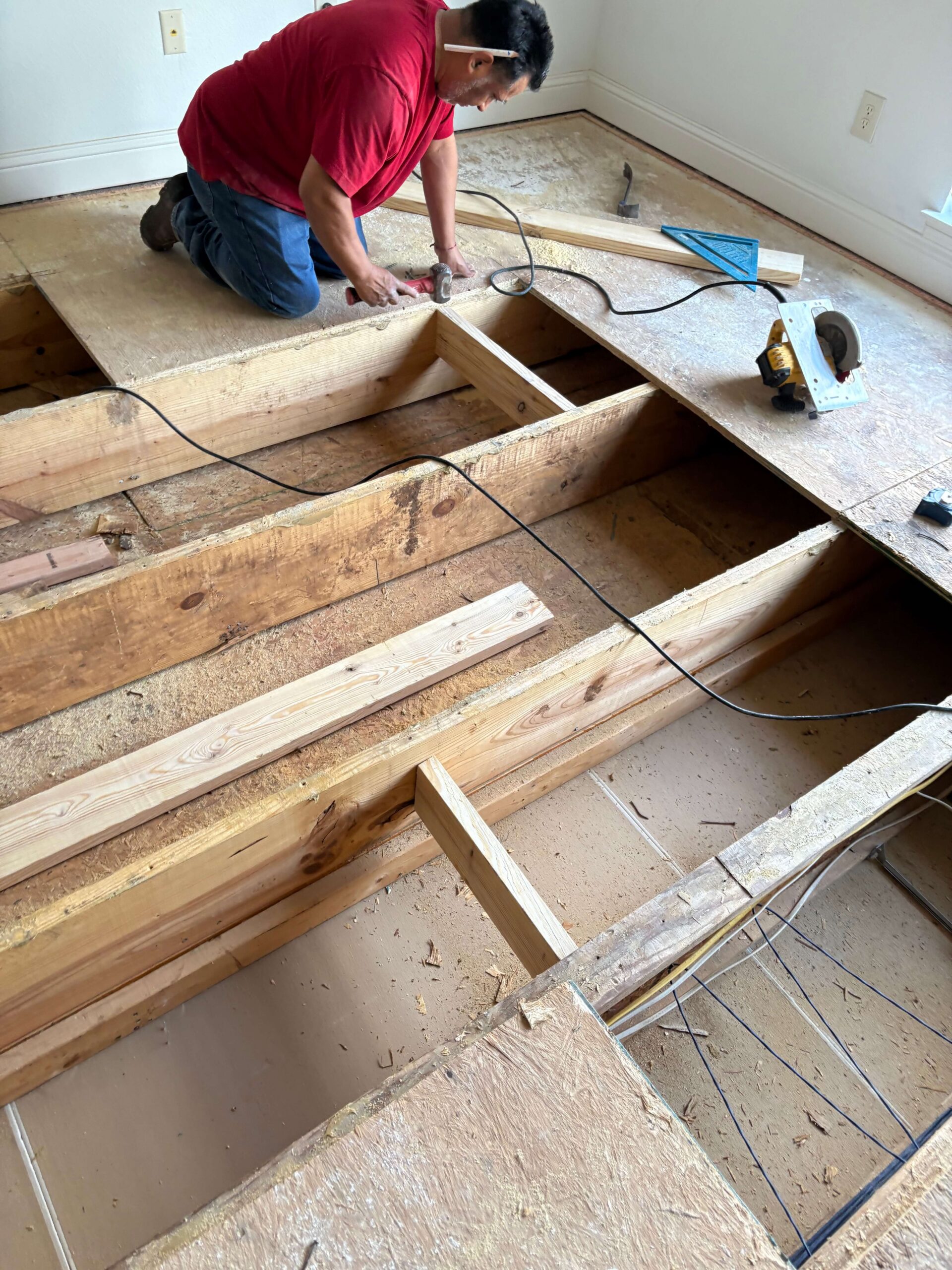
Replacing a second floor plywood subfloor after a leak soaked the cavity below.
Wet insulation in particular holds moisture for a long time and keeps feeding the framing and the underside of the upstairs flooring. A floor that will not dry out is frequently sitting above insulation nobody removed.
This is also where growth develops most readily, for the same reasons it develops under a floor: organic material, trapped moisture, and no airflow. The signs are worth knowing, and we cover them in our article on how to tell if moisture is trapped below a floor.
Water came through the ceiling?
We take readings on both floors and in the cavity between them, so nothing gets closed up while it is still wet.
How Does the Scope Get Determined?
Readings are taken on both levels, on both floors, and where the ceiling can be accessed. Often a section of ceiling is opened deliberately, both to dry the cavity properly and to see what condition the framing is in.
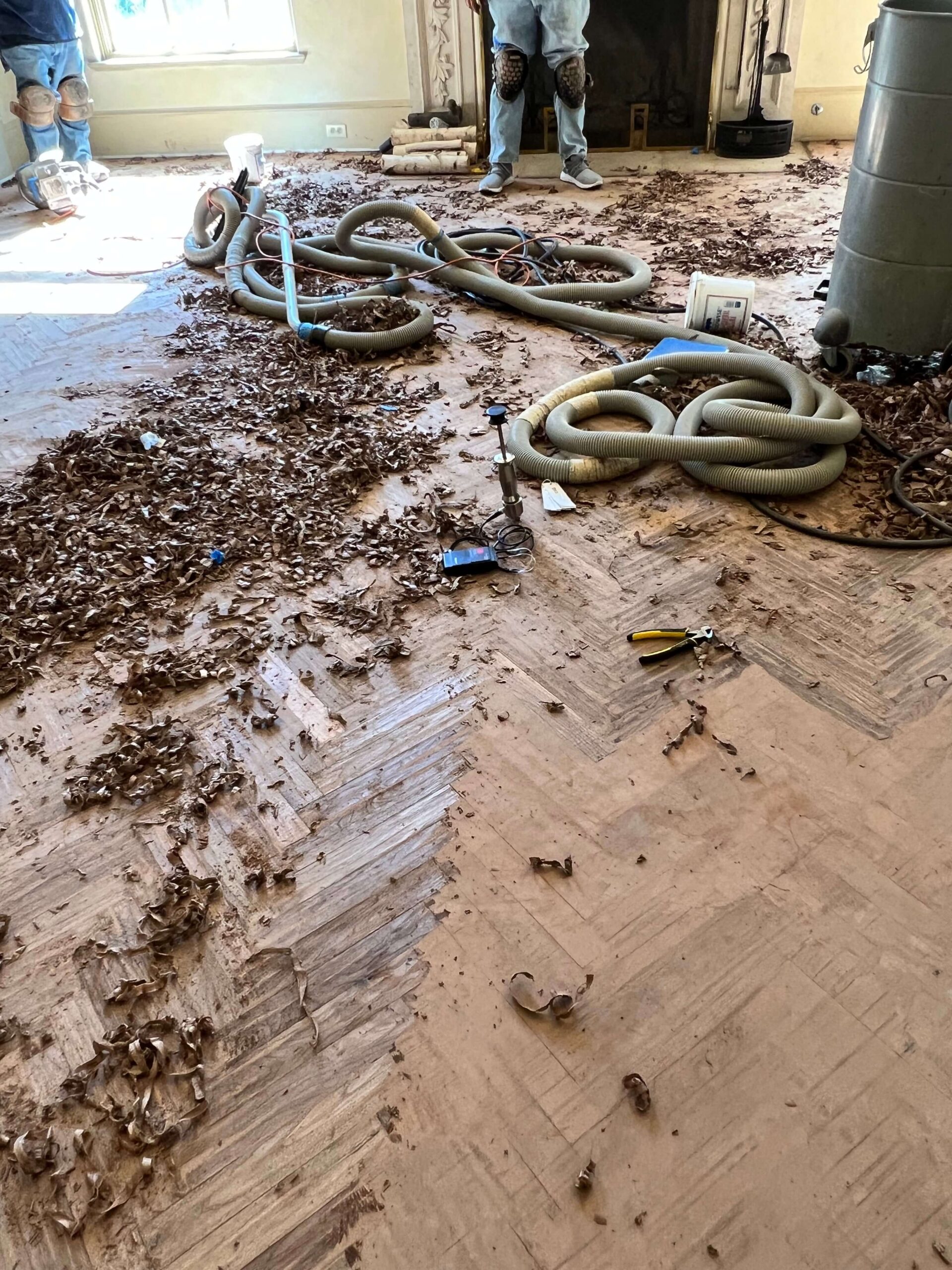
Moisture readings set the scope on both levels.
The upstairs damaged area is mapped first, since that is where the water originated and spread. Then the downstairs area is assessed, which is usually smaller and more localized, concentrated where water came through.
Sequence matters on a job like this. The cavity dries before the ceiling closes, and the ceiling closes before floor finishing begins, because drywall work produces dust that a fresh finish will hold onto permanently. Coordinating repairs across both levels largely comes down to getting that order right.
Do Both Floors Need to Match?
Only if they are visually connected, which usually comes down to the stairs. Where a staircase carries the same flooring, and you can see both levels from the landing, a color difference will be noticeable, for the same reasons a replaced section stands out against an aged floor.
If a closed stairwell separates the two floors, or the stairs have different flooring, you can treat them independently. That often reduces the scope considerably.
Stairs themselves deserve attention on a job like this. They are the most visible wood in most homes and the hardest to match after the fact, so if the staircase is involved, it should be part of the scope from the beginning rather than an addition later.
Is your staircase part of the damage?
Bring it into the scope from the start, and we will plan the matching across both levels and the stairs together.
How Do These Claims Usually Go?
A leak from a supply line, a failed valve, or an overflowing fixture is generally treated as sudden and accidental. A shower pan that has been leaking slowly into the framing for years is the harder conversation.
Photograph both levels and the open ceiling before anything is closed up. Two-level losses are larger claims by nature, which means more adjuster scrutiny and more benefit from careful documentation.
Our overview of what carriers cover on water losses goes through the standards, and we have worked alongside adjusters on claims like these for many years.
Get Both Levels Measured Before Anyone Closes the Ceiling
Once the ceiling is patched, the cavity above it is no longer accessible without opening it again. If a leak from an upper level reached your floors, call (214) 399-1770 to schedule a consultation. We will take readings on both levels while access is still open and give you a scope that accounts for the whole path the water took. We typically schedule consultations within the same week.
Frequently Asked Questions
The downstairs ceiling dried and looks fine. Do I still need it opened?
Not always, but a surface that looks dry says nothing about the insulation above it. A reading through a small access point can confirm it without committing to a full opening.
Which floor should be repaired first?
Generally, the upstairs, since it holds the larger damage and any additional moisture released during that work would fall into the space below. Repairing downstairs first risks having to do it twice.
Can the staircase be refinished separately from the floors?
It can, but matching a staircase to a floor finished at a different time is difficult because treads take stain differently than flooring. Doing them together produces a far better result.