
Why Do Some Wood Floors Have Different Plank Widths?
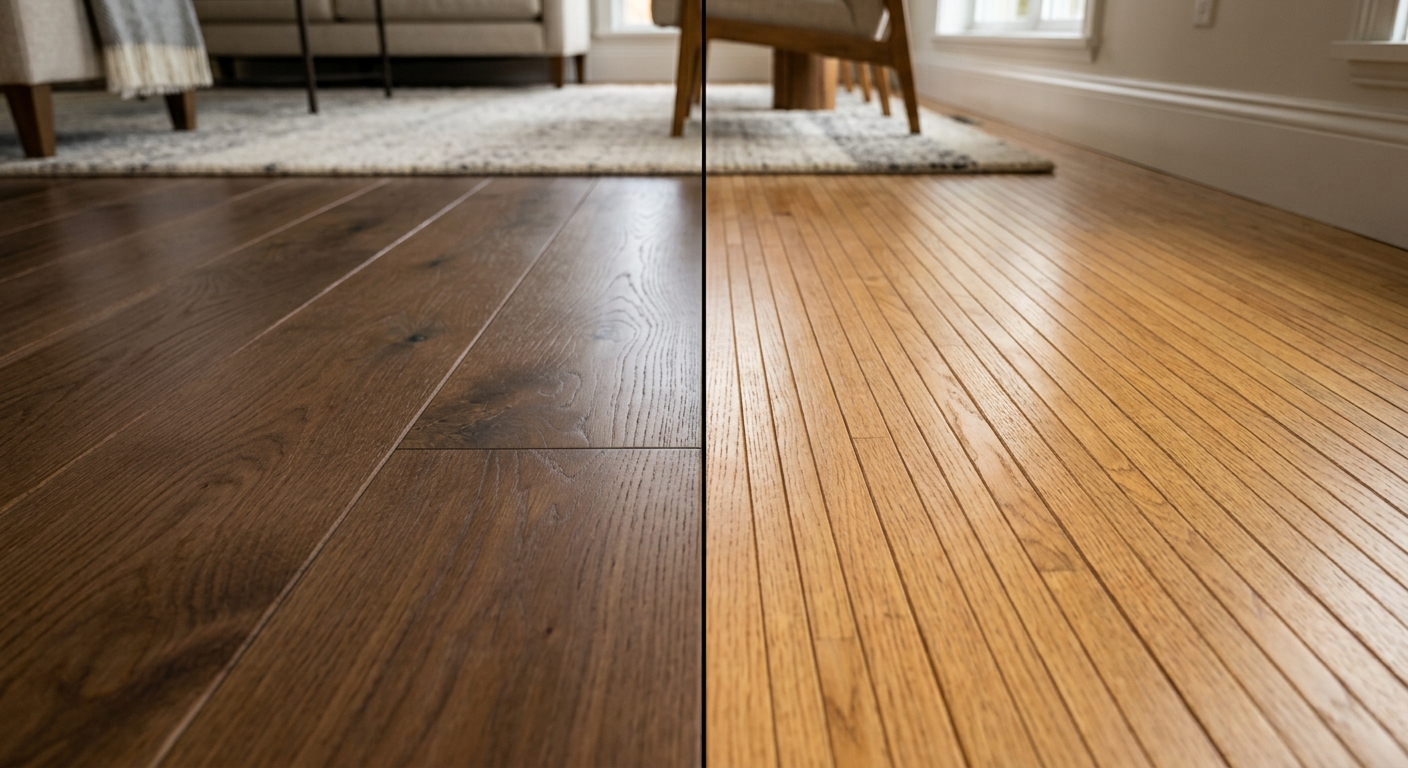
The quick answerBecause somebody chose that, plank by plank, before the floor was ordered. A mixed-width floor uses two, three, or occasionally four widths in a deliberate ratio, laid so no repeating pattern is visible. It is not an assortment of leftovers, and it is not a mistake.
The look reads as older and more handmade; it hides an imperfect subfloor better than a single wide width does, and it costs more in both material and labor. A single-width floor reads cleaner and more contemporary, and it is simpler to order, install, and match years later. If you settle on one width, our guide to choosing between wide and narrow planks covers how that width changes a room.
What Is a Random-Width Hardwood Floor?
A typical specification might be equal parts 4 inch, 6 inch, and 8 inch, or a weighted mix such as fifty percent 5 inch with the remainder split between 3 inch and 7 inch. The ratio is chosen for effect, and the mill orders it that way.
The installer then lays the planks so widths do not group, and no sequence repeats within a sight line. Done well, the eye never locates a pattern. Done carelessly, you get visible banding, which is the most common way these floors go wrong.
Where Does the Mixed-Width Floor Look Come From?
Before flooring was milled to standard dimensions, planks were cut from whatever the log gave up, so floors in eighteenth- and nineteenth-century houses are naturally mixed. Random width deliberately references that, which is why it belongs with hand-scraped or wire-brushed textures, character-grade material, and older architecture. That makes it worth considering if you are planning hardwood floor installation in an older Park Cities home.
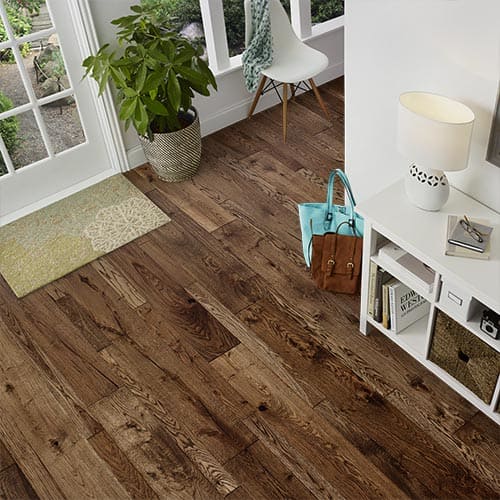
Mixed widths echo floors milled before standard dimensions.
It reads as authentic in a restoration and as affectation in a contemporary build with flat drywall and square trim. Homeowners planning hardwood floor installation in a newer Frisco home will usually find a uniform width the cleaner fit. If you are drawn to the texture as much as the widths, a hand-scraped surface delivers much of that feeling in a uniform width, which is a simpler floor to own.
How Is a Random-Width Floor Specified and Ordered?
Three things have to be decided before the order goes in, and getting them wrong is expensive to fix once the material is milled.
- Which widths, and how many. Two widths read as subtle. Three is the common choice. Four begins to look chaotic in a small space.
- The ratio between them, expressed as a percentage of total square footage rather than as a plank count.
- The overage. Random width needs more than the standard waste factor, because the installer needs enough of each width in hand to keep the layout from repeating as the floor closes out.
Under-ordering a random-width floor is a genuine problem. Running short of one width mid-installation forces the layout into exactly the banding you were trying to avoid.
Considering a mixed-width floor?
We will help you choose the widths, the ratio, and the overage for your rooms before anything goes to the mill.
Why Does Random-Width Installation Take Longer?
A uniform floor is a rhythm. Racking out a random-width floor is a continuous set of judgments about which plank goes where, made across the whole room rather than one row at a time. Good installers rack several rows ahead, standing planks out dry to check the distribution before anything is fastened.
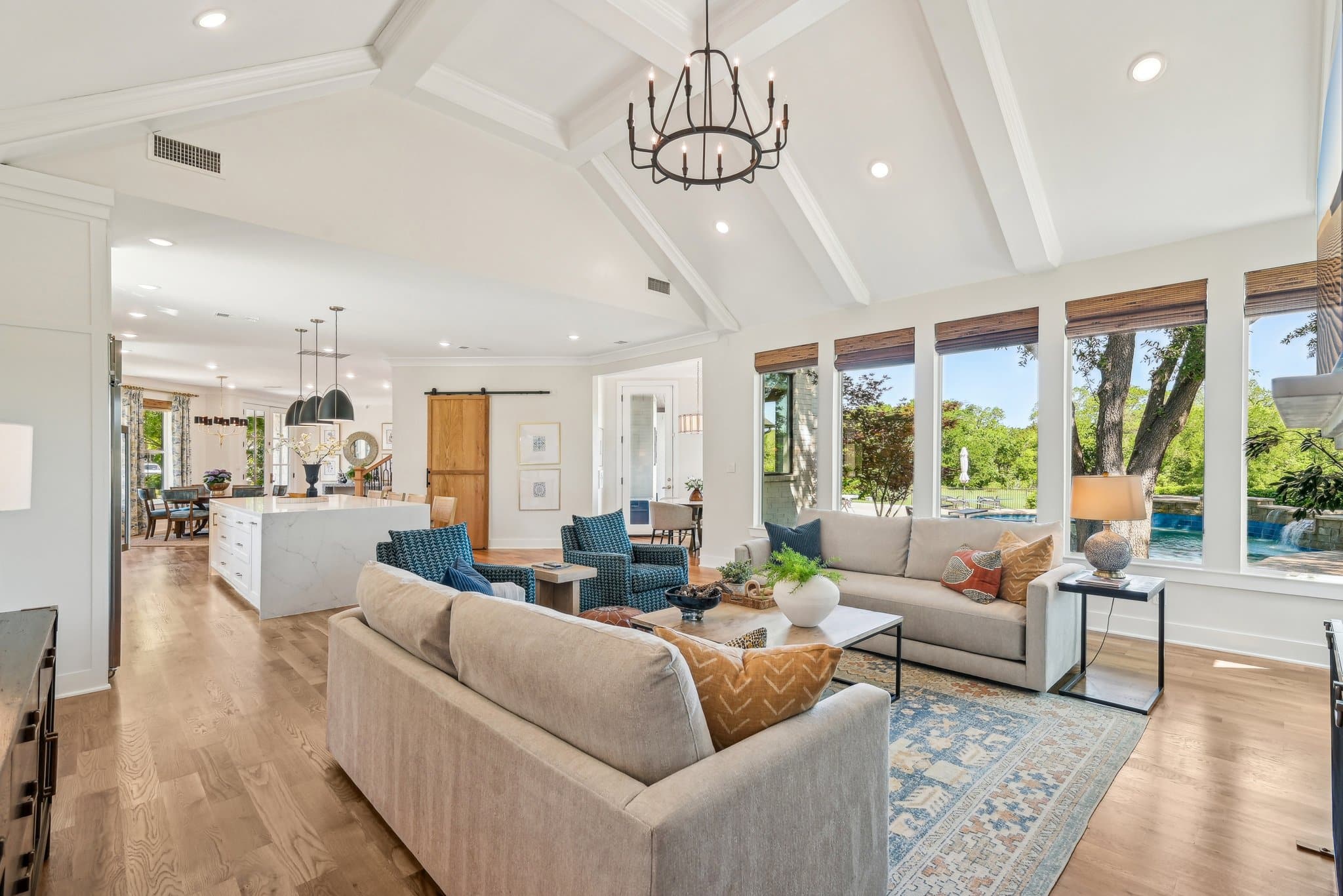
Every plank placement is a judgment call on a random-width floor.
That is skill, and it is time, and it should be reflected in the quote. It is also a reason to be specific about who is doing the work. Our installations are carried out by trusted long-tenured crews we have partnered with for years, and the sequence a hardwood installation follows shifts when a floor has to be laid out this way.
How Does Random Width Compare to Uniform Width?
| Factor | Random Width | Uniform Width |
|---|---|---|
| Ordering | By ratio across two to four widths | Single width, straightforward count |
| Typical overage | Above standard waste factor | Standard waste factor |
| Layout planning | Racked several rows ahead | Row by row |
| Installation labor | Higher | Baseline |
| Hides subfloor irregularity | Better | Less so at wider widths |
| Reads as | Older, handmade, informal | Cleaner, contemporary, formal |
| Matching an addition later | Difficult, ratio and widths must be recreated | Straightforward if the width is still milled |
| Best paired with | Character grade, scraped or brushed texture | Select grade, smooth or lightly brushed |
Random width or uniform width?
See both side by side, and we will tell you plainly which one suits your house and how you live in it.
Can You Match a Random-Width Floor Years Later?
This is the part homeowners rarely consider at purchase. Extending a uniform floor means sourcing one width in one species. Extending a random-width floor means recreating a ratio across several widths, in a species and grade that still look like the original after it has aged and been finished.
It is doable, and it is the kind of work that leans on replacing and lacing in planks followed by sanding and finishing the old and new areas together so the color is identical. Keeping a record of the original specification, and holding a box or two of material, makes that job dramatically easier.
Decide the Ratio Before You Order
Random width succeeds or fails on distribution, and distribution starts with a ratio chosen for the room rather than off a price list. Get that wrong, and the material is already milled. Call (214) 399-1770 or schedule a consultation, and we will look at the sight lines and the room proportions before anything is ordered.
Frequently Asked Questions
Is random-width flooring more expensive?
Yes, on both sides of the estimate. Material costs more because wider planks in the mix carry a premium and the overage is higher. Labor costs more because the layout requires racking ahead and continuous judgment rather than a repeating rhythm.
What width ratio should I use?
Three widths is the most common and the most forgiving. Equal thirds reads as deliberately mixed. Weighting toward one dominant width, with the others as accents, reads as more subtle. Room size matters, since a small room supports fewer widths before it looks busy.
Can random width be done in engineered hardwood?
Yes. Several manufacturers offer engineered collections in multiple widths intended to be mixed, and cross-laid construction means the wider planks in the mix move less seasonally. Confirm the widths are from the same collection so thickness and finish match exactly.
How do I keep it from looking like a mistake?
Distribution is everything. Widths should not group, the same sequence should not repeat within a sight line, and end joints need to stay staggered across the whole field. Ask to see the racked layout before fastening starts, since that is when it is still easy to change.