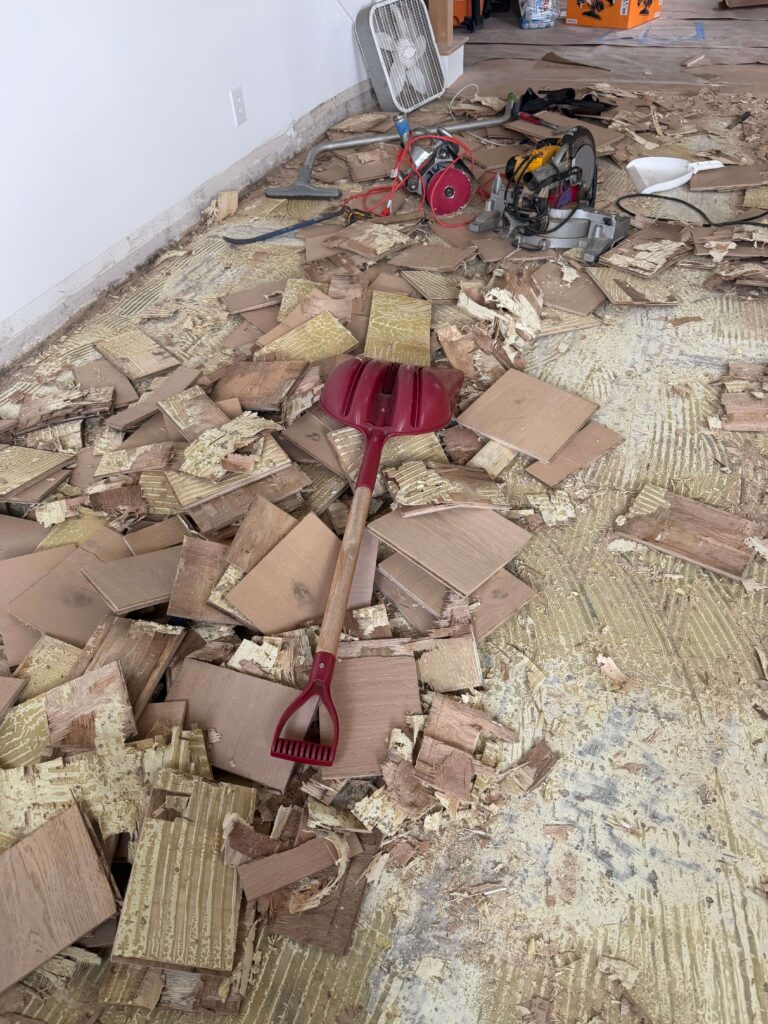
Is Vinyl Plank Really Waterproof?
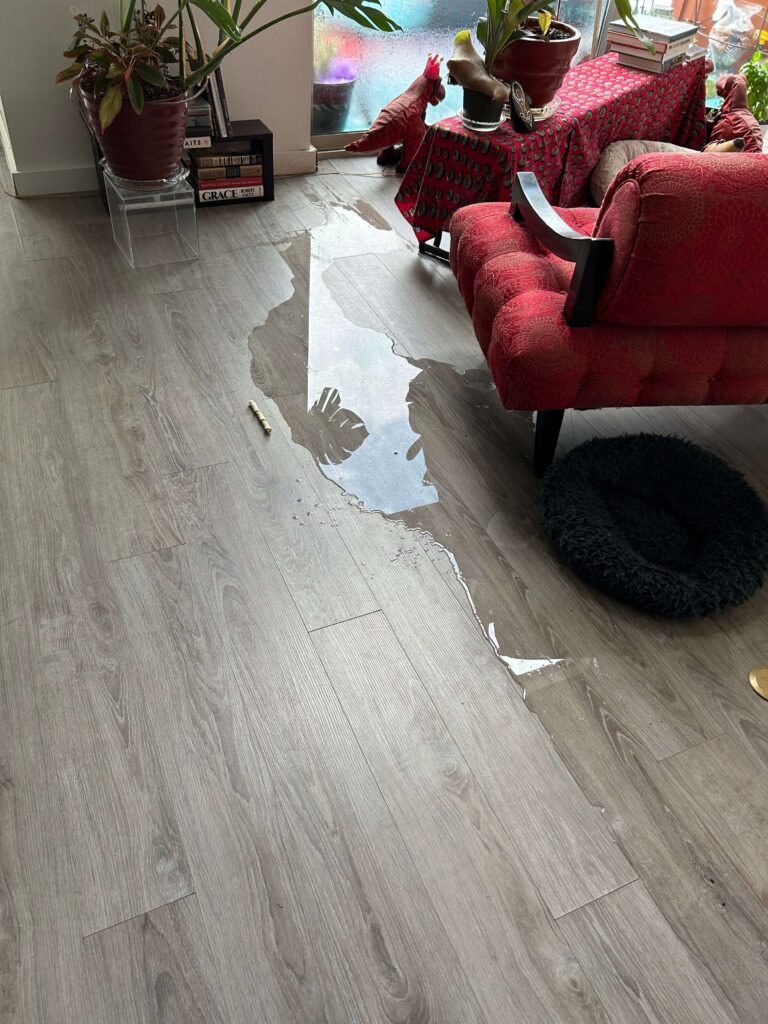
The quick answerThe planks themselves are waterproof. The seams between them and the subfloor beneath them are not. Water passes through the seams, spreads across the subfloor, and then has no way to evaporate because the waterproof surface traps it. The floor looks completely normal while damage develops below it.
What Does Waterproof Actually Describe?
It describes the plank. A luxury vinyl plank will sit in water without swelling, staining, or breaking down, which is a real advantage over wood and why the material has become so popular.

Luxury vinyl plank in a living room.
The rating doesn’t describe the floor as an installed system. Seams are tight, not sealed. Perimeter gaps exist by design, because the floor needs room to expand. Water finds both.
So a spill wiped up promptly is a non-event, exactly as advertised. A supply line that runs for two days is a different situation entirely, and the marketing language does not cover it. We walk through a common version of that, a dishwasher leak spreading beneath the flooring, in a separate article.
Why Is Trapped Water Worse Than Water on Wood?
This is the part that surprises people, and it is worth understanding clearly.
When water gets under a hardwood floor, the wood tells you. It cups, it stains, it swells. The damage is visible, which is unpleasant but useful, because it means you find out.
When water gets under vinyl plank, nothing on the surface changes. The planks are unaffected, so there is no signal. Meanwhile, the subfloor stays wet underneath an impermeable layer that prevents evaporation, which is close to ideal conditions for growth.
A hardwood floor damaged by water is a visible problem you address. A vinyl floor over a wet subfloor is an invisible problem that keeps developing, and the signs to watch for are the same ones we cover in our article on moisture trapped beneath a floor.
What Are the Warning Signs?
Odor usually comes first, for the same reason it does with hardwood. A musty smell in a room with a vinyl floor deserves attention precisely because the floor itself looks fine.
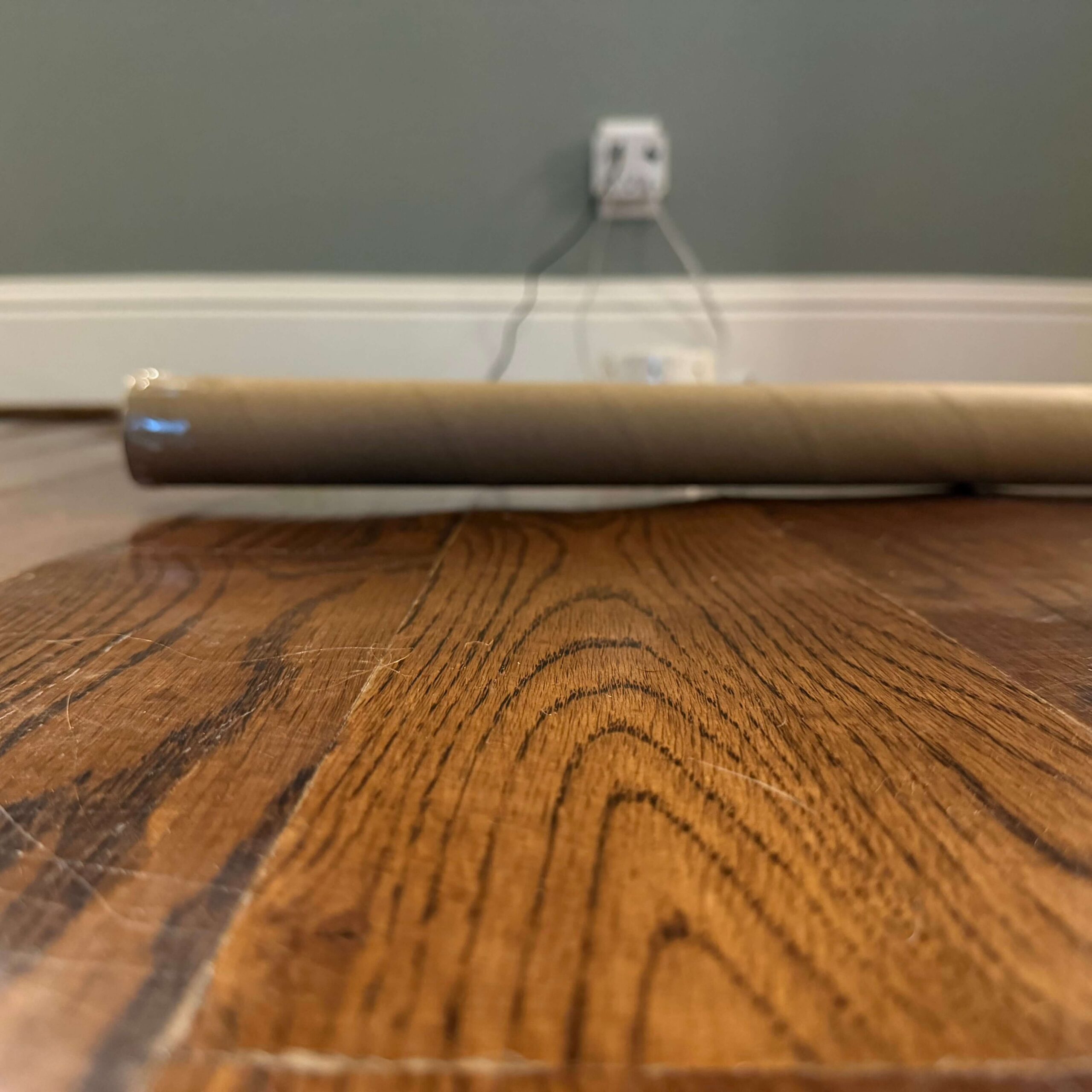
Soft or spongy areas mean the subfloor has begun to break down. On a floating installation, the floor may also feel like it moves slightly or makes a sound it didn’t before.
Lifting, peaking, or separating seams point to a subfloor that has swollen and is no longer flat. If the subfloor is a wood panel product, it swells when wet and does not return to its original dimension.
Any of these is worth investigating, and finding out what it takes to put the floor back starts with lifting a small section to see what the subfloor actually looks like.
Floor looks fine but something seems off?
A moisture reading at the perimeter tells you more than the surface of a vinyl floor ever will.
What Happens If Water Does Get Under It?
The planks usually come up fine and can often be reinstalled, which is a real advantage. The subfloor is the question.
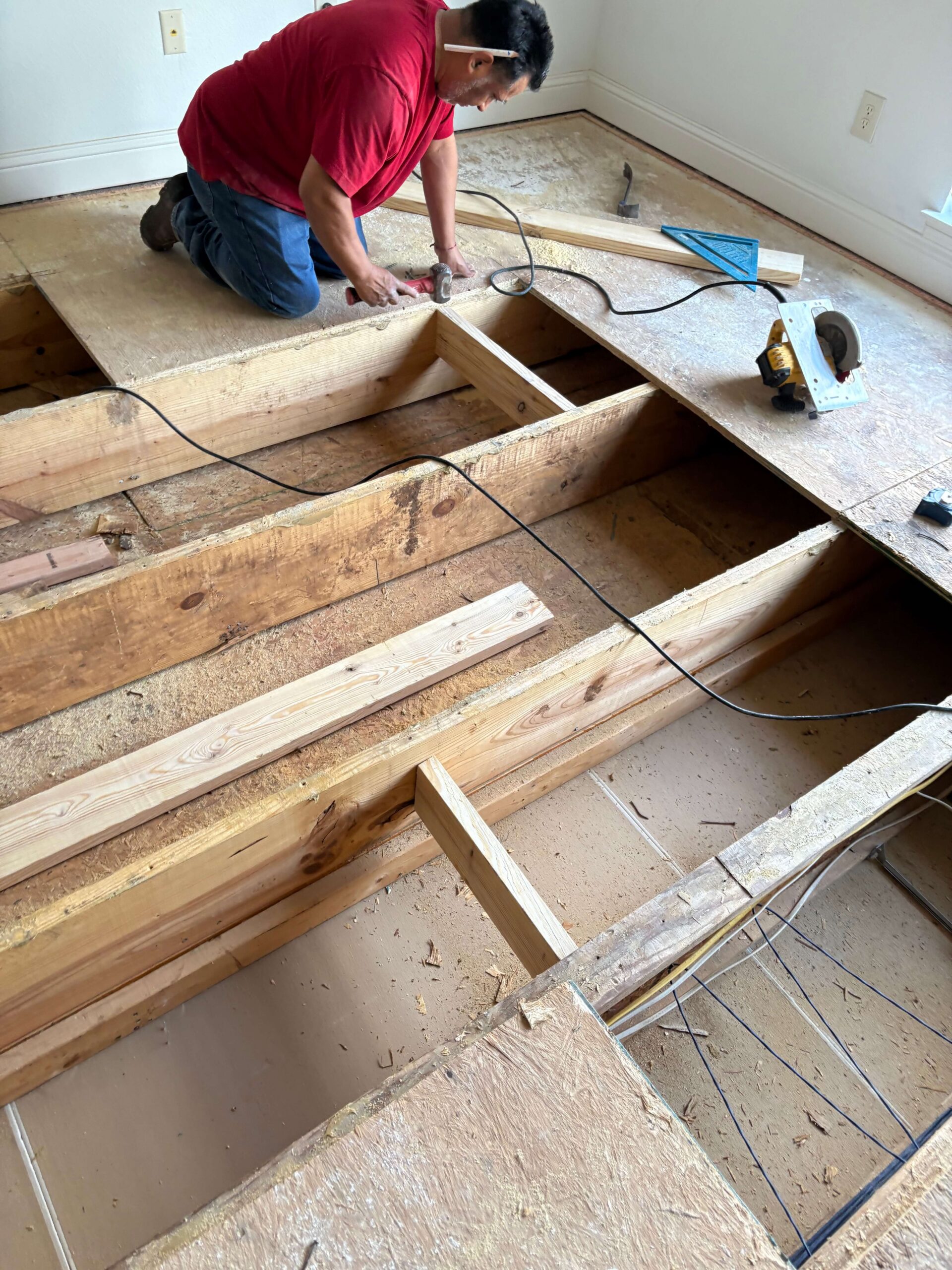
The subfloor is the part that needs checking after a leak.
A floating installation lifts relatively easily from an edge. Glued-down installations are harder, and the adhesive bond is frequently compromised by the water anyway.
Once the flooring is up, the subfloor is dried and assessed. Replace panel material that swelled, delaminated, or lost strength, because a floor installed over a compromised subfloor will telegraph every flaw and fail early.
Replacing a floor after a leak?
We check the subfloor first, then help you choose the floor that suits each room going forward.
Is This a Reason to Choose Something Else?
Not on its own. Vinyl plank is a reasonable choice for plenty of spaces, and our room-by-room guide to LVP and waterproof laminate shows where it fits best. It does what it claims to do at the surface. The point is to understand what the claim covers so the floor is not treated as invulnerable.
If you are replacing a floor after a water event, it is a good time to weigh your options. The factors that tend to matter most are plank width, the heights of your doors and cabinets, and budget, and we carry vinyl flooring alongside solid and engineered wood.
Hardwood isn’t waterproof and never claims to be, but it has one advantage worth noting: it can be sanded and refinished, which means a damaged floor is often recoverable rather than disposable. Our comparison of luxury vinyl plank against other options covers the trade-offs in more depth.
Have the Subfloor Checked If Water Reached Your Vinyl Floor
A vinyl floor that looks perfect tells you nothing about what is underneath it. If water reached your floor from an appliance, a supply line, or an overflow, call (214) 399-1770 to schedule a consultation. We will take readings and, where it is warranted, lift a small section so you can see the subfloor rather than guess at it. We serve homeowners throughout the Dallas and Fort Worth areas.
Frequently Asked Questions
Can vinyl plank be reused after the subfloor is replaced?
Frequently, yes, particularly with a floating installation lifted carefully. Glued-down planks are less often salvageable because of the adhesive.
How do I know if water got under my vinyl floor?
Practical signs include odor, soft spots, and seams that have lifted or peaked. A moisture meter reading at the perimeter or through a small access point confirms it.
Is waterproof laminate the same as waterproof vinyl plank?
No, and the difference matters. Laminate uses a fiberboard core that swells permanently when it gets wet, while vinyl plank does not absorb water into the plank itself.
Would hardwood have held up better in the same situation?
Differently, rather than better. Hardwood would have shown visible damage, which is worse to look at but means you find the problem sooner and can often refinish rather than replace.