LVP vs. Waterproof Laminate

The quick answerLuxury vinyl plank (LVP) wins on water tolerance, comfort, and quiet, because its vinyl core does not absorb water. Waterproof laminate wins on scratch resistance and a convincing wood look, thanks to its hard wear layer. Neither can be refinished, and neither is waterproof at the seams. The right choice depends on your priorities.
LVP and waterproof laminate are often presented as interchangeable, and sometimes one is sold as the clear winner. Neither is quite true. They are built differently, and those differences show up in how each one handles water, wear, sound, and daily life. This head-to-head comparison breaks down how the two floors stack up, factor by factor, so you can decide which strengths matter most to you.
How Are LVP and Waterproof Laminate Built?
LVP is made in layers: a protective wear layer, a high-definition photographic layer that reproduces the look of wood or stone, a core, and a backing layer. Many products use a rigid core. Because the plank is made from PVC, the material itself does not absorb water.
Waterproof laminate has a similar layered look, but its core is a dense fiberboard with a printed image under a hard, clear wear layer. The surface and core are treated to resist water for the period the manufacturer rates it for. If water does get into the core, though, fiberboard swells and does not go back.
That one difference, a vinyl core versus a wood-based core, drives most of the comparison below.
How Do LVP and Waterproof Laminate Compare Side by Side?
| Factor | Luxury vinyl plank | Waterproof laminate |
|---|---|---|
| Core material | Vinyl (PVC), often a rigid core | Dense fiberboard |
| Standing water | Plank will not swell or break down | Resists water for the manufacturer’s rated period; the core swells if water gets in |
| Scratch resistance | Good | Better, thanks to a harder wear layer |
| Feel underfoot | Softer, slightly warmer, more flexible | Firmer, closer to real wood |
| Sound | Generally quieter | Can be louder underfoot; a quality underlayment helps |
| Wood look | Realistic wood and stone visuals | Often reads more like real wood, with embossed texture |
| Cleaning | Sweep and damp mop | Sweep and damp mop |
| Repair | Replace damaged planks | Replace damaged planks |
| Seams and edges | Not waterproof | Not waterproof |
Which Handles Water Better?
LVP does. Vinyl is inherently waterproof, so an LVP plank can sit in water without swelling or staining. Waterproof laminate handles spills and surface water well, but prolonged exposure is where it is most likely to fail, especially at the edges.
Either way, the plank is not the whole story. Water can pass through seams and perimeter gaps and spread across the subfloor, where the floor’s waterproof surface keeps it from drying. Our article on why a waterproof plank doesn’t make a waterproof floor explains the warning signs to watch for.

Weighing water resistance against wear?
Tell us how your household uses its floors, and we will show you where each product earns its place.
Which Holds Up Better to Scratches and Daily Wear?
Waterproof laminate usually does. Its hard wear layer resists scratches from furniture, foot traffic, and pet claws better than most vinyl surfaces. LVP’s wear layer still protects against scratches, dents, and stains, and it holds up well in busy households, but laminate tends to keep its surface looking new longer under heavy use.
LVP has the edge when wear comes with moisture, such as wet shoes, pet bowls, and frequent spills, because its core is unaffected by water.
Which Feels and Sounds Better Underfoot?
LVP is softer and more flexible than laminate, which makes it more comfortable to walk and stand on. It also tends to be quieter, reducing the sound of footsteps. Some LVP products come with an attached underlayment for added cushioning and sound control.
Laminate feels firmer, closer to the feel of wood. A quality underlayment makes a real difference in how it sounds, so ask about it before you choose.

Which Looks More Like Real Wood?
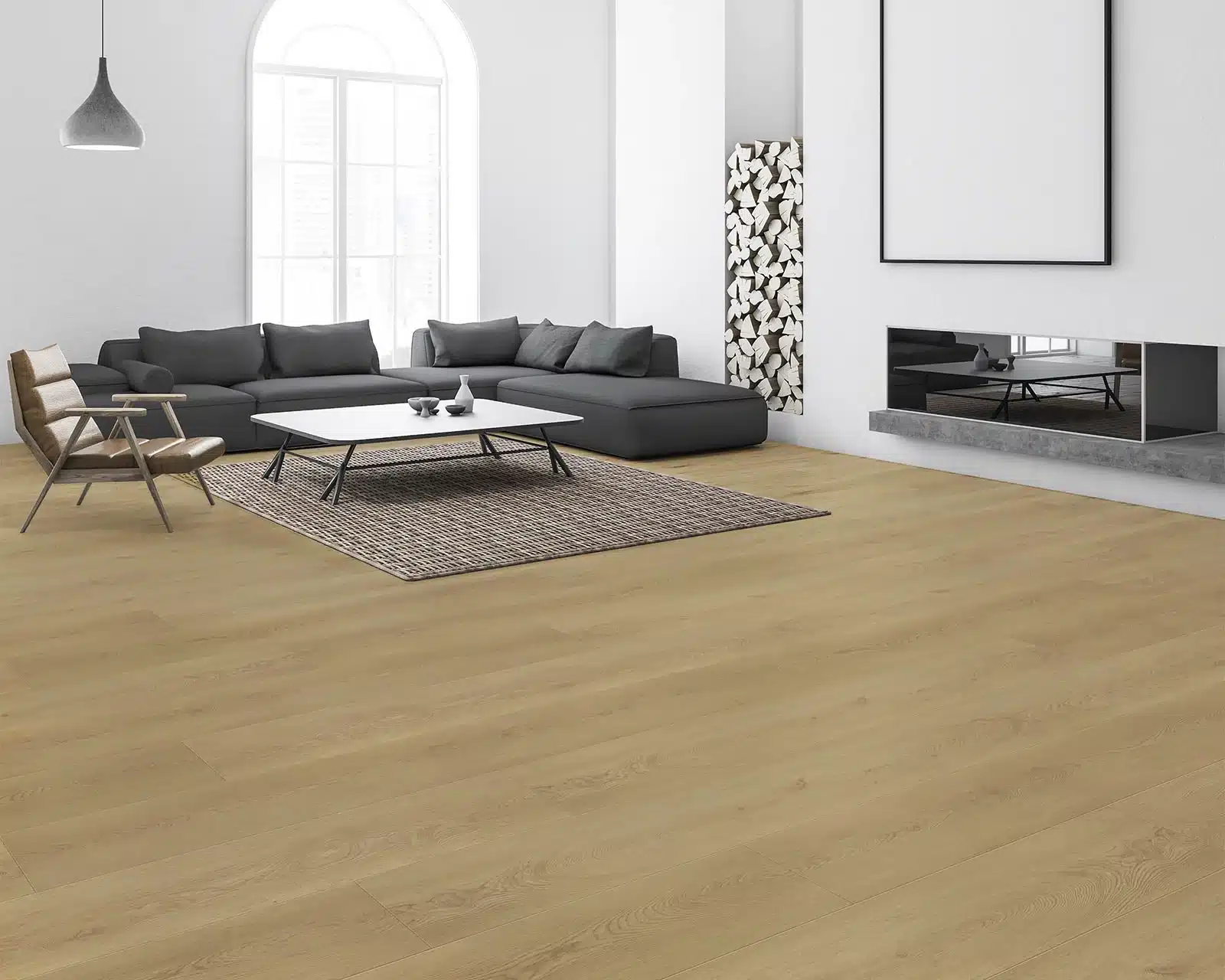
Both can look convincing. LVP’s high-definition photographic layer can reproduce many species and even stone, giving you a wide range of styles. Laminate’s embossed texture and harder surface often read more like real wood, especially across a large, open room.
The only reliable way to compare is in person, with full-size samples in your own light. You can start by browsing the LVP and laminate lines we carry to narrow the field.
How Do Installation and Maintenance Compare?
Both are commonly installed as floating floors with click-lock planks, and both can often go over an existing floor that is flat, solid, and dry. Laminate is more rigid, so subfloor flatness and careful cutting matter. Either way, professional installation with proper subfloor preparation and sealed perimeters in wet areas protects the result.
Maintenance is simple for both: regular sweeping and an occasional damp mop. Neither can be sanded or refinished, so damaged planks are replaced. Keep a few extra planks from your installation for future repairs.
Seal the edges in wet rooms. Whichever floor you choose, ask for proper perimeter sealing around tubs, toilets, and thresholds. The planks resist water, but the gaps around them do not.
Ready to compare samples in person?
See LVP and laminate side by side at our appointment-only Dallas showroom.
So Which Should You Choose?
Choose LVP if water exposure, comfort, and quiet are your priorities. Choose waterproof laminate if scratch resistance and a true wood look matter most. Many homes use both, with each floor where its strengths fit best. For a room-by-room breakdown, see our guide to matching LVP or laminate to each space.
When you are ready, our vinyl plank flooring installation team handles subfloor preparation and installation, and our waterproof laminate installation follows the same careful process.
650samples in our Dallas showroom
50+ yrsof experience behind our team
Same weekconsultations typically
3 generationsfamily-owned
Get Expert Advice on LVP and Laminate
For expert advice and professional installation, contact Texas Hardwood Flooring. We will help you weigh both floors against how your home is lived in and install the one that fits.
Frequently Asked Questions
Is LVP better than waterproof laminate?
Not in every way. LVP is better with standing water, comfort, and noise. Waterproof laminate is better with scratches and a realistic wood feel.
Is waterproof laminate actually waterproof?
It resists water at the surface for the period the manufacturer rates it for. If water reaches the fiberboard core, the core swells and does not recover.
Which is better for homes with pets?
For large dogs, laminate’s harder surface resists claws better. For accidents and spilled water bowls, LVP’s water tolerance is the bigger advantage.
Do LVP and laminate need an underlayment?
Usually, yes. Some LVP products have one attached. A quality underlayment adds comfort and reduces noise, especially with laminate.