Is Luxury Vinyl Plank (LVP) or Waterproof Laminate the right choice for your space?

The quick answerChoose luxury vinyl plank (LVP) for rooms where water shows up often, like bathrooms, laundry rooms, and mudrooms. Choose waterproof laminate where scratch resistance and a convincing wood look matter most, like busy living areas and homes with dogs. Kitchens can go either way. Neither floor is waterproof at the seams, so a leak still needs fast attention.
Both floors look like wood, both resist spills, and both cost less to install than hardwood. The difference shows up room by room. This guide matches each floor to the spaces where it performs best, so you can pick with confidence instead of guessing from a sample chip.
What Is the Difference Between LVP and Waterproof Laminate?
LVP is built from vinyl layers, often over a rigid core, so the plank itself shrugs off water. Waterproof laminate uses a dense fiberboard core with a printed wood image under a hard, clear wear layer, and it is treated to resist surface water for the period the manufacturer rates it for.
In practice, LVP tends to be softer and quieter underfoot and more tolerant of standing water. Laminate tends to resist scratches better and reads more like real wood. Our side-by-side comparison of LVP and waterproof laminate covers construction, feel, and durability in more depth.
Which Floor Fits Each Room?
BathroomsFrequent splashes and humidity. LVP
Laundry and mudroomsWet shoes, washer hoses, pets coming in. LVP
KitchensSpills plus heavy traffic. Either
Living and family roomsTraffic and furniture, wood look matters. Laminate
Homes with large dogsClaws are the main threat. Laminate
Upstairs bedroomsNoise carries to the floor below. LVP
Which Is Better for Kitchens?
Both work well in a kitchen, so the deciding factor is how your kitchen gets used. If spills are frequent and sometimes sit for a while, LVP is more forgiving. If the room sees heavy traffic and chairs sliding across it every day, laminate’s harder surface holds its looks longer.
Whichever you choose, appliance leaks are the real risk in a kitchen. Water from a supply line can travel under any floating floor, which is why it’s worth knowing what happens after a dishwasher leaks under the floor before it happens.

Which Is Better for Bathrooms and Laundry Rooms?
LVP is the stronger choice. These rooms see standing water, from bath mats, overflowing sinks, and washer hoses, and vinyl planks will not swell when water sits on them. Laminate can handle the occasional splash, but repeated standing water at the edges is where it is most likely to fail.
Ask for proper perimeter sealing around tubs, toilets, and thresholds in these rooms. The plank is waterproof, but the gaps around it are not.
Not sure which floor fits your rooms?
Tell us how each space gets used, and we will recommend the right product for each one.
Which Is Better for Living Areas and Bedrooms?
Laminate usually wins in main living spaces. Its surface resists scratches from furniture and foot traffic, and the wood image and texture tend to look more natural across a large, open room.
Upstairs bedrooms are the exception. LVP is generally quieter underfoot, which matters when someone is walking above a living room or a home office. A quality underlayment helps either floor, so ask about it before you choose.

Which Holds Up Better to Kids and Pets?
It depends on which problem you have more of. For large dogs, laminate’s harder wear layer stands up better to claws. For puppies, accidents, and spilled water bowls, LVP’s water tolerance is the bigger advantage.
Many families split the difference: laminate in the main living area and LVP in the laundry room, mudroom, and kids’ bath.
Is Either One Truly Waterproof?
The planks are, the floor is not. Water can pass through seams and around the edges, then spread across the subfloor with no way to dry. That’s why a slow leak under a “waterproof” floor can go unnoticed for weeks. We explain the warning signs in what happens when water gets under vinyl plank.
Mixing floors from room to room?
We will help you match colors and plank widths so LVP, laminate, and hardwood transition cleanly through your home.
When Is Hardwood Still the Better Choice?
For main living areas in a long-term home, hardwood still offers something neither LVP nor laminate can: it can be sanded and refinished, so it can look new again after decades. A common approach is solid hardwood through the main living spaces with LVP in the wet rooms, so each room gets the floor that suits how it is used.
If you are leaning toward vinyl, our luxury vinyl plank installation page shows how we prepare the subfloor and finish the transitions, and our laminate flooring installation page covers the same for laminate.
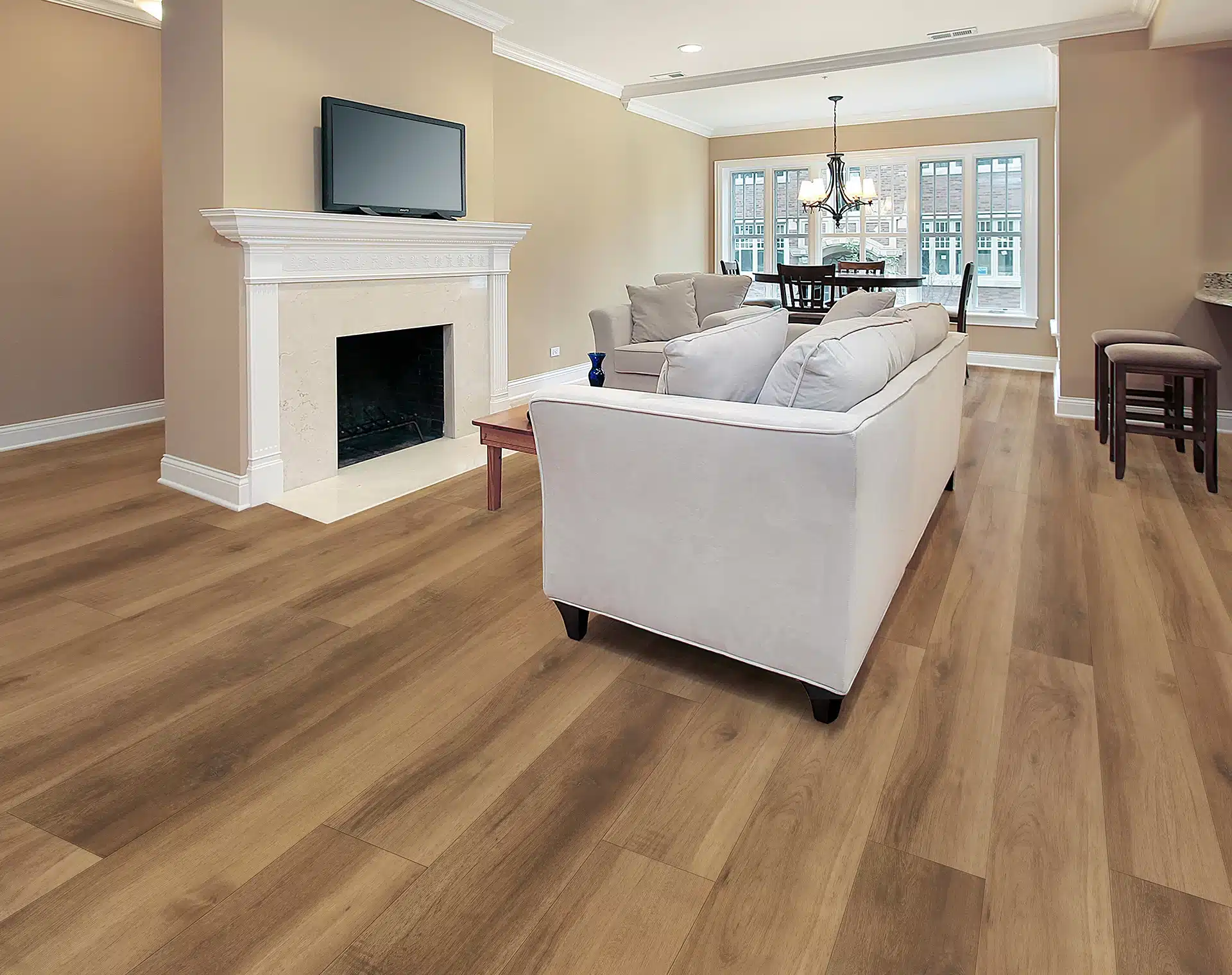


LVP and laminate options available through Texas Hardwood Flooring.
650samples in our Dallas showroom
3 optionshardwood, LVP, and laminate
50+ yrsof experience behind our team
Same weekconsultations typically
See LVP and Laminate Side by Side
Samples on a screen can’t show you texture, sound, or how a color looks in your light. Browse our product catalog, then schedule a consultation and we will bring the right options to your rooms or meet you at our appointment-only showroom.
Frequently Asked Questions
Can I use LVP and laminate in the same house?
Yes, and it is common. The key is choosing colors and plank widths that transition cleanly between rooms, which is easier to judge with full-size samples side by side.
Which one feels more like real wood?
Laminate usually does. Its harder surface and embossed texture feel closer to wood underfoot, while LVP feels slightly softer and warmer.
Can LVP or laminate go over my existing floor?
Often, yes, if the existing floor is flat, solid, and dry. Carpet always comes up first, and any floor with soft spots or moisture needs to be addressed before anything new goes down.
Can either floor be refinished like hardwood?
No. Neither can be sanded. Damaged planks are replaced instead, so keep a few extra planks from your installation for future repairs.