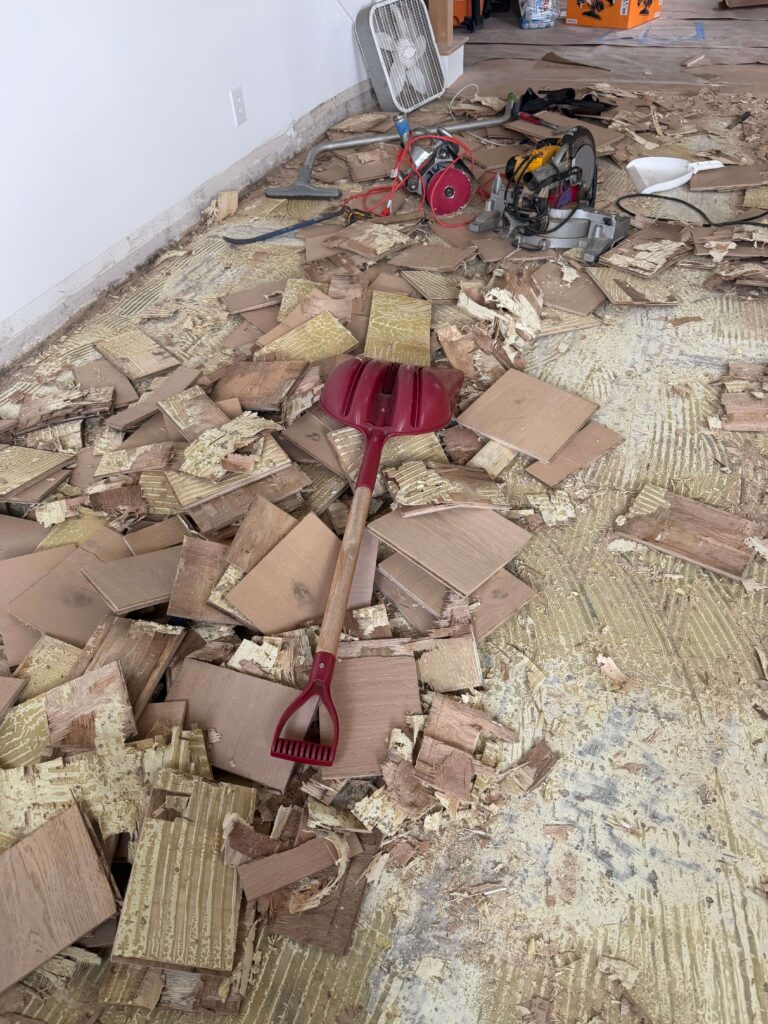
My Dishwasher Leaked Under the Floor: What Happens Next?
The quick answerAppliance leaks travel under the flooring before anything shows on the surface, so the damage almost always extends beyond the kitchen. Shut off the water, pull the appliance, and get a moisture reading across the surrounding rooms. Because these failures are sudden, they typically fall under homeowners insurance.
Why Does the Damage Reach Farther Than the Kitchen?
Water follows the path of least resistance, and under a hardwood floor that path runs along the length of the flooring and through the gaps in the subfloor. It does not stop at a doorway or a cabinet line.
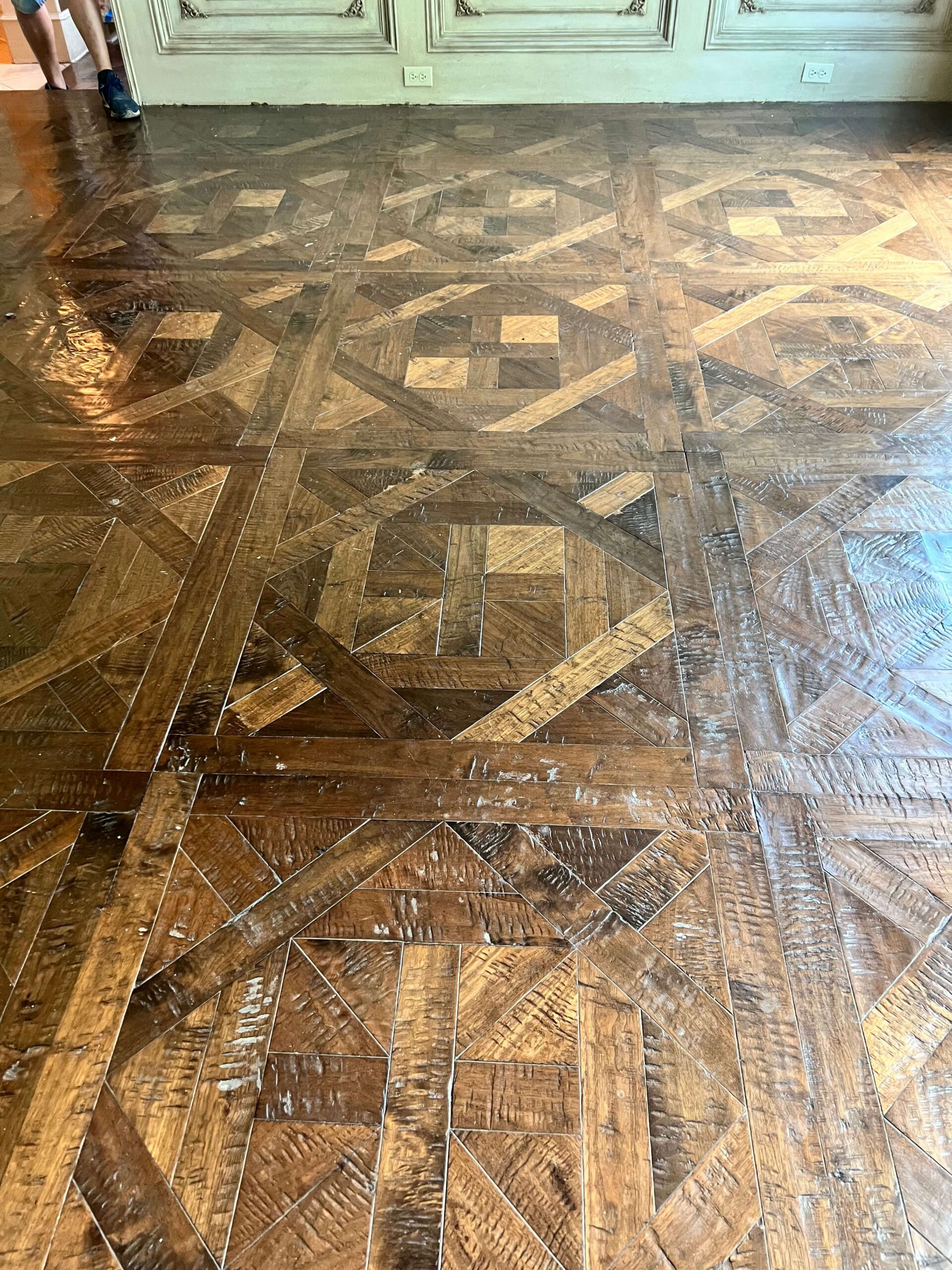
Cupping from water that traveled under a solid hardwood floor.
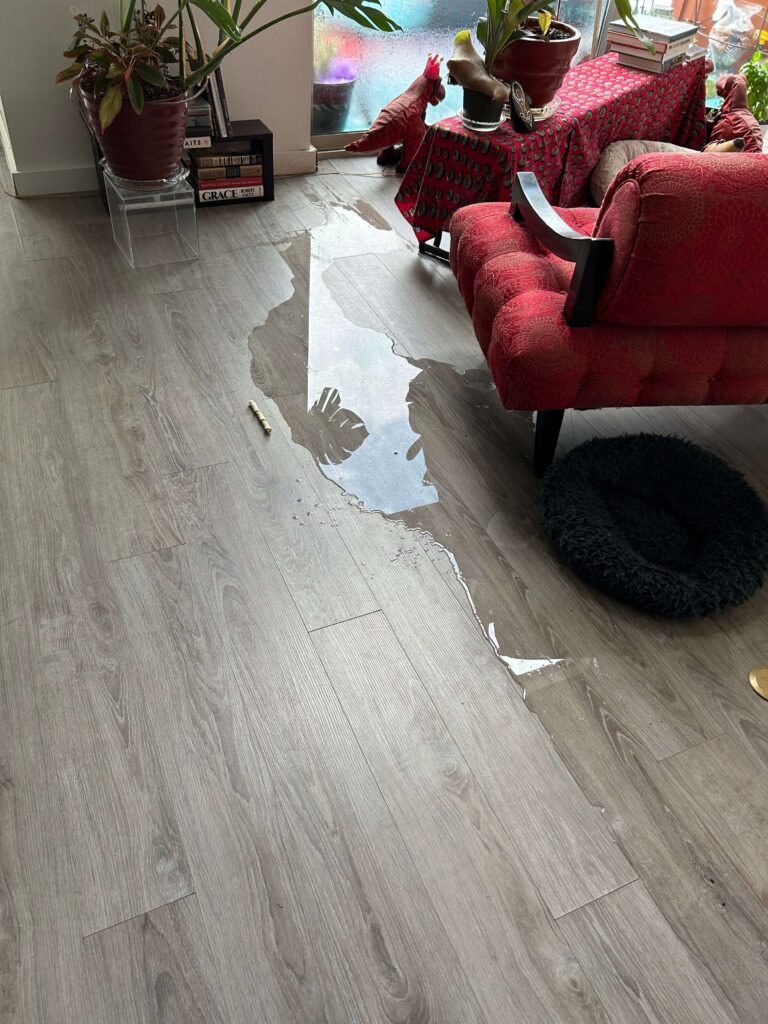
A dishwasher that leaked for a week can put moisture under an adjoining dining room with no visible sign in either room. By the time cupping appears in the kitchen, the wet zone is often two or three times larger than what you can see. Floors sold as waterproof hide it even better, because water still travels under vinyl plank with no visible sign.
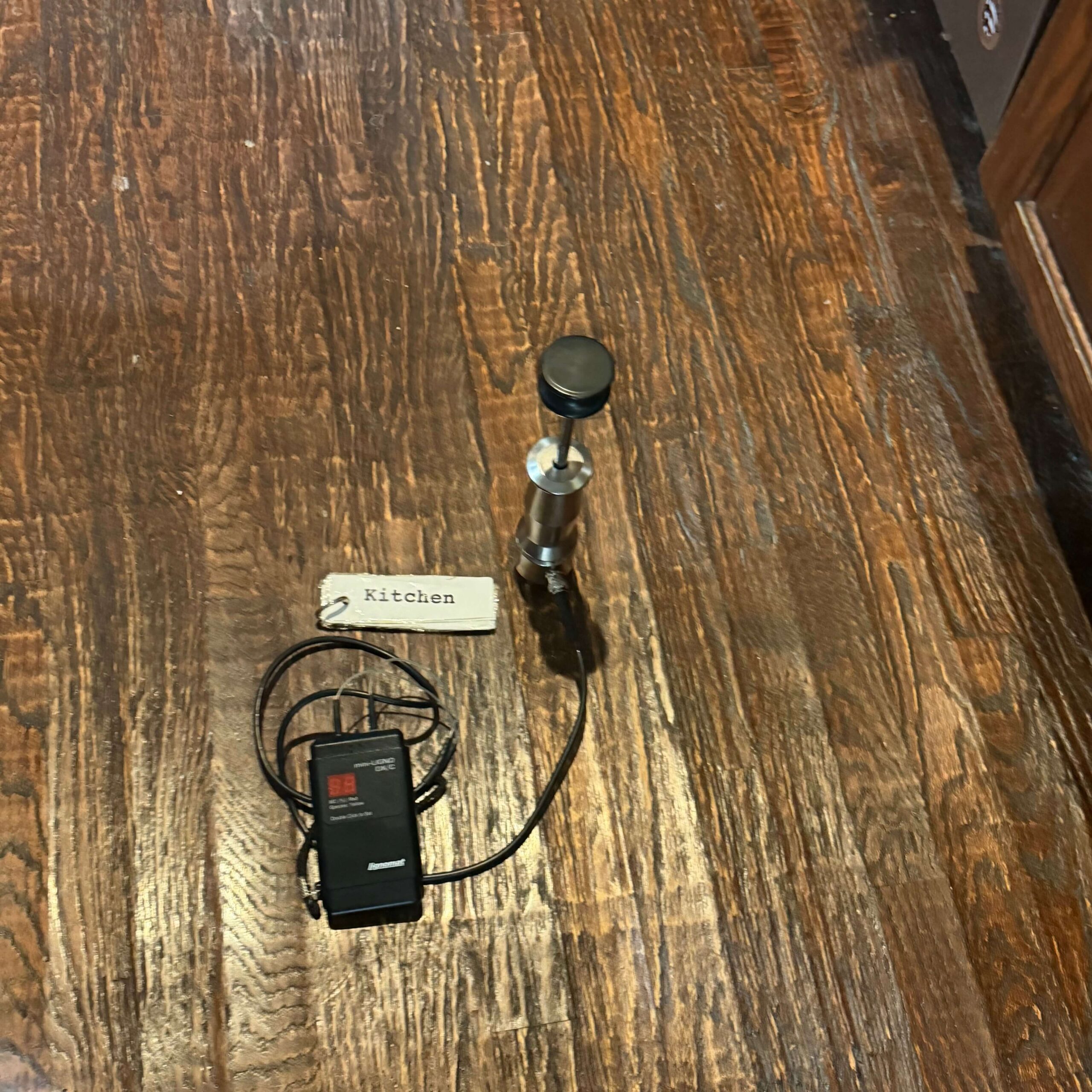
This is why measuring matters more than looking. A meter reading taken in four corners of the connected space tells you the real boundary, and that boundary determines the scope of everything that follows.
Which Appliances Cause the Most Floor Damage?
Refrigerator ice maker lines are the most common culprit we see, largely because they fail quietly behind an appliance nobody moves. A pinhole can run for months.
Dishwashers are second, usually from a supply line, a door seal, or a pump. The damage concentrates under and in front of the unit and then spreads outward.
Washing machine supply hoses cause the most dramatic single events. When one fails, it releases water at full pressure until someone notices, and the volume can reach multiple rooms within an hour.
Water heaters sit in a category of their own because of where they live. A failure in a closet adjacent to living space can put a large volume under the floor with no visible warning.
What Should You Do in the First Few Hours?
- Stop the water. Shut off the water at the appliance or at the main. Pull the appliance out if you safely can, because the wettest wood is almost always directly underneath it.
- Dry gently. Remove standing water and get air moving, but do not aim heat or high-velocity fans directly at the wood. Drying the surface fast while the underside stays wet drives the moisture differential that causes cupping and can split the wood.
- Document it. Photograph everything before you move furniture or start drying. Those photos matter later, and our step-by-step guide to the first 48 hours covers the full emergency sequence.
- Get readings. Then call someone to take readings. Getting the damage evaluated properly in the first few days prevents a small repair from becoming a large one.
Just found water under the dishwasher?
We map the wet zone with a meter, so the scope covers every room the water reached.
Is an Appliance Leak Covered by Insurance?
Usually, when the failure was sudden. A burst supply line, a split hose, or a pump that failed without warning all fit the sudden-and-accidental standard most policies use.
A leak that ran slowly for months is a harder case. Carriers look at staining patterns and the condition of the wood to estimate duration, and long exposure often falls under the maintenance exclusion.
The appliance itself is generally not covered by the homeowners policy, only the damage it caused. In our article on how carriers handle water damage claims, we break down the distinctions and what to document, and we’ve assisted homeowners through the claim process for many years.
Filing a claim for an appliance leak?
We document the damage with readings, photos, and a line-item scope your adjuster can work from.
What Does the Repair Look Like?
Drying comes first, and you must verify it with a meter rather than assume it based on the calendar. Sanding a floor that is still giving up moisture produces a worse problem than the one you started with.
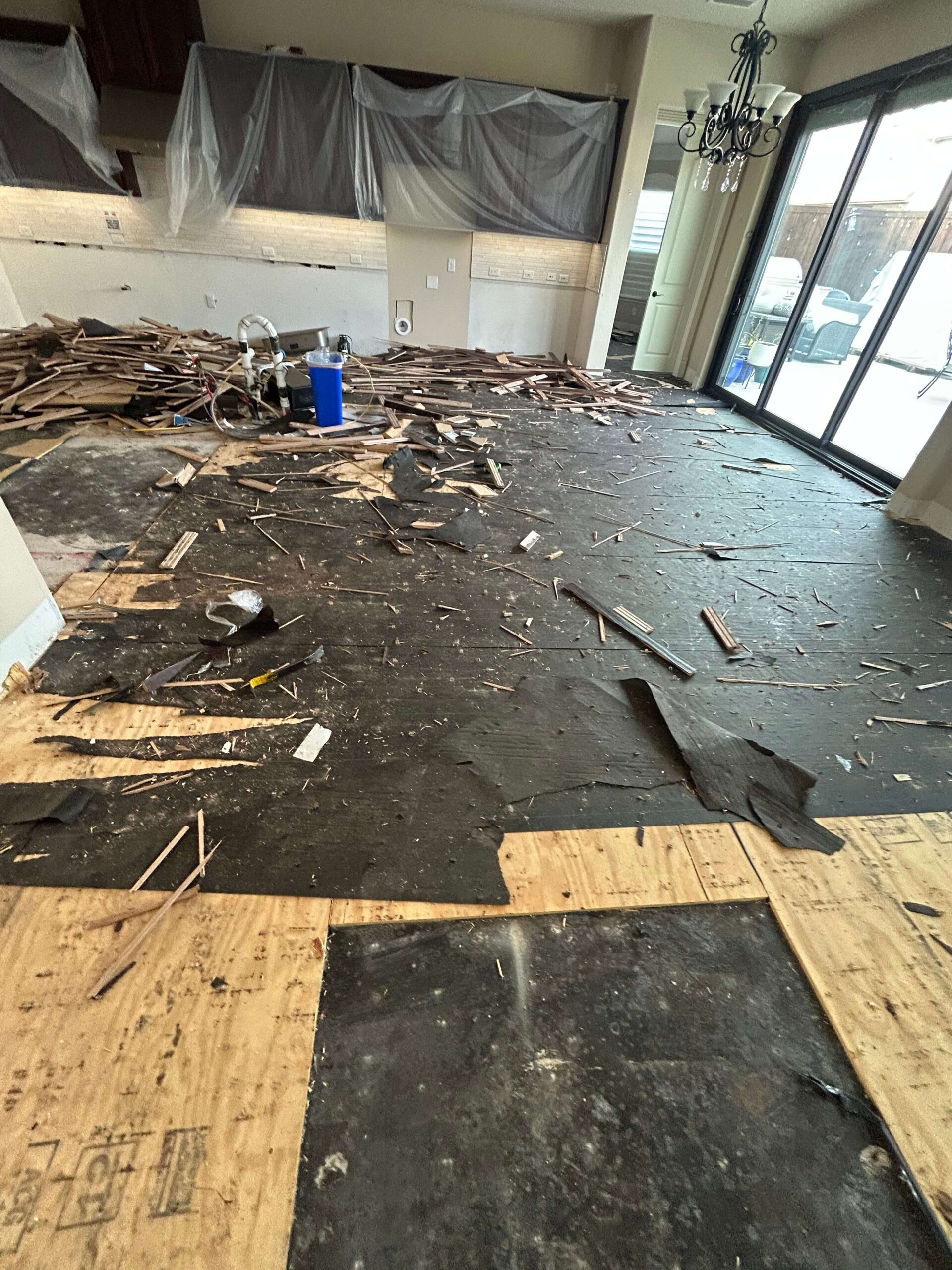
Damaged sections come out once the floor is dry.
Once readings are stable, we remove and replace wood that swelled permanently or stained through. The rest is usually recoverable. Because kitchens so often open directly into connected living space, the finishing area tends to be larger than the damaged area.
Color determines whether the result looks deliberate. Finishing in place lets you match the replacement wood to your existing floor rather than accepting a factory color, the same approach described on our page for custom on-site finishing. If you are weighing a different floor for the kitchen this time, our room-by-room guide to LVP and waterproof laminate covers how each one handles a kitchen.
Get Readings Taken Across the Whole Connected Area
The biggest mistake is scoping an appliance leak to the room you can see. If water reached your floor from a dishwasher, refrigerator, or supply line, call (214) 399-1770 to schedule a consultation. We will map the actual wet zone with a meter, document it for your claim, and give you a written scope of what the floor needs. We serve homeowners across Dallas, Frisco, Plano, and the surrounding communities.
Frequently Asked Questions
My floor looks fine after a small leak. Do I still need it checked?
Yes, and this is the most common reason small losses become large ones. Cupping often doesn’t appear for a week or more, and by then the underside has been wet the entire time.
Should I replace the flooring under the appliance only?
That rarely works out. The wet area extends past the appliance footprint, and finishing a small patch in the middle of a kitchen floor leaves a visible mark even when the repair is sound.
How long before a leak under the floor causes permanent damage?
Surface marks can appear within hours. Permanent swelling and staining generally take days to weeks of continuous exposure, which is why the first week matters so much.
Can the restoration company handle the floor too?
They handle drying and removal. Sanding, matching, and finishing a hardwood floor is separate work, which we explain in our article on who actually repairs the floor.