Wide Plank vs. Narrow Plank Hardwood: How Width Changes a Room
The quick answerWide planks make a room feel larger and quieter because they have fewer seam lines across the floor. Narrow planks read as more traditional and detailed, and in solid hardwood, they move less with humidity, which matters in North Texas. Width also drives cost, since wider planks come from larger logs with more waste.
The practical range runs from a 2 1/4-inch strip through 5 inches, which suits most homes, up to 7 inches and beyond, where engineered construction usually becomes the sensible way to go.
How Does Plank Width Change the Scale of a Room?
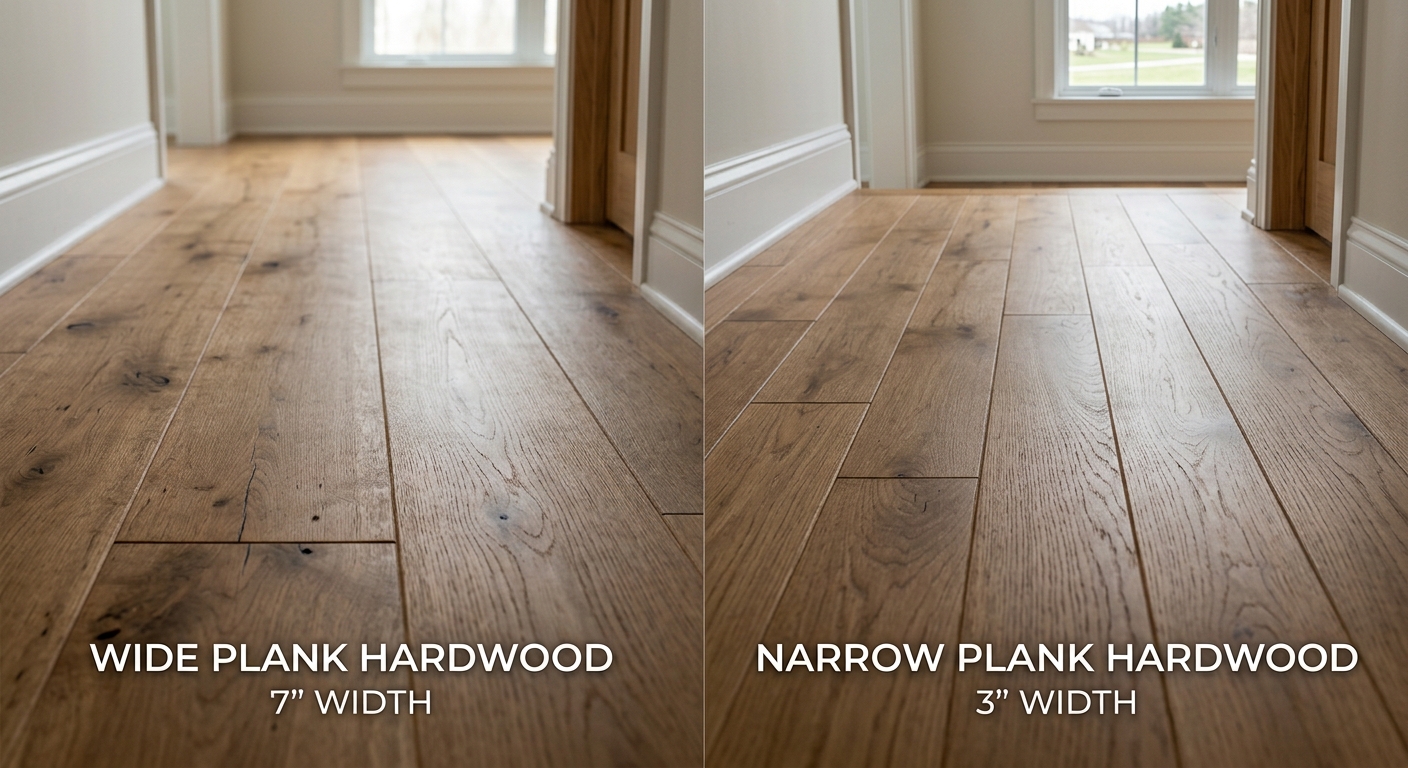
Every seam between planks is a line your eye registers. A 2 1/4 inch strip floor in a twenty-foot room puts more than a hundred lines across it. The same room in 7-inch plank has about thirty-five. Fewer lines means the floor recedes and the room feels broader and calmer.
Fewer seams make a room read larger and quieter.
That works beautifully in open-plan spaces with long sight lines and high ceilings. If you are planning hardwood floor installation in a Southlake home with an open plan, wider planks are worth a close look. It works against you in a small room, where wide planks can look oversized, and in a hallway, where a wide plank running the length can read as heavy.
Narrow strip does the opposite. It adds visual texture and reads as period-appropriate, which is why it belongs in the pre-war houses across East Dallas and the Park Cities rather than being something to replace.
Do Wide Plank Floors Move More With the Seasons?
Solid wood moves across its width, not its length. Double the width, and you roughly double each plank’s total seasonal movement. In a Dallas summer-to-winter cycle, that movement shows up as gapping in the dry months and tightness in the humid ones.
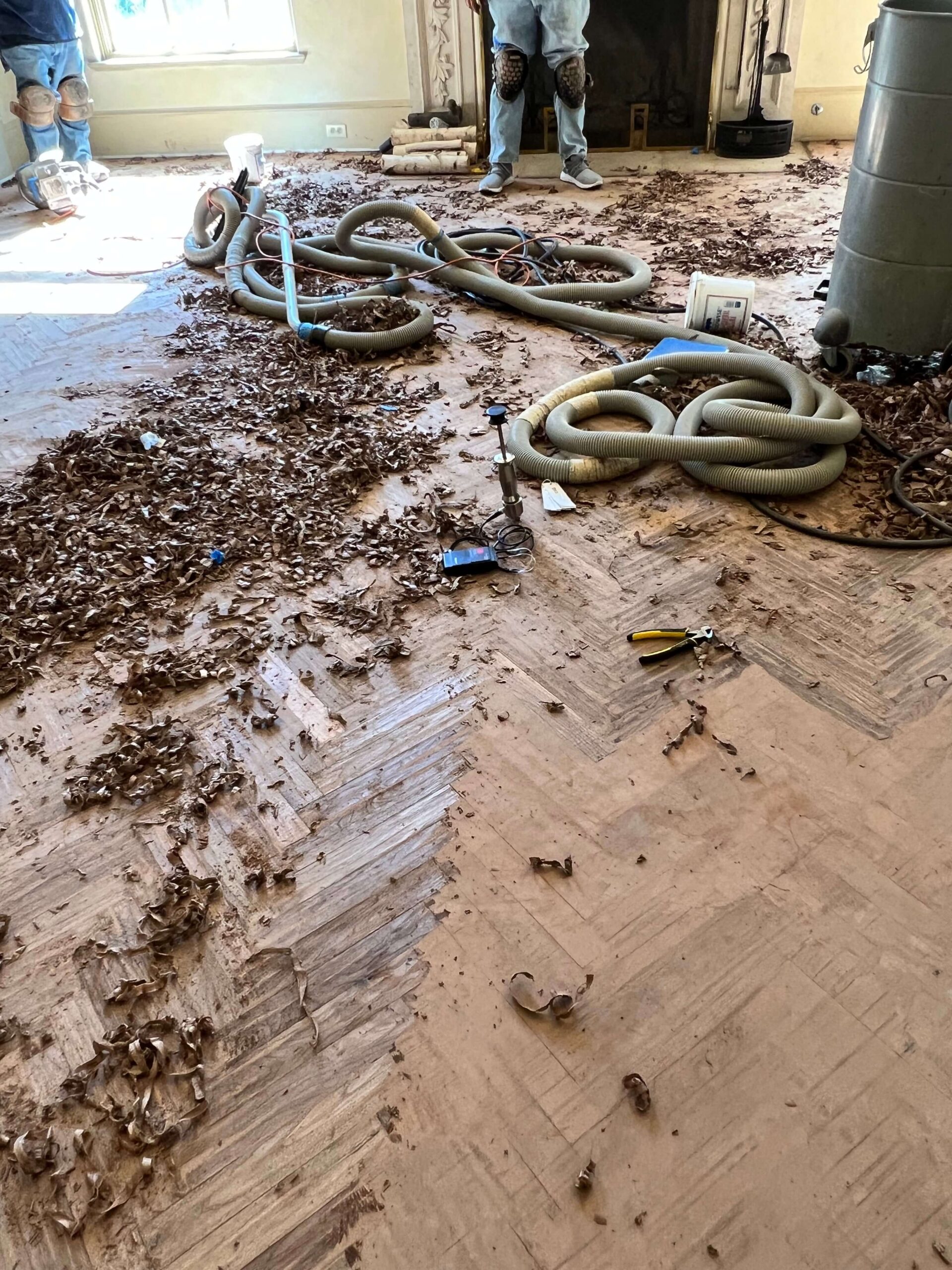
Moisture readings come before any wide plank recommendation.
A 2 1/4 inch strip floor distributes that movement across many small joints, where it is nearly invisible. A 7-inch solid plank concentrates the same percentage change into far fewer, far larger gaps. This is the single most common disappointment with wide solid floors in Texas, and it is entirely predictable. Acclimation, moisture testing, and humidity control become non-negotiable rather than nice to have as width increases.
Cross-laid engineered construction largely removes the problem, which is why wide plank specifications so often arrive as engineered. In that context, it is not a compromise. It is the correct engineering answer to the width you want.
Want a wide plank floor that stays tight?
We check your subfloor moisture and your rooms before recommending a width and construction that suit your house.
What Plank Width Is Best for Your Room Size?
If you are planning hardwood floor installation in Richardson, match the width to each room’s size before you pick a species or color.
| Space | Works well | Usually avoid | Note |
|---|---|---|---|
| Small bedroom or study | 2 1/4″ to 4″ | 7″ and wider | Wide planks crowd a small footprint |
| Hallways | 2 1/4″ to 5″ | 7″ and wider | Few full planks fit across the width |
| Standard living or dining | 4″ to 6″ | Under 3″ if the look is modern | The most forgiving range |
| Open plan main floor | 5″ to 8″ | Under 3″ | Long sight lines carry wide planks |
| Great room, high ceiling | 7″ and wider | Narrow strip | Scale of the room supports scale of the plank |
| Period home restoration | Match what is there | Anything wider | Original width is part of the architecture |
| Stairs | Match the main floor | Wider than the floor | Tread depth constrains the options |
Do Wider Hardwood Planks Cost More?
Price rises with width for a straightforward reason. A wide plank requires a larger log and produces more waste, and clear wide stock is scarcer than clear narrow stock. Moving from 3 1/4 inch to 5 inch is usually a modest step. Moving from 5 inch to 8 inch is not.
Installation labor tends to rise too. Wide planks are less forgiving of a subfloor that isn’t flat, so flattening work a strip floor would have absorbed becomes real preparation on a wide-plank job.
Weighing 5 inches against 8?
We will walk your rooms, check the subfloor, and show you where the extra width earns its place and where it doesn’t.
How Does Plank Width Affect Species, Grade, and Cut?
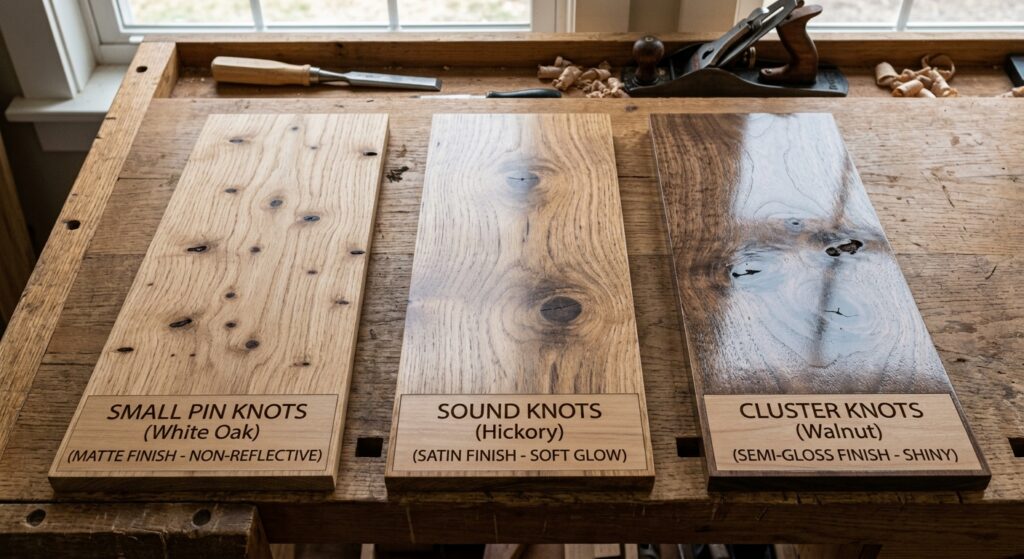
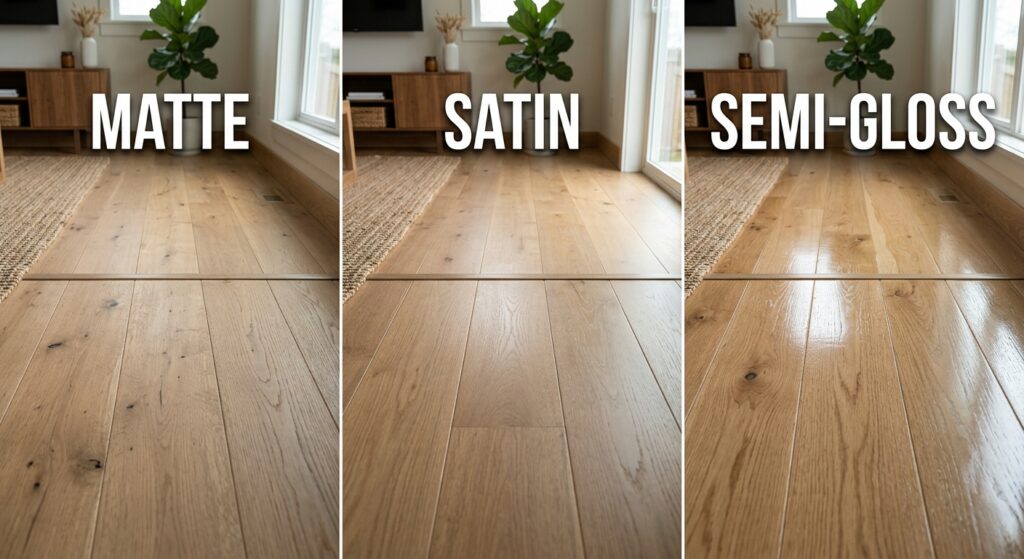
Width is rarely an isolated decision. Wider planks show more of each plank face, making species and grade more visible, so a character-grade plank that reads as charming in strip form can read as busy at 8 inches. It is worth settling width alongside how much knot character you want in the floor. Wider planks also make the seam detail more prominent, which is why finishing the floor in place suits wide plank particularly well, since there is no beveled groove at every edge to catch light and dust.
In white oak, the cut of the plank also interacts with width. Rift and quartersawn stock stays flatter at width than plainsawn, which is part of why wide-plank white oak in custom builds around Frisco is so often specified that way.
650samples in our Dallas showroom
On-sitefinishing to match your floor
50+ yrsof experience behind our team
Same weekconsultations, typically
Judge Width in the Room, Not on a Table
Width does more to the character of a room than species or color, and it is the one decision a photograph consistently misrepresents. A five-inch sample on a showroom table looks nothing like five inches running across your living room. Our appointment-only Dallas showroom carries 650 floor and stain samples, so you can compare widths side by side, and a project manager can bring options to the house where the light and room scale are real. Call (214) 399-1770 or schedule a consultation.
Frequently Asked Questions
What is the most popular hardwood plank width right now?
Five to seven inches covers most of what is currently specified in DFW, with the wider end of that range dominating new custom construction. Homes built before the mid-2000s are overwhelmingly 2 1/4-inch strip, which is why extending an existing floor and starting fresh are very different projects.
Will a wide plank floor gap in winter?
Solid wide plank will show more seasonal gapping than narrow strip, because the same percentage of movement is concentrated into fewer joints. Proper acclimation, a subfloor within moisture tolerance, and keeping indoor humidity in a reasonable band all reduce it. Engineered construction largely prevents it.
Can I mix plank widths in the same house?
Between rooms with a clear break, yes, and it can look intentional. Within one continuous sight line, generally no. A deliberate random-width installation is a different thing, specified and ordered as a single floor rather than assembled from two products.
Do wide planks make a small room look bigger?
Up to a point. Fewer seam lines help a room read as calmer, but a plank that is wide relative to the room reads as oversized and does the opposite. In a small bedroom, four to five inches usually gives you the benefit without the awkwardness.